






Types of Subfloors: A Complete Guide for Builders, Designers, and Homeowners
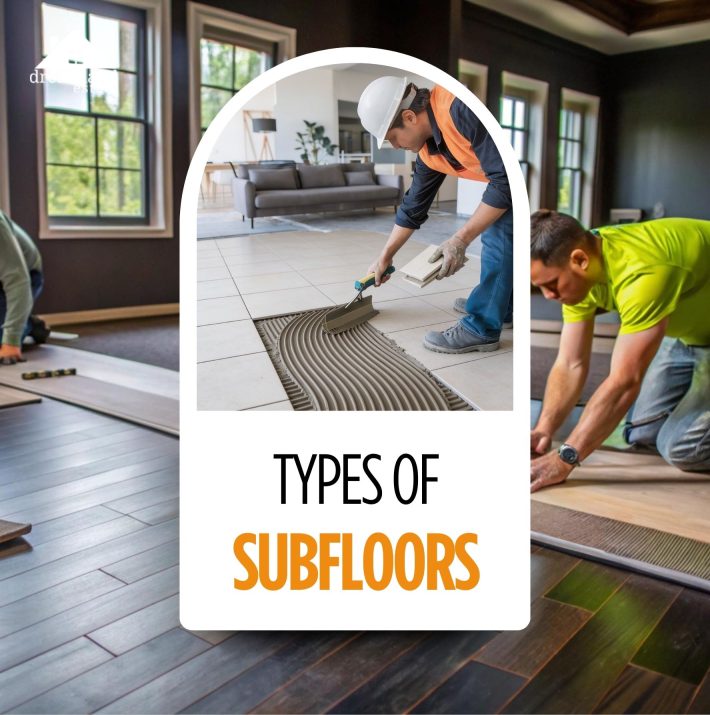
When it comes to flooring, the focus is often on finishes hardwood, tile, carpet, or vinyl but the underlying subfloor is equally, if not more, important.
A subfloor provides structural support, sound insulation, thermal regulation, and moisture protection for the entire flooring system.
Choosing the right subfloor type can affect the longevity, performance, and comfort of your floor for decades.
This comprehensive guide explores subfloor types, insulation systems, installation methods, maintenance practices, and emerging trends to help you make informed decisions.
What Is Subfloor and Why Does It Matter?
A subfloor is the layer between your floor joists (the main structural framework) and the finished flooring surface. Its role is to provide:
- Structural support: Distributes weight evenly across the floor joists.
- Stability: Prevents flexing, squeaking, or unevenness in the finished floor.
- Moisture protection: When combined with a vapor barrier, it helps prevent water damage.
- Soundproofing and insulation: Supports acoustic and thermal comfort.
Without a proper subfloor, even the most expensive flooring can fail prematurely. Cracks, squeaks, uneven surfaces, and moisture damage often trace back to subfloor issues.
Types of Subfloor Systems
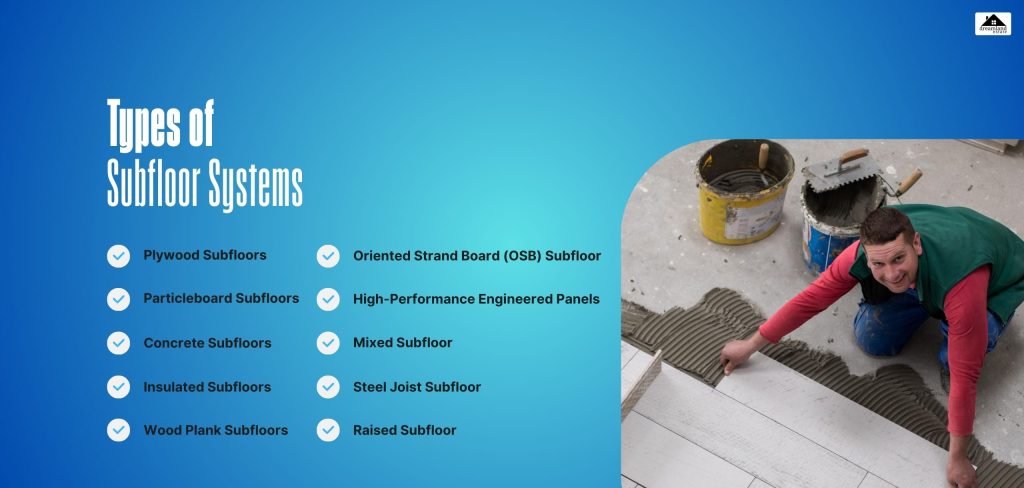
Subfloors can be classified based on material, installation type, or additional performance characteristics. Here are the most common systems:
1. Plywood Subfloors
Plywood is one of the most widely used subfloor materials. It is made from layers of wood veneer glued together with alternating grain directions, giving it excellent strength and stability.
Advantages:
- Strong and durable, can support heavy loads.
- Smooth and flat, ideal for tile, laminate, and hardwood finishes.
- Resists shrinking, warping, and splitting better than particleboard.
Considerations:
- Sensitive to moisture if not sealed.
- Can be more expensive than other wood-based options.
Plywood subfloors are ideal for residential and light commercial applications where longevity and load support are critical.
2. Particleboard Subfloors
Particleboard is manufactured from wood chips, sawdust, and resin compressed into sheets.
Advantages:
- Economical and widely available.
- Smooth surface suitable for carpet or vinyl flooring.
Disadvantages:
- Weak when exposed to moisture.
- Less structurally stable; prone to sagging under heavy loads.
Particleboard is best used in dry interior environments, such as closets or interior subfloor layers under carpet.
3. Concrete Subfloors
Concrete subfloors are common in basements, garages, and ground-level structures.
Advantages:
- Extremely durable and long-lasting.
- Excellent fire resistance and thermal mass.
- Can support radiant heating systems.
Disadvantages:
- Requires leveling for smooth flooring installation.
- Heavy and less forgiving to structural movement.
Concrete subfloors often serve as a base for tiles, engineered wood, or polished concrete finishes.
4. Insulated Subfloors
Insulated subfloors incorporate thermal or acoustic insulation between the subfloor and joists.
Advantages:
- Enhances energy efficiency by reducing heat loss.
- Improves soundproofing between floors.
Considerations:
- Installation costs are higher.
- Requires careful planning to avoid compression of insulation and moisture trapping.
Insulated subfloors are ideal for cold climates, apartments, or multi-story residential buildings.
5. Wood Plank Subfloors
Older homes and some modern designs use solid wood plank subfloors.
Advantages:
- High aesthetic appeal when left exposed.
- Strong and long-lasting when properly maintained.
Disadvantages:
- Susceptible to moisture, warping, and shrinkage.
- Can be difficult to level for modern flooring finishes.
Wood plank subfloors are often found in historic homes and high-end renovation projects.
6. Oriented Strand Board (OSB) Subfloor
OSB is made by compressing layers of wood strands with adhesives. It has become increasingly popular due to its affordability and strength.
Advantages:
- Comparable to plywood in strength.
- More uniform surface than plywood.
- Cost-effective for large-scale construction.
Disadvantages:
- Susceptible to water damage if exposed.
- Can swell if not properly sealed.
OSB is widely used in residential and light commercial construction for modern builds.
7. High-Performance Engineered Panels
These panels are composite boards designed for high-load areas, often incorporating multiple layers of wood, resin, or synthetic materials.
Advantages:
- Superior strength and moisture resistance.
- Pre-engineered for dimensional stability.
Considerations:
- Higher cost.
- Installation may require specialized fasteners.
Ideal for luxury homes, commercial offices, or areas with heavy furniture and foot traffic.
8. Mixed Subfloor
Some modern constructions combine multiple materials, such as OSB over concrete, or plywood over steel joists, creating a hybrid system that optimizes strength, insulation, and cost.
Advantages:
- Customizable performance.
- Can balance cost, load capacity, and moisture resistance.
9. Steel Joist Subfloor
Used primarily in commercial or industrial buildings, steel joists provide a rigid base for subfloor panels.
Advantages:
- High load-bearing capacity.
- Fire-resistant and long-lasting.
Disadvantages:
- Costly compared to wood systems.
- Requires precise engineering and installation.
10. Raised Subfloor
A raised or elevated subfloor is built above the ground, creating a crawl space.
Advantages:
- Allows wiring, plumbing, and HVAC beneath the floor.
- Improves moisture control and ventilation.
Disadvantages:
- Requires careful design to avoid sagging.
- Typically more expensive than slab systems.
Raised subfloors are common in modular homes and areas with damp ground conditions.
What Types of Subfloor Insulation Systems Are There?
Subfloor insulation enhances comfort, energy efficiency, and soundproofing. The most common systems include:
1. Rigid Foam Insulation
Rigid foam boards are placed between or beneath subfloor panels.
Advantages:
- High R-value for thermal insulation.
- Moisture-resistant.
Considerations:
- Can compress under heavy loads if not supported.
- Requires precise cutting and installation.
2. Fiberglass Batts
Fiberglass batts are placed between joists for thermal and acoustic insulation.
Advantages:
- Cost-effective.
- Easy to install.
Considerations:
- Must remain dry to maintain performance.
- Requires protective barriers to prevent irritation.
3. Spray Foam Insulation
Spray foam expands to fill gaps and voids beneath the subfloor.
Advantages:
- Air-sealing properties reduce drafts.
- Excellent R-value per inch.
Disadvantages:
- Higher installation cost.
- Requires professional application.
4. Loose-Fill Insulation
Blown-in insulation fills crawl spaces or hollow subfloor cavities.
Advantages:
- Flexible for irregular spaces.
- Effective for thermal and soundproofing.
Considerations:
- Can settle over time, reducing effectiveness.
- Must be kept dry to prevent mold.
5. Subfloor Insulation System
Many buildings use hybrid systems, combining batts, spray foam, or rigid insulation for maximum thermal, acoustic, and structural performance.
How to Choose the Right Subflooring Material?
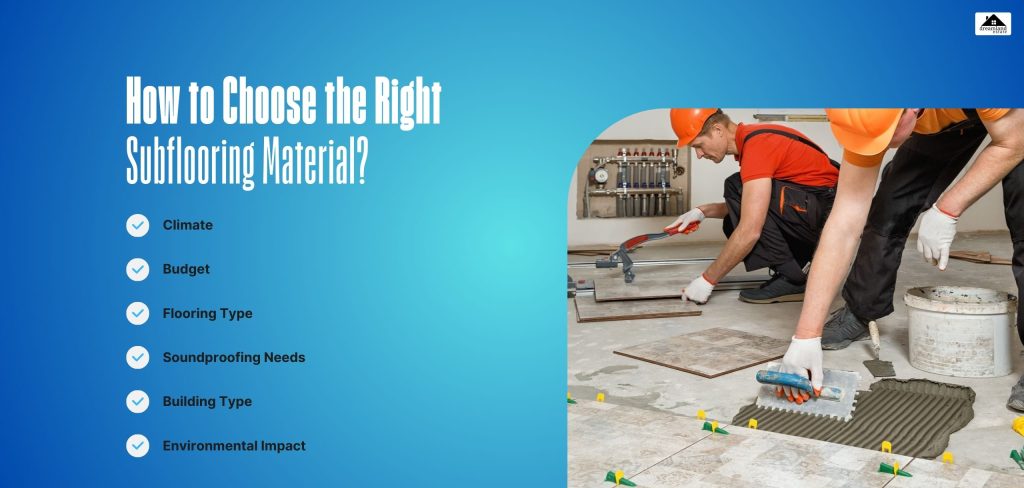
Choosing the correct material depends on multiple factors:
1. Climate
High moisture or cold climates require water-resistant and insulated subfloor systems. Concrete and engineered panels are preferable for damp environments, while wood-based subfloors suit dry regions.
2. Budget
Plywood and OSB are cost-effective, while engineered panels, insulated subfloors, or steel systems increase initial costs but often provide long-term savings.
3. Flooring Type
Tile, hardwood, vinyl, or carpet may require different subfloor materials for stability and compatibility.
For instance, tile needs a rigid, moisture-resistant base, while carpet can tolerate minor flex.
4. Soundproofing Needs
Multi-story buildings benefit from insulation and subfloor systems that minimize impact noise. Floating subfloors or sound-dampening underlayment are common solutions.
5. Building Type
Residential, commercial, and industrial buildings have different load and performance requirements.
Commercial structures often demand high-performance engineered panels or steel joist systems.
6. Environmental Impact
Recycled materials, sustainably sourced wood, and low-VOC adhesives reduce environmental impact and improve indoor air quality.
Subfloor Installation Best Practices
Here are a few best practices that you can adopt to properly install subflooring.
1. Site Preparation
Ensure the foundation or joists are level, clean, and free from moisture before installing the subfloor.
2. Vapor Barrier
Install vapor barriers on concrete or damp areas to prevent moisture transfer.
3. Insulation Placement
Place insulation between joists or beneath subfloor panels for energy efficiency.
4. Joist Spacing
Follow manufacturer recommendations for spacing; standard spacing is 16–24 inches on center.
5. Subfloor Material
Choose the material based on load, moisture, and finish flooring requirements.
6. Fastener Selection
Use screws, nails, or adhesives appropriate for the subfloor type to prevent squeaks and separation.
7. Seams and Gaps
Leave proper expansion gaps and stagger seams to prevent warping or buckling.
Maintaining Your Subfloor System
- Inspect for Moisture: Check crawlspaces and basements regularly.
- Repair leaks promptly: Plumbing or roof leaks can damage subflooring.
- Control humidity levels: Use dehumidifiers or ventilation.
- Monitor for pests: Termites and rodents can compromise wooden subfloors.
- Address issues quickly: Squeaks, sagging, or soft spots should be fixed immediately.
Subfloor Systems in Different Building Types
The type of building largely determines the choice of subfloor and installation method. Each has unique requirements for strength, moisture resistance, sound insulation, and load-bearing capacity.
1. Residential Buildings
Most residential buildings use plywood, OSB, or engineered panel subfloors over wood joists. Key considerations:
- Load: Standard furniture, foot traffic, and appliances.
- Soundproofing: Especially in multi-story homes, impact noise can be reduced with insulation or floating subfloor systems.
- Moisture control: Vapor barriers and crawlspace ventilation are essential in humid or rainy climates.
- Flexibility: Homeowners may want DIY-friendly materials that are easy to repair or replace.
Example: A 3-bedroom house with hardwood flooring over plywood subfloor with rigid foam insulation achieves thermal efficiency and long-term durability.
2. Commercial Buildings
Commercial floors require high-performance subflooring systems capable of withstanding heavier loads and higher foot traffic. Common solutions:
- Engineered panels or concrete slabs for durability.
- Steel joists with plywood or concrete topping in large office spaces.
- Soundproofing layers for conference rooms and multi-tenant buildings.
Example: Retail stores or offices often use raised subfloor systems to conceal wiring, plumbing, and HVAC while allowing easy access for maintenance.
3. Industrial Buildings
Industrial facilities demand robust, highly load-bearing subfloors for machinery, storage, and heavy equipment. Key features:
- Concrete subfloors reinforced with steel or fiber.
- Moisture and chemical resistance for factories or warehouses.
- Minimal insulation requirements, except in temperature-sensitive environments.
Example: A warehouse may have a reinforced concrete subfloor with epoxy coating for durability and chemical resistance.
Emerging Trends in Subfloor Systems
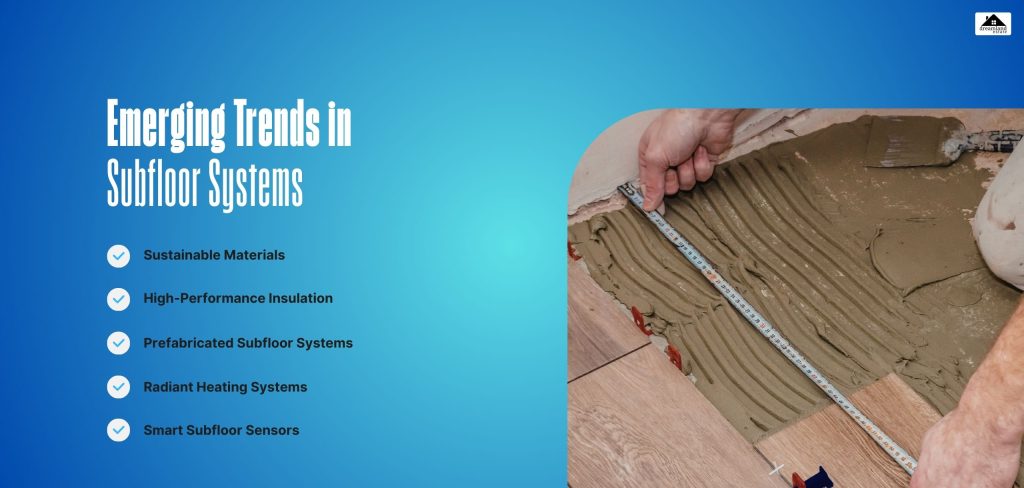
Modern construction increasingly relies on innovation in subfloor design for efficiency, sustainability, and comfort.
1. Sustainable Materials
- Recycled wood, bamboo, and low-VOC panels are replacing traditional plywood.
- Helps reduce deforestation and improve indoor air quality.
2. High-Performance Insulation
- Advanced insulation materials like vacuum-insulated panels or spray foams improve energy efficiency.
- Reduces heating and cooling costs significantly.
3. Prefabricated Subfloor Systems
- Pre-engineered panels are lightweight, uniform, and quick to install.
- Reduces construction time and labor costs.
4. Radiant Heating Systems
- Subflooring now incorporates hydronic or electric heating for comfort in colder climates.
- Works best with concrete or engineered panels for heat transfer efficiency.
5. Smart Subfloor Sensors
- IoT sensors embedded in subfloor systems detect moisture, structural movement, and temperature fluctuations.
- Enable early detection of issues and preventive maintenance.
Installation Methods for Subflooring Systems
Subflooring installation affects long-term performance, stability, and soundproofing.
1. Floating Subflooring System
- Subfloor panels are laid over a vapor barrier and insulation without direct attachment to joists.
- Advantages: Reduces squeaks, allows minor movement, good for soundproofing.
- Best for: Multi-story apartments and areas with minor floor irregularities.
2. Nailed or Screwed Subfloor System
- Traditional method with plywood or OSB secured directly to joists.
- Advantages: Maximum stability and rigidity.
- Best for: Hardwood, tile, and heavy furniture applications.
3. Glued Subfloor System
- Adhesive applied to subfloor or joists prevents movement and squeaks.
- Often combined with screws for hybrid stability.
- Best for: Tile floors, engineered wood, and floating floor systems.
Cost Considerations for Subflooring
Several factors influence the cost of subflooring:
- Material type: Plywood and OSB are economical; engineered panels and high-performance insulation increase cost.
- Labor: DIY vs professional installation; complex layouts increase labor costs.
- Building type: Residential subfloors are cheaper than commercial or industrial systems.
- Insulation and vapor barriers: High-performance materials add upfront costs but save energy over time.
- Additional features: Radiant heating, prefabricated panels, or smart sensors increase costs.
Example: A 1000 sq. ft. plywood subfloor may cost ₹1.5–2 lakh installed, while a high-performance insulated engineered subfloor may cost ₹3–4 lakh.
Common Subflooring Issues and How to Prevent Them

Even a well-installed subfloor can face challenges if not properly maintained. Common issues include:
1. Squeaky Floors
- Caused by loose fasteners or gaps between panels and joists.
- Prevention: Use screws instead of nails, stagger panel seams, and ensure proper joist spacing.
2. Moisture Damage
- Leads to warping, mold, and structural weakness.
- Prevention: Install vapor barriers, ventilate crawlspaces, and fix leaks promptly.
3. Uneven Flooring
- Results from joist irregularities or improperly installed panels.
- Prevention: Level joists during site preparation and check panel alignment.
4. Structural Failure
- Overloading or poor materials can cause sagging or cracks.
- Prevention: Use appropriate material thickness and fasteners for load requirements.
FAQs
Here are a few questions and queries on the topic of guides to types of sublfloor that others have asked, and you might think helpful at the same time.
1. What are the different types of subflooring?
Common types include plywood, particleboard, concrete, wood planks, OSB, engineered panels, steel joist subfloors, raised subfloors, and mixed subfloor systems.
2. What is the rule of 3 flooring?
The rule of 3 is a design principle for spacing flooring planks or panels to maintain structural integrity and visual balance. It often refers to staggering seams in three-row increments to prevent weak points.
3. Should I use 5/8” or ¾” plywood for subfloor?
- 5/8” plywood: Suitable for lighter loads and residential areas with joists at 16-inch spacing.
- ¾” plywood: Recommended for heavy loads, tile installation, or wider joist spacing.
4. What is the difference between 23/32 and 7/8 subfloor?
These are thickness measurements in inches:
- 23/32” (~0.72”): Standard for most residential subfloors.
- 7/8” (~0.875”): Provides extra rigidity for commercial or heavy-load areas.
5. Which subfloor is best?
It depends on use, climate, and budget:
- Plywood and OSB are common for residential.
- Concrete for basements or commercial.
- Engineered panels or mixed systems for high-performance requirements.
6. What are the three types of plywood?
- Softwood plywood – Made from softwood veneers; used for subfloors and walls.
- Hardwood plywood – Durable and smooth; often used for furniture and flooring base layers.
- Marine plywood – Water-resistant; suitable for damp areas.
7. What is the 3/4/5 rule flooring?
A general guideline for subfloor thickness based on joist spacing and floor load: ¾” plywood or OSB for standard spacing; 5/8” for lighter loads; 1” for high-load commercial use.
8. What is the 3-5-7 rule in interior design?
Used for visual balance in spaces, often applied to flooring: three main elements (floor, walls, ceiling), five accents (rugs, furniture, lighting), seven textures or patterns.
9. What is the 60/30/10 rule for flooring?
A design rule for color balance:
- 60% dominant flooring color
- 30% secondary elements (walls, furniture)
- 10% accents (decor).
10. What’s the best thickness for a flooring?
Depends on subfloor material, joist spacing, and finish:
- Residential: ¾” plywood or OSB.
- Commercial: 7/8”–1” engineered panels.
- Tile: At least ¾” for rigidity.
11. Why does a good subfloor system matter?
A proper subfloor ensures:
- Structural stability
- Longevity of finished flooring
- Comfort, soundproofing, and insulation
- Prevention of moisture damage and uneven surfaces
The Right Subfloor Can Make All the Difference
The subfloor is the unsung hero of any building, forming the foundation for your finished floors and contributing to the structural integrity, comfort, and longevity of your space.
Equally important is selecting the right insulation, installation method, and maintenance routine, as these factors directly affect the floor’s performance, energy efficiency, and soundproofing.
Emerging trends such as prefabricated subfloor panels, smart sensors, radiant heating integration, and sustainable materials are transforming how floors are designed and constructed, making modern subfloors more durable, eco-friendly, and technologically advanced.


Leave A Reply