





18 Genius Retaining Wall Ideas For Sloped Backyard Makeovers
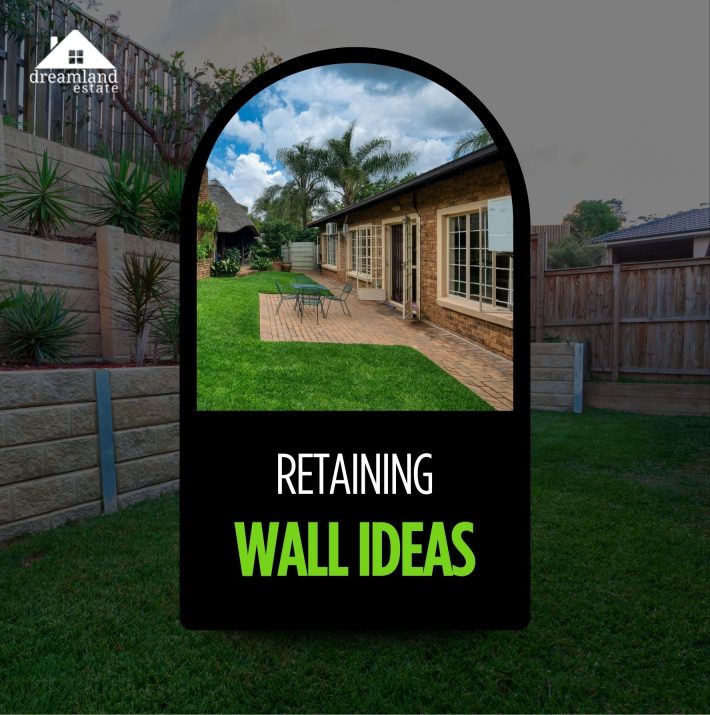
A sloped backyard can feel like completely wasted space. It is hard to mow, prone to soil erosion, and dangerous to walk on. Retaining walls are the ultimate fix.
Turning a steep hill into a flat, usable space does not have to be difficult.
If you want to transform your property, here are 14 creative retaining wall ideas for sloped backyard projects that balance strength with beautiful design.
Why Should You Try Retaining Wall Ideas For Sloped Backyards in the First Place?
If you have a sloped backyard, putting up retaining walls improves both its stability and curb appeal.
It will not only be useful in your backyard but also contribute to its landscape design.
Why do Homeowners Set up Retaining Walls?
In general, people build retaining walls to create a functional area around sloped terrain.
Most importantly, retaining walls improve slope stability and prevent erosion and landslides by withstanding lateral earth pressure.
There are also other functions that these walls perform.
According to Architectural Digest, “You might think that retaining wall ideas are all about function—after all, retaining walls prevent soil erosion and reduce the risk of flooding—but they are not all utility; these structures can enhance an outdoor space by creating levels, evening out a hillside, and even using pavers to produce a pathway.”
How Do Retaining Walls Enhance Curb Appeal of Your Backyard?
Furthermore, many experts believe that retaining walls are useful for creating topographic interest.
Apart from that, they are also useful for creating smaller features, such as elevated garden beds.
Another great aspect of retaining walls is that, when done right, they are aesthetically pleasing.
Basically, with the help of a retaining wall, you can turn a bad incline into usable land with uniform surfaces.
In many cases, people use retaining walls as backdrops for gardens and terraces.
In general, building a retaining wall can boost your home’s value.
This is because when there is a flatter, more uniform surface in your house, the price will change.
Actually, when there is a steep surface in your house, it needs some intervention.
One of the major advantages of retaining walls is that they offer many hardscaping options that suit your house.
The Golden Rule Of Retaining Walls: Drainage
No matter which material you choose from the list below, your wall will fail if water gets trapped behind it.
Wet soil expands and becomes incredibly heavy. To prevent your wall from bowing or cracking, always do these three things:
- Perforated Drain Pipe: Lay a gravel-wrapped PVC drain pipe along the inside base of the wall to channel water away.
- Gravel Backfill: Fill the first 12 inches directly behind the wall with clean gravel, not dirt, so water can easily flow down to the pipe.
- Weep Holes: If you are building a solid concrete or brick wall, leave small gaps or drill holes along the bottom row so water can escape.
Best Retaining Wall Ideas For Sloped Backyard
Finding the right look for your landscape depends entirely on your budget and your home’s style.
Let’s look at the best retaining wall ideas for sloped backyard spaces that you can try this weekend.
1. Heavy Metal
Your best option for basic retaining wall designs for sloping backyards is to use jagged metal. It would be ideal, particularly if your home is made of stone or concrete.
The fact that you don’t have to worry about the jagged material corroding is its finest feature.
Additionally, it requires less upkeep and complements your retaining wall wonderfully.
The jagged metal has the power to warm the tone, which would otherwise be colder due to the overabundance of greenery.
If you’re looking for something that will complement your modern-style building, this is a great suggestion.
2. Block Retaining
Another time-tested solution for your sloping garden is a retaining wall with steps. If you’re looking for a durable, long-lasting material for your retaining wall, consider concrete sleepers.
We refer to this option as a classic since it may transform your outside area into a lovely tiered garden.
The stone stairs can be used as a path.
Don’t forget to plant some lush trees and bushes to improve the appearance of your outside space. Because it is straightforward and attractive.
You can also try cascading flowers and shrubs planted on top. If you picture yourself having evening quality time in the backyard, LED landscape lights would add extra charm.
We believe it is among the best simple retaining wall ideas for sloped backyards.
3. Living Walls
We all adore the color green! One of the best ideas may be to display this affection on the retaining wall.
The nicest part of all is that it doesn’t take much effort. For instance, all you have to do is arrange some grass and flowers in an interlocking design.
You might choose plants that don’t need much upkeep to save yourself the hassle of regular care. It might be done with a variety of decorative grasses.
To fill the retaining wall with lush foliage, you only need to make sure that you use practically every shade of green.
Soften The Edges With Cascading Plants
Hard stone or concrete blocks can look cold and harsh. Soften the look by planting trailing ground covers—like creeping thyme, rosemary, or ivy—right along the top edge of the wall. Over time, these plants will spill over the side like a green waterfall, hiding the blocks and making the wall look like part of nature.
4. Double Wall
If your garden slopes, a double (tiered) wall is a solid option. It’s practical and a landscape-friendly yet creative way to create garden beds.
If you care for specific visual interest, use the midsection between two retaining walls as garden beds.
Instead, split the hill into two smaller, terraced levels. This is one of the most effective retaining wall ideas for sloped backyard designs.
This is because it breaks up heavy soil while giving you a deep, flat space to plant your favorite garden beds.
5. Benches And Boulders
It’s time to come up with an original idea. One of the nicest, easy retaining wall ideas for sloping backyards is unquestionably installing rocks with seats there.
If you want to give your backyard a natural appeal, this concept is ideal. But make sure you choose the pebbles with great care.
The ones you choose should have flat faces so that sitting on them is simple and pleasant.
Once you’ve made your choice, you may position these boulders to create an integrated sitting area.
Pillows and cushions can also be added to the seats to improve comfort.
6. The Two Timer
Nowadays, backyards tend to have steep slopes, making two-tier retaining walls ideal for them. In reality, if you want to prevent erosion, this is one of the greatest ideas.
You may keep more room for garden beds and your favorite plants since it stops erosion.
If you want something that helps create a beautiful background, a two-tier retaining wall is unquestionably the best option among straightforward retaining wall ideas for sloping backyards.
7. The Mixed Bag
Let’s try out retaining wall ideas for a sloped backyard that doesn’t break the bank, but still stabilizes your backyard.
You’ll need concrete bags and a concrete mix of sand and stone.
Stack these concrete bags like bricks to form an interlocking gravity structure. It’s just like layering bricks on top of bricks to create a wall.
You may develop a unique design for your retaining wall by combining different types of materials.
8. Wall Of Gabion
It would be wise to design your retaining wall to resemble a gabion wall. In case you’re curious, a gabion wall resembles a wire cage filled with rocks. Other inorganic materials can be used to fill the gabion wall.
A gabion wall weighs a lot after it is filled. To create a sturdy retaining wall, you may mix several other materials.
Additionally, it will help reduce the risk of erosion.
The best feature of a gabion wall is that you can customize its appearance to match the size of the retaining wall you already have or plan to install.
9. Contemporary But Wooden
One of the easiest retaining wall ideas for sloping backyards is the use of modern wood. To make it appear more precise, you might arrange the wood horizontally.
Make sure you use durable wood when choosing contemporary materials.
Additionally, you may hire a contractor to repair the wood surrounding the retaining wall.
Otherwise, there is always a chance that the appearance may fall short of expectations.
10. The Minimalist
One beneficial option is to add minimalist levels to basic retaining wall designs for sloped backyards.
You may choose this straightforward design where you simply need to make many stages.
You would like these layers, as they can be used as garden beds.
Moreover, you may fill these simple levels with your favorite plants. The best course of action is to use as many shades of green as possible.
Your backyard will appear natural and full of the beauty of nature, thanks to it.
11. Layer After Layer
Additionally, you have the option of layering your retaining wall’s landscape.
If your backyard is sloping, create layers of slopes by adding multiple walls within close intervals. The extra space in your backyard is the ideal place for layered gardening.
This concept will enable you to divide the slope into several levels. Trees, shrubs, and other plants can be planted on the flat surfaces that form between the layers.
12. Blocks Of Wood
The most elegant retaining wall ideas for a sloped backyard involve using wooden blocks to construct the wall.
Wood evokes a feeling of elegance and elevates the appearance of your garden.
You may arrange the wood blocks in a retaining wall in a similar manner to how you would arrange stones.
Similar to boulders, wood blocks will provide the retaining wall’s critical structural support and guard against soil erosion.
13. Aspen Logs
The elevated garden bed is entirely yours, thanks to aspen logs. They are flawless in every way, in fact.
The retaining walls are well supported by the logs. They also make a wonderful alternative for landscaping.
Aspen logs unquestionably contribute to the aesthetic appeal of your property. You may use logs of various sizes to give your garden a unique appearance.
14. Pool With A Patio
A patio and a pool can also be incorporated into simple retaining wall designs for backyards with a slope.
This is more of a way to enhance the backyard’s curb appeal.
This idea may be used with the multi-layered option to provide your retaining wall with stability and some seclusion.
To make it greener, you may add grass, flowers, and other plants to the layers. In fact, the greenery you plant will mitigate the retaining wall’s angular stone look.
To make it greener, you may add grass, flowers, and other plants to the layers. In fact, the greenery you plant will mitigate the retaining wall’s angular stone look.
15. Built-In Stone Slab Steps
If you are building a retaining wall on a hill, do not forget about how you will walk up it.
Cut a section out of your wall and install thick, oversized natural stone slabs as stairs.
Making the steps extra-wide gives your yard a grand, luxury look while making it easy to carry lawn tools up the slope.
16. Retaining Walls Made of Industrial Steel
It’s almost impossible not to love the modern appeal of retaining walls made out of industrial steel. If you want fast installation with no compromise on durability, industrial steels are your best bet.
In fact, if your house is on eroding hillsides, then retaining walls made of industrial steel are the most reliable prevention against soil erosion. It looks thin and polished, but it’s strong and durable. Most importantly, you’ll find plenty of ways to make them versatile.
17. Build In A Hidden Water Feature
If you want to block out noisy neighbors, build a water spout directly into your stone retaining wall.
The water can cascade down into a small gravel basin or pond at the bottom.
This hides the structural wall, creates a beautiful focal point, and fills your backyard with relaxing sounds.
18. Design Soft, Sweeping Curves
Avoid building your wall in a perfectly straight line. Curved retaining walls are visually softer and blend beautifully into a backyard hill.
As a bonus, curved walls are structurally stronger than straight walls because the arch shape helps distribute the weight of the dirt behind it.
Installing Retaining Walls: Here are a Few Things to Consider
A retaining wall holds or retains soil and other materials behind it. Here, the time for holding can be temporary or permanent.
However, in general, people use retaining walls to prevent soil erosion, create space, or divert or control water flow.
Retaining walls can improve the usability and appearance of your property.
Primarily, these walls act as structural strongholds that help keep dirt and water from entering your backyard.
According to HGTV, “There aren’t any strict rules when it comes to retaining walls. Everything, from the size and shape to the materials you use, is totally dictated by your property’s needs and your vision. From winding walls made from unique materials like corten steel, a type of steel that is designed to rust, to extraordinary designs utilizing ordinary (and wallet-friendly) landscape blocks, your only limits are your budget and imagination.”
You can make retaining walls from concrete, brick, stone, steel, timber, and more.
Basically, the material that you choose for the retaining wall determines both its aesthetics and strength.
Furthermore, if you want to create a slope in your front yard, you can stack timber to keep everything in place while maintaining top-notch aesthetics.
Read Also:


Leave A Reply