




Saltwater vs. Chlorine Pools: Which is Best for Resale & Costs? (2026 Guide)
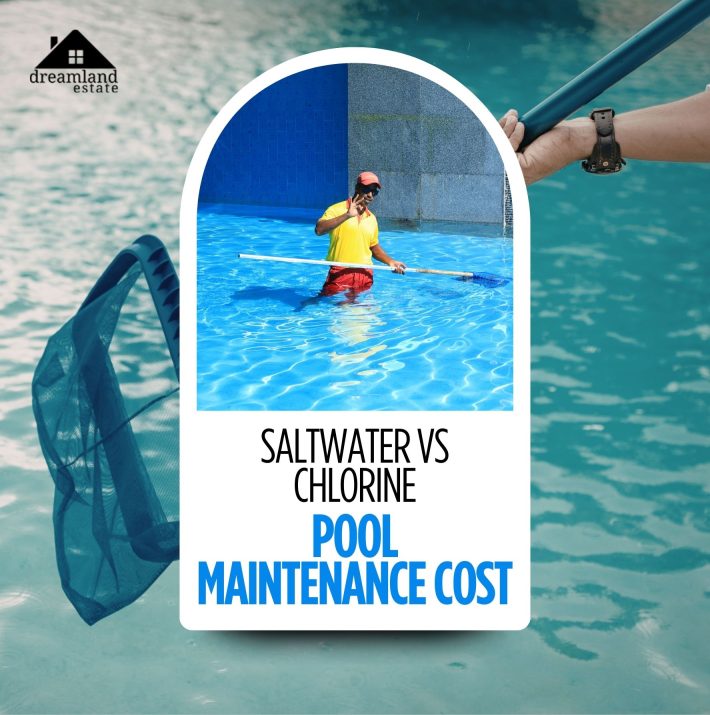
Lately, everyone is obsessed with the word, “wellness.” if you are selling your home over $500k in 2026, buyers are likely to ask for the saltwater before they even step inot the backyard!
But, the real question is: is it worth the hype?
While the chlorine remains the classic, reliable standard, saltwater is now the premium choice for modern buyers.
When comparing saltwater vs. chlorine pool maintenance costs over five years, the numbers might even surprise you!
The saltwater cells are pretty expensive when it comes to replacement. However, you will be able to save on the chemical jugs.
But, do not ignore the corrosion risks. The salt can be really tough on stone coping and metal fixtures if they are not sealed properly.
Even with that specific risk, the resale value is really undeniable.
The modern buyers view saltwater as a luxury upgrade which is easier on the skin and eyes. It is more like a smart play for your equity, that provided you keep an eye on the hardware.
Saltwater Vs. Chlorine Maintenance Costs: The 5-Year Math
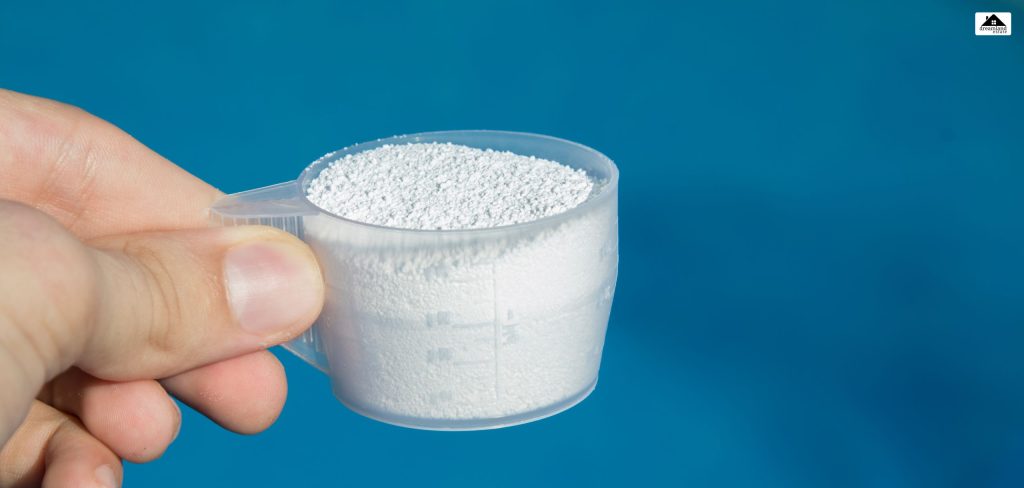
When you look at the 5-year math, the savings from a saltwater system are often a wash. It is less about saving pennies and more about how you prefer to make the payment.
1. Monthly chemical costs
You can expect to pay around $50 to $80 per months for the chlorine tablets and shocks.
Now, the prices are pretty stabilized in 2026. But, they might remain as a significant recurring line item.
Moreover, As for the saltwater, your monthly chemical spend can drop to just $5 to $10 for the occasional bag of salt.
2. The Hidden “CapEx”
The “Capital Expenditure” is where saltwater catches up.
- Cell Replacement: Firstly, salt cells are not forever. You must replace them in every 3-7 years. And the cost will be about $700 to $1,100.
- Electricity: Secondly, the generators use an extra $30 to $50 per year in power to convert that slt into chlorine.
The Verdict: 5-Year Maintenance Comparison
| Feature | Chlorine Pool | Saltwater Pool |
|---|---|---|
| 5-Year Chemicals | ~$3,600 | ~$450 |
| Equipment/Power | Minimal | ~$1,200 (Cell + Power) |
| Total Est. Cost | $3,600 | $3,150 – $3,650 |
Ultimately, the saltwater vs chlorine pool maintenance cost is more like a choice between a steady monthly bill or a larger upfront investment with periodin big repairs.
What Are The Pros And Cons Of Saltwater Pools For Resale Value?
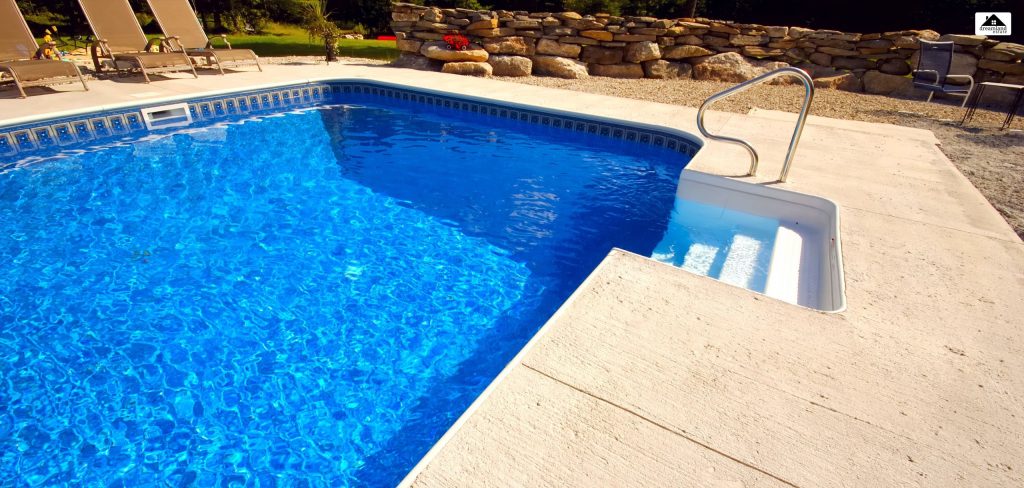
In 2026, selling you home is not just about the square footage. It is more about the lifestyle you are offeirng.
When the buyers see a saltwater system, they see a wellness upgrade. It signals that your home is modern, premiums and very easy to live in.
The “Wellness” Marketing Premium
Buyers these days are hunting for the best pool system for home value, and saltwater that fits the bill.
It is often marketed as the eco-friendly and luxurious choice.
While an appraiser might not give you a specific dollar bump for the salt cell, it can help your home sell much faster.
Moreover, in high-end markets, it’s becoming the expected standard rather than a “nice-to-have” feature.
The Buyer’s Fear Factor
Now, let’s be real! The traditional pools can scare away the first time buyers. They imagine themselves as mad scientists who are struggling with the heavy chemical jugs and complex testing kits.
The saltwater systems can significantly lower this exact buyer anxiety by automating the process.
When you explain all the pros and cons of saltwater pools for the resale value, you have to emphasize the simplicity.
Moreover, a buyer is more likely to make an offer when they realise that the saltwater vs chlorine pool maintenance costs are predictable and the daily work is minimal.
The Hidden Risk: Corrosion & Inspection Failures
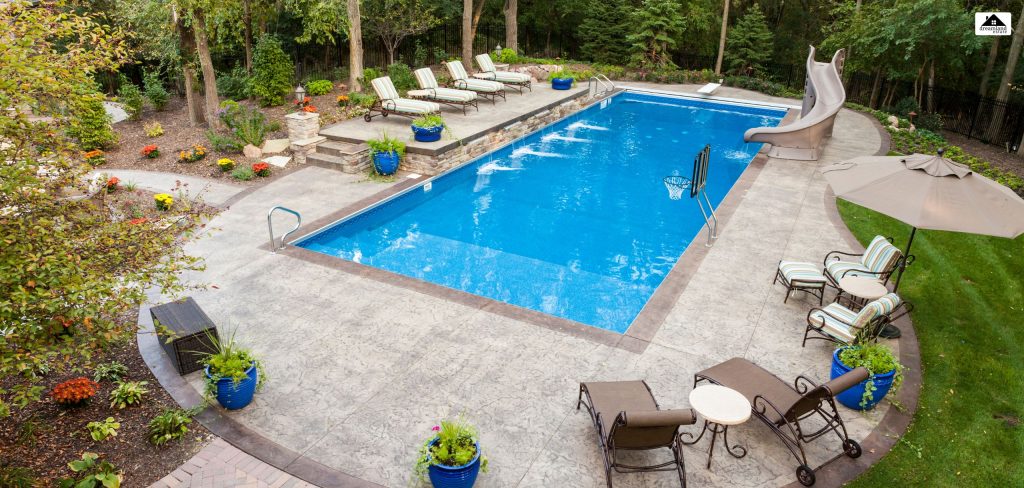
Saltwater might feel like a dream for your skin. However, it can be a nightmare for your backyard materials.
If you are not careful, the hidden corrosion tax will quickly eat into any savings any savings you found in the saltwater vs chlorine pool maintenance cost math.
1. The “Soft Stone” Danger
You just watch out if your pool features Travertine, Flagstone, or Limestone. These are porous soft stones.
Saltwater absorbs into their porres, evaporates and further l;eaves behind the expansion of salt crystals.
This process is known as spalling. It can cause your expensive stone to flake or pit within just a few seasons.
Furthermore, to save your deck, you must use a heavy-duty, salt-resistant sealer and install a sacrificial zinc anode to draw away the corrosive electrical current.
2. Equipment Damage
Salt doesn’t just target stone. It loves metal too. This salt can corrode three things:
- Metal furniture,
- Pool ladders, and
- Heater cores
It can leave them up to five times faster than a traditional chlorine system.
So, if you do not perform the regular fresh-water rinsing and proper cathodic protection, you could be looking at a total equipment overhaul years earlier than expected.
Health Benefits: Why Families Prefer Saltwater
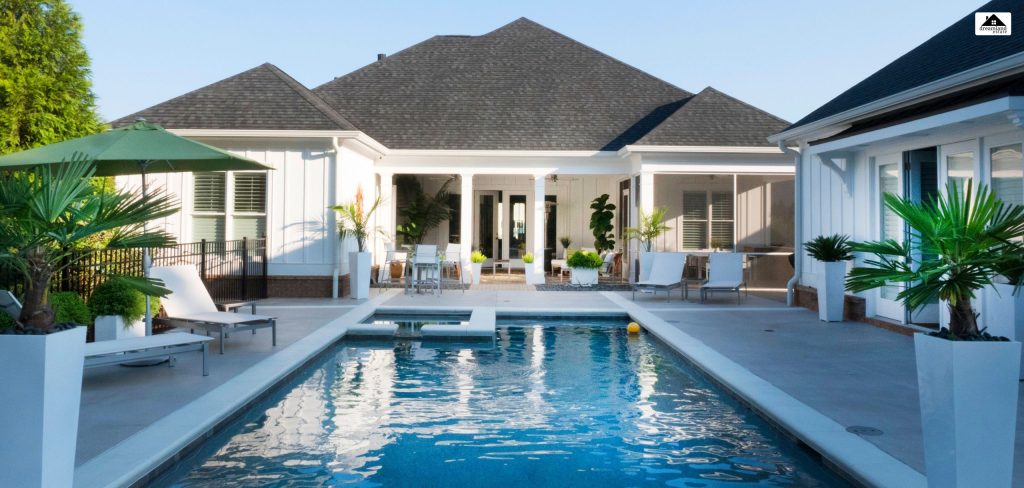
Most families choose saltwater for how it feels on their skin. It can go beyond the saltwater vs. chlorine pool maintenance costs,
So, if you have kids who practically live in the water, the health benefits can be a total game-changer.
1. The “No Red Eye” Factor
Have you ever noticed that “pool smell”? That’s actually chloramines. It is like byproducts that cause stinging red eyes and itchy skin.
Moreover, the saltwater systems naturally break these down more efficiently. This makes the water much gentler. So it can be helpful for children dealing with asthma or sensitive eczema.
2. The “Soft Water” Feel
Think of your pool as a giant water softener. The salt levels are low. It is about the same as a human tear.
However, they create a silky, moisturized sensation. Instead of feeling chalky or dried out after a swim, your skin and hair stay soft.
It’s a spa-like experience right in your backyard.
Cost To Convert Chlorine Pool To Saltwater (Is It Worth It?)
Before you make the decision for the switch, you must take a look at the actual cost to convert a chlorine pool to saltwater in 2026.
It is a significant investment. Thus, you need to be sure it fits your timeline.
The 2026 Price Tag
Converting isn’t just about dumping bags of salt into the water. You need a saltwater chlorine generator (SWCG) installed in your filtration plumbing.
- DIY Kit: If you are handy with PVC and basic wiring, you can expect to spend $1,200–$1,800 on a quality system.
- Professional Install: For a pro to handle the plumbing, electrical bonding, and setup, your total will likely land between $2,200–$3,500.
ROI Calculation: Should You Do It?
Now you might be wondering: Is it worth it? Well, that depends on your “Move-Out” date.
You can skip the selling in less than 2 years of timeline. This way, you likely will not recoup that $2,500 investment in your home’s sale price.
Now, if you are staying for 5+ years? Then absolutely yes.
While the saltwater vs. chlorine pool maintenance costs break even over time, the real ROI is your “freedom.”
This way, you will spend less time hauling heavy chlorine jugs and more time enjoying the water.
Expert Tips For Pool Owners (Salt & Chlorine)
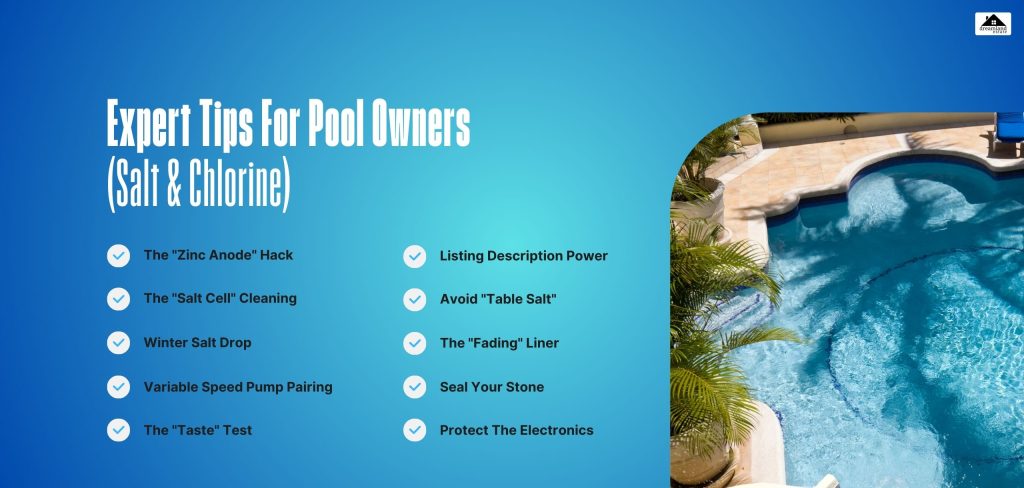
If you truly want to master the saltwater vs chlorine pool maintenance cost, in that case, you need more than just a chemical kit.
No worries, you just need a strategy to protect your equipment and your home’s value. Here are ten expert hacks to keep your backyard paradise running smoothly.
1. The “Zinc Anode” Hack
You have to grab a zinc anode for about $50. It’s a “sacrificial” piece of metal. This metal can take the hit from corrosion so your expensive heater and handrails stay pristine.
2. Listing Description Power
Now, if you’re selling a house with a chlorine pool, don’t just list “pool.” You have to use the phrase “Traditional Chlorine (Easy-Convert Ready)” to snag those salt-obsessed buyers. Write it in as much details as you can!
3. The “Salt Cell” Cleaning
Calcium is the silent killer of salt cells. So, if you want to increase your cell’s lifespan by 2 years, you just have to soak it in diluted acid every 3 months. That’s a potential $900 saving right there.
4. Avoid “Table Salt”
You have to stick to 99.8% pure pool-grade salt. Do not choose the kitchen salts. It often has iron impurities that can leave nasty, permanent stains on your liner.
5. Winter Salt Drop
Most generators take a nap when the water hits 60°F. When it gets cold, you must switch back to manual liquid chlorine to keep the water from turning green.
6. The “Fading” Liner
Chlorine tabs can bleach the area around your skimmer. Saltwater systems prevent that “washed-out” look, keeping your pool looking showroom-ready for years.
7. Variable Speed Pump Pairing
For the best results, pair your system with a variable speed pump. Running it 24/7 at low speed creates a steady, perfect stream of chlorine.
8. Seal Your Stone
If you have flagstone or limestone, apply a heavy sealer every 12 months. This salt can literally turn unsealed stone back into powder.
9. The “Taste” Test
Always educate your buyers! Saltwater pools have about 3,000 ppm of salt. This is roughly the same as a human tear. It’s nothing like the salty ocean.
10. Protect The Electronics
If you take look at it, the Control boards are expensive ($500+). So, if you live in a lightning-heavy area, you can install a surge protector to save your system from a fry-up.
Conclusion: Which Pool Wins The Listing War?
So, which pool actually wins the listing war?
In conclusion, the answer depends on your goal in 2026. Saltwater wins for pure desirability and “wow factor,” while chlorine wins for long-term durability and lower equipment risk.
The truth is, the best pool isn’t just about the salt. It’s about how well you care for it. A sparkling chlorine pool beats a cloudy saltwater pool every single time.
However, if you are selling your home this year, making the switch is a power move.
For a roughly $2,000 investment, you eliminate the biggest buyer objection: “Pools are too much work.”
By normalizing the saltwater vs. chlorine pool maintenance costs, you make your home move-in-ready and stress-free.




Leave A Reply