





How To Sell A Retirement Flat Quickly: Smart Pricing, Exit Fees, And Quick-Sale Secrets Revealed

Selling a retirement flat can feel like an uphill battle, especially if you are aiming for a quick move.
In fact, these properties often take longer to sell than standard homes due to a limited buyer pool, strict lease rules, and concerns about depreciation.
However, you can easily speed up the process with the right approach.
So, to help you get started on the right foot, you need to keep these three vital tips in mind:
- Engage the community: Spread the word to neighbors and the onsite management team, as local word-of-mouth is incredibly powerful.
- Watch for exit fees: Be fully prepared for sneaky transfer fees you must pay directly to the developer when you sell.
- Price it right: Smart, realistic pricing prevents your flat from sitting empty while racking up expensive monthly service charges.
Read this article for more detailed guidance on how to sell a retirement flat quickly.
What Is The Concept Of Retirement Flats?
Retirement flats are cozy homes in special communities built just for older adults, usually over 55.
They are perfect for retirees who want to downsize while staying independent.
On top of that, these lovely spaces make life easier with handy features. This includes:
- Ramps,
- Lifts,
- 24/7 emergency call systems.
Living here also means you get awesome perks. For instance, you can enjoy beautiful gardens, on-site cafes, and fun social activities with friendly neighbors.
However, if you ever need to move on, you might wonder how to sell a retirement flat quickly.
You just need to find a warm and professional team of solicitors who can help you handle the paperwork smoothly.
These properties offer the perfect mix of freedom and everyday support.
Retirement Flats Are Not Selling: Know The Reason Why?

Even though retirement flats sound great, selling them can sometimes be a bit of a headache.
In fact, research shows that about half of these flats don’t find a buyer on the first try.
If you are facing a slow market, understanding the main hurdles can help you sell a retirement flat quickly.
A. A Smaller Pool Of Buyers
First of all, these homes have a very limited market. Since they are restricted to people over 55 or 60, you lose a massive chunk of everyday homebuyers.
On top of that, older buyers are usually very picky about location.
They want to be super close to doctors, shops, and family, which makes the buyer pool even smaller.
B. Pricey Extras And Hidden Fees
Another massive roadblock is high service charges.
Developers regularly charge over £7,000 a year, and we have even seen luxury places top £20,000 annually.
This goes straight to pay for on-site managers, emergency buttons, and nice gardens.
And the worst part is that the family still has to pay these heavy bills even if the flat sits empty.
Buyers also get scared off by “exit fees.” This can eat up an average of 12% of the final sale price when you move.
C. Complicated Lease Issues
Additionally, leasehold issues cause many sales to fall through. If the property has a short lease or expensive ground rent, buyers simply walk away.
Luckily, if your lease is running low, our expert conveyancing solicitors can kickstart the lease extension process for you so the new buyer can take over smoothly.
D. Value And Saturated Markets
Finally, there is a big worry about depreciation. Sadly, standard property prices usually go up.
However, Land Registry data reveals that 59% to 75% of major retirement builds actually lose money when resold.
Buyers are naturally quite cautious, with an average loss of around 16% to 18%.
Consequently, getting the right help early on is absolutely essential.
Reason? Well, it takes an average of 78 days to sell these homes compared to just 50 days for regular flats.
How To Sell A Retirement Flat Quickly?
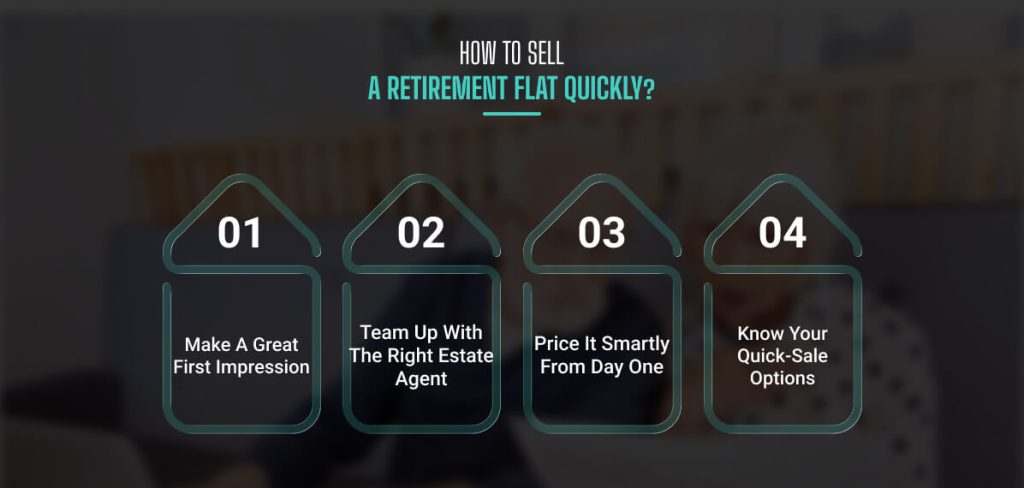
The market can be slow, averaging 78 days to find a buyer compared to just 50 days for normal flats.
There are some excellent, practical steps you can take to speed things up.
1. Make A Great First Impression
First, make sure the property looks amazing at first glance.
This means deep cleaning, clearing out personal clutter, and fixing minor issues like loose doorknobs.
A fresh coat of neutral paint can work wonders, helping buyers imagine their own furniture in the space.
To give your property an extra edge, focus on these presentation details:
- Professional staging: Arrange furniture and décor to make rooms look bright and spacious.
- Highlight the perks: Create a list of community benefits, such as the social calendar, gardens, or 24/7 security.
- Spruce up the entry: Clean up the front door area, as older buyers highly value safety and accessibility.
2. Team Up With The Right Estate Agent
Next, do not just pick any random estate agent. Instead, look for a specialist who truly understands how retirement developments work.
A great agent will know how to market the flat to the right audience. This includes the adult children who often search on behalf of their elderly parents.
You need to ensure your listing has high-quality photos and virtual tours, to get people through the door,
Additionally, you can tell the onsite manager and the neighbors that the flat is available.
Sometimes, word of mouth within the community is the fastest way to find a buyer.
3. Price It Smartly From Day One
Another vital step is getting the price right. Overpricing your flat will only leave it sitting on the market, because 59% to 75% of retirement homes depreciate and lose value upon resale.
Meanwhile, empty flats continue to rack up expensive service charges that average over £7,000 a year.
Look at recent local sales and set a highly competitive price right away. This can help you to avoid all those ongoing costs.
4. Know Your Quick-Sale Options
Finally, if you are in a massive rush or dealing with a stressful inherited property, you have a couple of alternative routes to get a fast result:
- Property-buying companies: These firms offer cash and can close a deal within weeks, though they will pay below market value.
- Modern property auctions: Auctions give you a fixed timeline and ensure the buyer cannot back out once the hammer falls.
- Conveyancing readiness: You can have your solicitors check the lease early so you can fix short lease or ground rent issues before a buyer asks.
Costs Involved In Selling A Retirement Flat

Selling a retirement flat comes with a unique set of bills that can catch many sellers off guard.
If you are trying to figure out how to sell a retirement flat quickly, keeping these expenses in mind will help you budget smartly and avoid nasty surprises.
1. The Cost Of An Empty Flat
First of all, you have to keep paying the service charges even if nobody is living in the flat.
On average, this costs about £525 a month (around £7,000 a year), but luxury retirement villages can charge much more.
Because these bills pile up fast while the property sits on the market, pricing your flat competitively from day one is the best way to stop the financial bleed.
2. Exit Fees And Lease Extensions
Another major expense to look out for is the “exit fee” or transfer fee. This is a charge written into the lease that you must pay to the landlord or developer when you sell.
While a 1% or 2% fee is common, industry data show that exit fees average around 12%—and can even soar to 30% or 35% in luxury developments.
Additionally, you might need to extend the lease to attract buyers. Sprucing up the paperwork involves a few steps:
- Surveyor valuation: A local RICS surveyor charges around £600 to figure out your lease extension premium.
- Legal setup: Formal solicitor fees for a lease extension start at £720.
- The premium: This is the actual cost paid to the freeholder to extend the lease by additional years.
3. Agent, Legal, And Marketing Fees
Naturally, you will also need to cover standard moving costs. This includes estate agent commissions and conveyancing fees to handle the legal paperwork.
It is often worth spending a little extra on premium online listings, professional photos, or virtual video tours.
And you can make your property stand out in the marketplace.
4. Capital Gains Tax (CGT)
Finally, do not forget about taxes. You might owe Capital Gains Tax on any profit you make if you are selling a flat that you inherited, or one that isn’t your main home.
What To Look Out For Before Buying A Retirement Flat?
Many retirement flats look absolutely stunning, offer fantastic social perks, and sit in highly convenient spots.
However, before you jump in, it is wise to know how to navigate the trickier sides of owning one.
If your plans change later on, being prepared now ensures you won’t have to struggle with how to sell a retirement flat quickly.
1. Talk It Over with Family
If you want to leave a smooth inheritance for your family, definitely involve them in the decision early on.
Sadly, if you pass away and the flat sits empty, your loved ones inherit the responsibility of paying hefty monthly service charges until it sells.
Real-World Warning: Some grieving families have faced bills over £60,000 covering empty-flat fees, ground rent, and council tax while trying to sell a home over several years.
To protect your family’s finances:
- Take them to viewings: An extra pair of eyes helps you check the numbers with a clear head.
- Budget for the worst case: Discuss how they would cope financially if the flat takes months or years to sell.
- Watch out for double tax: Empty properties can sometimes trigger expensive second-home council tax premiums.
2. Hunt for Pre-Owned Resales
Next, consider existing resale properties rather than brand-new ones. You can often pick up a pre-owned flat on sites like Rightmove or Zoopla for a major bargain.
This is because reselling a later-living property can be quite tough. Just keep these fee rules in mind:
- Service charges: You will still have to pay these every single month, regardless of whether the flat is new or old.
- Ground rent: Most new leases created after April 2023 have a legally permitted £0 ground rent.
However, older resale flats might still carry expensive yearly ground rent bills.
3. Dig into the Fine Print
Never skip checking the rules written into the property lease. Some developments feature strict clauses that can make a future move highly stressful.
Before signing, have your conveyancing solicitor double-check the lease for:
- Subletting bans: Rules that completely block you from renting the flat out to help cover costs.
- Forced redecoration: Clauses requiring you to completely repaint the flat at your own expense before selling.
- Punitive exit fees: Sneaky charges that take a massive cut of your final sale price when you eventually move out.
4. Get Expert Guidance & Explore Renting
You must always consult an independent financial adviser before making a final decision. This way, you can ensure you can afford the service charges in the long run.
Renting a retirement flat is a fantastic alternative if the upfront buying costs and future resale risks seem too high.
Moreover, renting lets you enjoy the lovely community gardens, lounges, and on-site support. And you do not even have to worry about:
- Exit fees,
- Falling property values,
- Future sales hurdles.



Leave A Reply