





How To Buy A House At Auction: The Hidden Secrets To Snagging A Bargain Today!

How to buy a house at auction? Buying a home can be a wild ride, especially if you are learning how to buy a house at auction.
Basically, an auction happens on a set day and time. The auctioneer calls out for bids, and the highest bidder wins the property.
However, this only counts if the bid hits the seller’s secret minimum price.
Traditional auctions are “unconditional.” This means you must sign the papers and pay a deposit right then and there.
After that, you usually have 28 days to pay the rest. If you change your mind later, you will lose your deposit and owe extra fees.
Keep in mind, this guide covers traditional auctions. Another option is the Modern Method, which works a bit differently.
How Can You Find Properties That Are For Sale By Auction?

So, you want to learn how to buy a house at auction? First, you need to find the right property. Fortunately, there are two super easy ways to do this.
First, check out popular websites to search for properties as usual, then turn on the “auction” filter to hide standard sales.
Another simple trick is to Google your target town or area along with the word “auction.”
Second, reach out directly to local auction companies. Ask them for their latest property catalog and sign up for their regular email updates.
For a truly massive list of upcoming events across the country, check out trusted sites like the UK Auction List or the Essential Information Group.
Just remember, time moves incredibly quickly. You usually only get about four weeks to browse the list before bidding starts. So, if you spot a great place, act fast!
Things To Do Before A House Auction
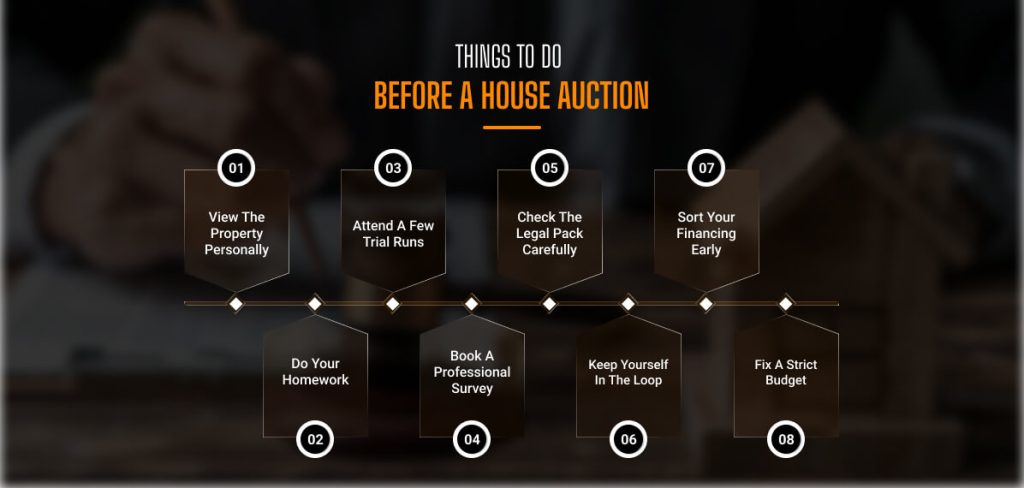
The secret to the success of how to buy a house at auction mainly lies entirely in preparation.
Bidding on a whim can lead to major regrets. Here is a friendly pre-auction checklist to keep things running smoothly and successfully.
1. View The Property Personally
First, you need to browse the catalog and pick your favorites. Always book an in-person viewing before you even think about bidding.
Moreover, you need to keep an open mind, as many auction homes need a lot of love.
It is a fantastic idea to bring a builder along so you know exactly how much repairs might cost.
2. Do Your Homework
Never trust the guide price alone, as it is usually set low to attract attention.
Instead, chat with a local estate agent and neighbors. Lastly, you need to compare the house with similar properties nearby to find its true value.
3. Attend A Few Trial Runs
You also need to go watch a few live auctions before risking your own cash. This helps you get used to the fast pace and understand the overall vibe.
4. Book A Professional Survey
Skipping a home survey can be a financial nightmare. If you buy a house with hidden structural flaws, you are stuck with it.
Spending a bit of money upfront on a surveyor protects you from buying a total money pit.
5. Check The Legal Pack Carefully
The auctioneer will give you a legal pack. This contains:
- Title deeds,
- Local searches,
- Lease details.
Do not read this alone. Hire a conveyancing solicitor to look for hidden rules or loopholes that could cost you later.
6. Keep Yourself In The Loop
If you fall in love with a property, ask the auctioneer to keep you updated. Sometimes, sellers accept offers before the auction even starts.
7. Sort Your Financing Early
Can you use a mortgage? Yes, but you must move fast. Get a mortgage in principle before auction day.
Remember, you must pay a 10% deposit immediately upon winning, and mortgage funds usually cannot be used for this.
You then have a very short time, often just 28 days. to pay the remaining 90%.
Some buyers look into short-term bridging loans because standard mortgages take time to process.
However, these can be expensive. So it is vital to speak with a financial advisor first. If you miss the deadline, you could lose your deposit and face legal costs.
8. Fix A Strict Budget
It is incredibly easy to get caught up in the excitement and overspend. Decide on your absolute maximum bid before you walk in, and promise yourself that you will stick to it.
Remember, your home or assets may be at risk if you do not keep up with repayments on a mortgage or any debt secured against them.
Ways You Can Win At The Auction!

When mastering how to buy a house at auction, the big day can feel both thrilling and nerve-wracking.
However, staying organized ensures everything goes your way. Here are top tips to help your auction day go smoothly:
- Arrive early
Arrive early to find a comfortable spot. Make sure you sit or stand so the auctioneer can clearly see your hand.
- Keep calm
It is easy to get overwhelmed by the fast pace. Take a deep breath and keep a cool head so you make smart decisions.
- Stick to your budget
Never get caught up in a bidding war. Always remember that if you miss this property, another great one will come along.
- Get bidding help
If you feel too nervous to bid, you do not have to do it alone.
Alternatively, you can hire an agent or solicitor to bid on your behalf. Many auction houses also allow phone or proxy bidding.
- Bring your paperwork
You must carry two forms of ID, like your passport and a utility bill. Additionally, bring solid proof that you can pay the 10% deposit instantly.
- Do not despair
If the bidding falls short of the seller’s reserve price, do not walk away. Instead, stick around and chat with the seller at the end, as they might still accept your highest bid.
How To Buy A House At Auction: Advantages And Disadvantages?
Before learning how to buy a house at auction, it is incredibly important to weigh the pros and cons.
While auctions offer amazing opportunities, they also come with a few serious risks you need to consider carefully.
| Pros (The Perks) | Cons (The Risks) |
|---|---|
| Find Unique Bargains: Perfect for spotting unusual properties that regular estate agents miss. | Lost Upfront Costs: You lose your survey and research funds if your bid doesn’t secure the contract. |
| No Property Chains: You avoid the long, annoying delays of standard house buying chains. | Pre-Auction Sales: Someone could buy the property before the auction day. |
| Instant Certainty: The deal is legally locked the very second the hammer falls. | Deposit at Risk: You lose your cash deposit if your funding falls through after winning. |
| Zero Gazumping: Every bid is out in the open, so no one can outbid you in secret. | Hidden Flaws: You are legally stuck with the property even if you find massive structural issues later. |
What to Do Immediately After You Win
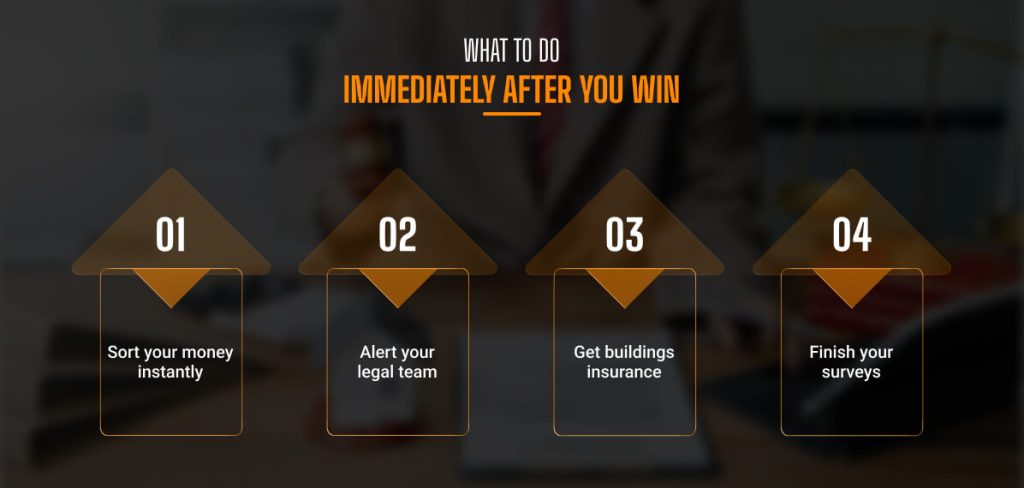
The moment you win the property, your next steps must happen without any delay:
- Sort your money instantly
Call your mortgage broker immediately to submit your full application.
If you are using a short-term bridging loan instead, kickstart that process right away.
- Alert your legal team
Contact your conveyancing solicitor to let them know that the official sale has been agreed.
- Get buildings insurance
You are legally responsible for the building the second the hammer hits the desk, so put insurance in place on day one.
- Finish your surveys
If you did not get a home survey done before bidding, find a qualified surveyor to complete it for you now.
Please remember that your home or assets could be repossessed if you do not keep up with regular repayments on any mortgage or loans secured against them.
Can a First-Time Buyer Use Auctions?
Yes, absolutely! Buying your very first home at an auction is totally possible. In fact, you have a huge advantage because you do not have another house to sell first.
However, it is definitely not for the faint-hearted. With a normal house sale, you can walk away freely before swapping contracts.
At an auction, you are locked in instantly. If you pull out, you lose your deposit and face extra costs. Therefore, doing deep research is vital.
Who Pays the Auction Fees?
Generally, the seller pays the main auction house fees. However, as a buyer, you still need to budget for your own legal fees, stamp duty, and immediate buildings insurance.
For the seller, traditional auction houses usually charge around 2.5% of the final sale price.
This rate is typically higher than standard estate agent fees, and sellers may also have to pay additional upfront advertising costs.
Why Do People Sell Homes at Auction?
Sellers choose auctions for a few key reasons:
- Speed and certainty: They want a very fast sale and total peace of mind that the buyer cannot pull out.
- Bidding wars: High demand from multiple competitive buyers can quickly drive the final price up.
Tricky properties: If a house is run-down or unusual, it is often much easier to sell to auction investors than to normal families.




Leave A Reply