



What to Know Before You Pay A Buyer’s Closing Costs?
The costs of buying property have been constantly going up and up for quite some time now. This is because of the rising population in every country and the unavailability of land to build new houses on. This has created a lot of financial issues for both buyers and sellers of property.
However, one common thought that every buyer gets in their mind is to let the seller pay for the closing costs of purchasing a property. These costs are extra costs you pay to the bank or a lender if you have taken a home loan.
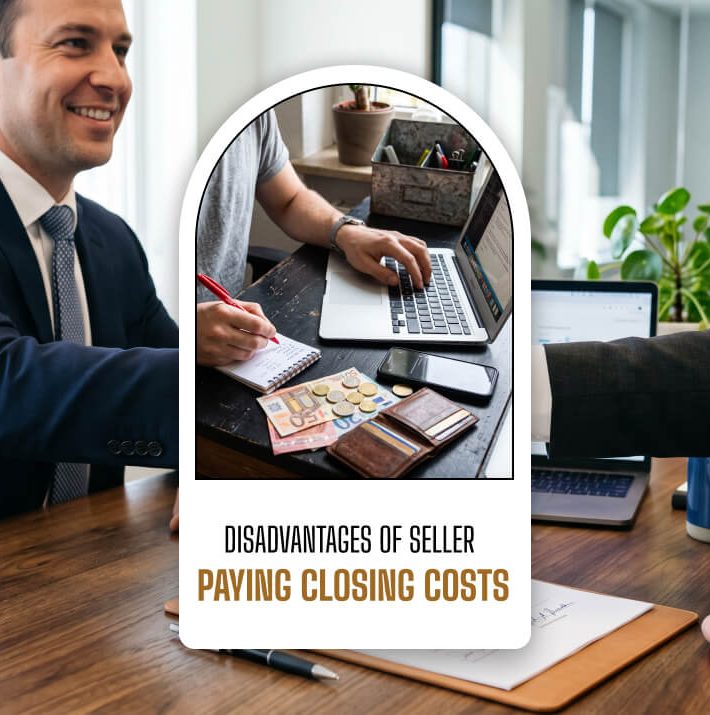
However, the disadvantages of seller paying closing costs is a lot higher than you think for the seller. This is what many new real estate buyers do not know or understand.
Therefore, this article will be dedicated to explaining the concept of closing costs during real estate transactions and why it is disadvantageous for the seller.
What Are Closing Costs?

Closing costs are the expenses that are associated with the purchase of real estate from the end of the buyer. These are generally considered to be extra expenses. Such expenses are incurred if the buyer takes a loan from a bank or a money lender.
Think of it as a commission that you pay to your lender for providing you with the loan. The amount of money one pays as closing costs depends on the value of the property and its location. Also, the appraisal of the property in the future is also calculated as part of the closing costs.
For example, if you wanted to know how much are closing costs in Ohio compared to how much are closing costs in pa will be vastly different because of the location and initial price of the property.
Who Pays What? Breaking Down Buyer vs. Seller Closing Costs
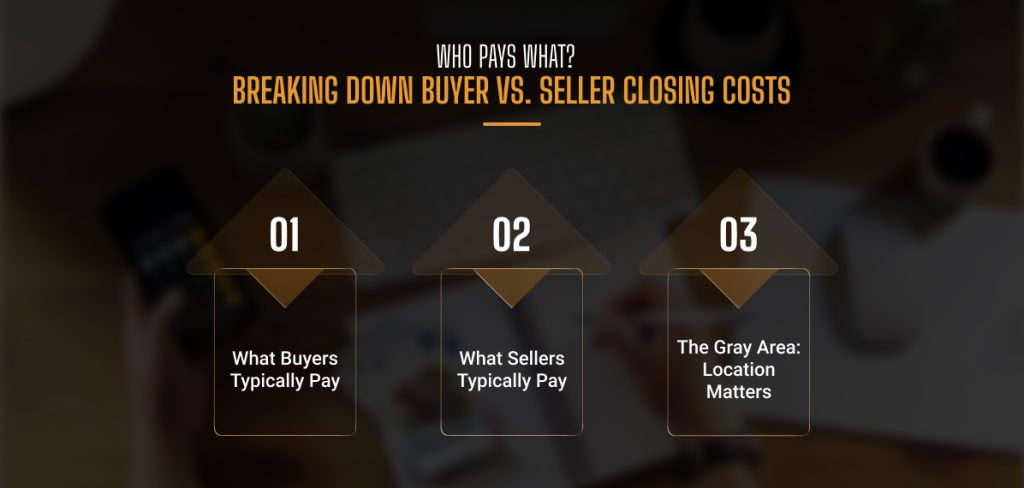
When you finally reach the closing table, both buyers and sellers have their own set of fees to pay. Generally, each party covers the specific expenses they incur during the home sale. However, local customs and your specific location play a massive role in who handles certain gray-area fees.
What Buyers Typically Pay
Buyers usually cover costs tied to getting their mortgage and checking the home’s condition:
Loan fees: This includes mortgage origination charges and discount points.
Lender’s title insurance: Protection required by the bank for their loan.
Appraisal fee: The cost to confirm the home’s market value.
Property inspections: Independent checks for structural or pest issues.
Tax adjustments: Prorated real estate taxes up to the closing date.
What Sellers Typically Pay
Sellers generally pay fees associated with transferring ownership and clearing the title:
Agent commissions: The fees for both the buyer’s and seller’s agents.
Loan payoff: The remaining balance on the seller’s current mortgage.
Transfer taxes: Government fees for recording the deed transfer.
Owner’s title insurance: Protection for the new buyer’s ownership rights.
HOA documents: The cost to provide neighborhood rules and bylaws.
The Gray Area: Location Matters
Some expenses, like the final settlement or escrow fee, aren’t set in stone. Instead, your local state and county customs decide who pays.
For instance, in Arkansas, buyers and sellers typically split the settlement fees right down the middle.
Flip over to California, and it changes by county. In San Francisco, the buyer pays the escrow fee, but in Los Angeles, the buyer and seller split it.
Because these rules vary by zip code, it is always smart to ask a local real estate expert for guidance.
Types Of Closing Costs

There are many disadvantages of seller paying closing costs because of the different types of closing costs. Some of these costs are:
- Application Fee: Most money lenders will request you to pay an application fee upfront for issuing the loan. This varies between each lender, but it goes to a maximum of $550.
- Property Appraisal: The prices of all forms of real estate will increase over time because the cost of housing and living is increasing every day. In this case, there are many disadvantages of seller paying closing costs because the moneylender will calculate the appraisal through a property appraisal firm. This generally amounts to somewhere between $350 to $550.
- Attorney Charges: In many federal states, you will not be able to receive any housing loans without the permission of a real estate attorney. The closing costs also include their service fees.
- Escrow Funds: This refers to money that the loan lender or the bank takes from you in advance of processing the loan. The lender then pays off other costs on your behalf using that money. Around two months of escrow funds are calculated as part of closing costs.
- Mortgages and Insurances: There are many types of mortgages and insurances like FHA mortgage insurances, homeowners insurance, lenders’ title insurance, and owners’ title insurance. All of these are collectively added to your closing costs.
- Property Tax: Whenever brick houses are bought, you have to pay a certain amount of property tax to the government.
Why Would A Seller Pay For Closing Costs In The First Place?

If you are a home seller, there might be a variety of reasons for which you would like to pay for the closing costs of the buyer. One reason among many can be the fact that the closing costs can solidify the deal of the business if, somehow, the buyer does not possess enough cash to make the down payment or cover the closing costs.
Another reason why a seller would like to pay the closing costs is the fact that it would let the business stand out in the market. This can be a great thing to do if the business wants to attract more buyers, as it will help them potentially close the table faster.
However, there are some limits up to which a seller can contribute towards the closing cost of a buyer. According to MoneyTips.com,
“Seller concessions can help bring home ownership within reach for many buyers. But, if the buyer is taking out a mortgage, certain loans could limit how much (and what) a seller can contribute toward the buyer’s closing costs.”
There are certain concession limits given by the government, which you can easily check out on the Internet.
Disadvantages Of Seller Paying Closing Costs

The primary disadvantages of seller paying closing costs are:
Sales Price Gets Higher

Merchants aren’t paying your finishing costs off of the integrity of their souls. In most cases, when a merchant pays a purchaser’s end costs, it really brings about a higher deal cost.
Moreover, in very few cases will a merchant through, and through cover, finishing costs off of their own pocket. In many situations, you’ll consider higher deal costs to be an outcome.
The Property Might Not Get An Appraisal

On occasion, the concessions mean a higher deal value; you could wind up facing examination issues – and potential supporting issues.
On the off chance that you’re utilizing a home loan advance to pay for the home, your moneylender will probably arrange an examination, fundamentally evaluating the home’s estimation. On the off chance that the home evaluates at the cost of the new deal, you’re free, and your loan specialist will give you the assets you really want to purchase the house.
However, on the off chance that the home doesn’t hit that new, higher deals cost? Then, at that point, you’ll experience some difficulty. Your home loan moneylender will just give you the evaluated sum, and you’ll have to compensate for any shortfall (between the assessed esteem and the cost of the last deal) using cash on hand.
Bigger Downpayment
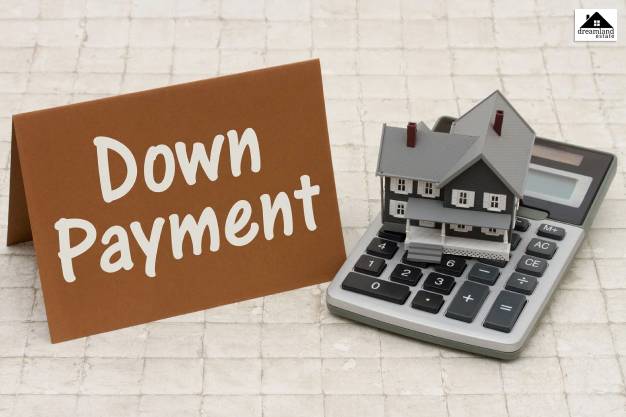
Up-front installments are determined as a level of your absolute advance equilibrium. This proves the point that there are many disadvantages of seller paying closing costs.
For instance: On an FHA advance, you really want to make essentially a 3.5% upfront payment.
On a $300,000 advance, that is $10,500. Assuming you request shutting expenses and that surplus goes up to $305,000, your upfront installment prerequisite leaps to $10,675.
While another $175 doesn’t seem like much from the beginning, when you couple it with the additional thousands you’re spending in revenue, it could mean a great deal of squandered cash over the long haul.
Higher Interest Rate

At the point when a merchant concession prompts a higher home loan advance sum, it implies more interest costs, as well. Here is a speedy model: Let’s say you require a 30-year advance for $300,000, and you get a 3.5% financing cost. Without requesting that the merchant pay shutting costs, you’ll wind up paying $184,968 in interest over the 30-year term.
Potential For Fraud

This is one of the least talked about reasons when it comes to the consequences of a seller paying closing costs for the buyer. As already discussed that there are several federal limitations for the seller to pay the closing costs of the buyer. These limitations are also known as interested party contributions (IPCs).
According to SuperMoney.com,
“These concession limits apply not only to the seller but also to a builder, developer, or real estate agent. The regulations are in place partly because it’s believed that excessive concessions can lead to artificially inflated housing prices.”
It means that as a seller or as a part of any interested party if you try to exceed the limitations of concession set by the federal government, it can be considered as a fraud. Here, you are basically breaking the boundaries set by the govt. It will be considered an “under the table” action, which is, by itself, illegal.
Furthermore, there are many loan regulations as well, which both the seller and the buyer need to be aware of. This restricts how much seller concessions you can offer. The limitations for the closing costs are between 2% to 9% of the price of the purchase.
How Much Can a Seller Help Pay for Your Closing Costs?
When you buy a home, sellers can offer to help pay your closing costs. This is called a seller concession.
However, banks impose strict limits on this because large credits can inflate a home’s actual value.
If a house price gets pushed too high just to cover closing costs, the bank risks loaning more than the home is actually worth.
Consequently, your exact limit depends entirely on your loan type:
Conventional Loans
Your limit is tied to your down payment. If you put down less than 10%, the seller can only contribute up to 3%. If you put down 10% to 25%, the limit jumps to 6%. Put down more than 25%, and it tops out at 9%.
FHA Loans
Sellers can give up to 6% of the price. This includes perks like repair or moving allowances.
VA Loan
The government caps extra perks at 4%, but normal closing costs don’t count toward this limit.
USDA Loans
You get a solid 6% cap for your closing costs.
Ultimately, if a seller goes over these limits, the lender will simply lower the home’s purchase price.
Knowing these rules early keeps your home closing completely smooth and stress-free!
Creative Ways Sellers Can Help Buyers Lower Their Home Costs
Sellers can easily attract buyers and further make their property stand out without simply handing over the standard closing-cost credits.
You can significantly reduce a buyer’s upfront costs while protecting your bottom line by offering smart alternatives.
Consequently, these incentives give buyers peace of mind and make your home much more affordable.
Here are four creative ways to help buyers with their home purchase costs:
Gift a Home Warranty: Firstly, this policy covers major appliance repairs for the first year.
Prepay HOA Fees: Covering Homeowners Association dues for 12 months slashes their monthly bills.
Offer Repair Credits: Also, buyers get cash at closing to fix issues themselves later.
Include Premium Appliances: Leaving the refrigerator, washer, and dryer saves them thousands upfront.
Ultimately, these strategic perks create a win-win scenario that can secure a faster, smoother sale.
Read Also:




Leave A Reply