





Best Degreasers For Kitchen Cabinets: How To Remove Grease Without Damaging Your Finish

If you are planning on painting your kitchen cabinets a fun color like rustic sage green, you may be tempted to just start painting.
But don’t just trust me, wiping them with a damp cloth will not work! It is absolutely necessary not to skip the degreasing step because paint simply won’t stick to oil and dirt.
After years of cooking in my kitchen, I realized that there is a substantial layer of sticky residue on those doors, even if it is invisible to the naked eye.
In other words, if you decide to paint over it, you will have trouble obtaining a smooth, clean finish on your newly painted cabinets.
Besides, those hard-to-remove stains will reappear by leaking through your fresh paint job, and you’ll be reminded of them.
That is why it is so crucial to get the best degreaser for kitchen cabinets to achieve a professional appearance.
After trying many different methods on my own cabinets, I am now revealing my best choices to help you start your painting project the right way!
Before We Get Started….Know This!
First of all, if you do not want your kitchen cabinets to suffer during a cleaning session, keep in mind that the same cleaning method cannot be applied to all surfaces.
I have learned from personal experience that when dealing with maple wood kitchen cabinets, the finish really affects how they should be cleaned.
If you decide to go for the best degreaser for kitchen cabinets, you will need to determine which cleaner is appropriate for your cabinet surface to avoid messing up the finish.
Different Materials Call For Different Methods:
- Wood Cabinets: Water and acids are very harsh on them. If you decide to use vinegar, mix it with water and dry the wood immediately, as the vinegar can cause the wood to swell or warp.
- Painted Cabinets: If you use harsh or gritty cleaners often, the color can start to fade. Use a diluted solution and a microfiber cloth.
- Laminate Cabinets: They are very resilient! If you apply vinegar or baking soda, they will not cause damage, but a gentle hand is still recommended to prevent scratches.
Basically, identifying what your cabinets are made of will guide you most efficiently in deep cleaning them.
You will thank yourself later if you take a moment to examine your finishing now!
What Makes A Good Degreaser?
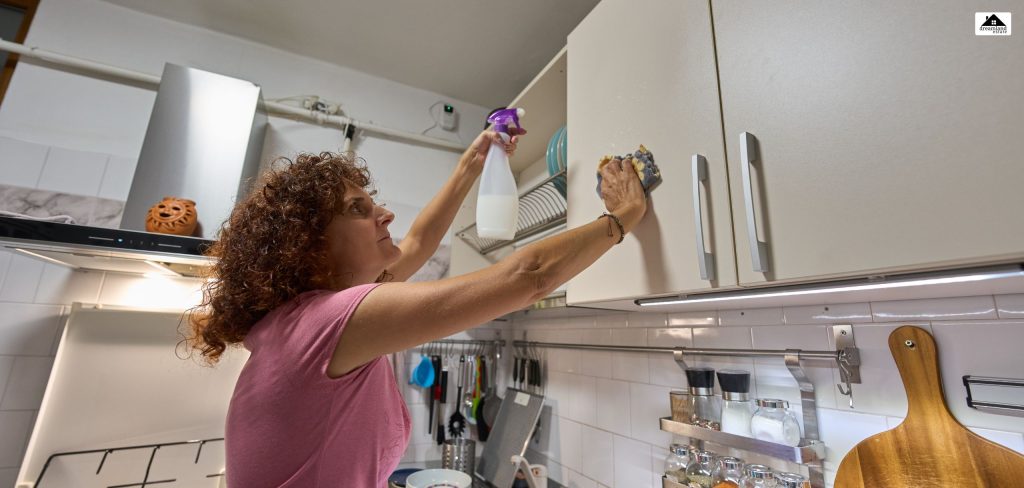
It’s quite easy to be fooled by fancy packaging that promises a “mirror shine” when choosing the right degreaser for kitchen cabinets.
I can testify from my experience with my own maple kitchen cabinets that the “strong” feature isn’t necessarily good.
Many heavy-duty cleaners can be too harsh for modern finishes like lacquer, laminate, or acrylic.
Although these materials are very resistant! They still can be damaged by the wrong chemical!
That can either remove the protective coating or leave a nasty, sticky film that is almost impossible to remove.
To protect your wood, you really should keep away from:
- Wax or Silicone: These only lead to buildup, making future touch-ups or repainting very difficult.
- Bleach or Ammonia: These chemicals are extremely harsh and can discolor or “burn” the finish.
- Abrasives: Anything containing grit will cause small scratches that will dull the wood over time.
- Strong Alcohols: These are capable of dissolving certain types of varnishes.
Simply put, an excellent cleaning product should combat grease effectively while being kind to the wood’s “skin.”
The key is to strike the right balance to keep your kitchen looking like new!
What Is The Best Degreaser For Kitchen Cabinets?
Most often, the easiest answer turns out to be the most effective one.
I have personally experienced different types of grime on my maple kitchen cabinets, including:
- Sticky cooking grease,
- Food splatters
- Oils that come from fingers
These are usually located around the knobs. Over time, the accumulated grease buildup can make the surface dull and make the cabinets sticky to the touch.
Mild dish soap is my sorting point for the following reasons:
- It breaks down grease: it cuts through oils and food residue right away
- It is finish-friendly: it can degrease effectively without harming the wood’s finish
Moreover, it does not cause heavy buildup: when compared to certain cleaners, it will not leave a waxy or sticky layer on the surface.
In the end, mild dish soap combined with warm water is the winner in my book after doing lots of trials with the products.
Almost any cabinet surface can be cleaned effectively with this method, and it is a routine cleaning. Most importantly, it is safe and easy.
What Are The Other Alternatives That You Can Choose?
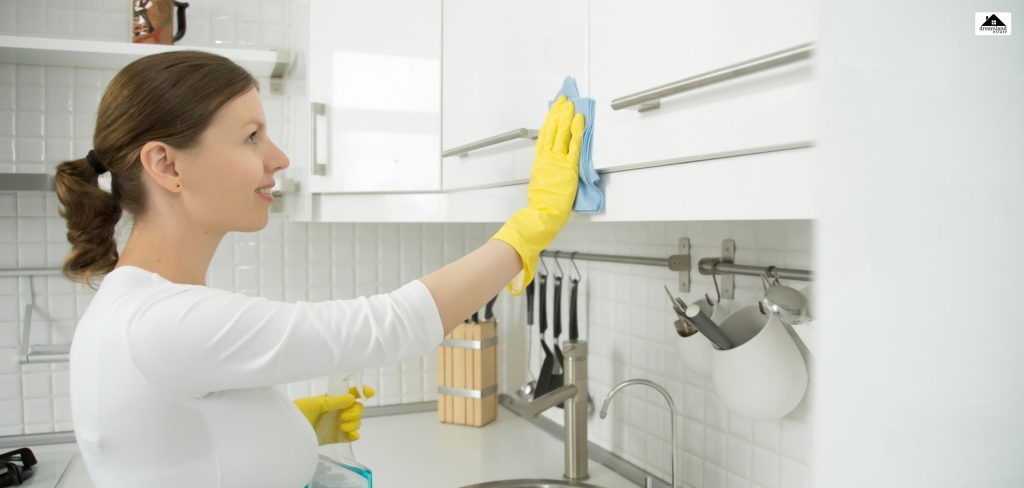
If the heavy-duty cleaners are not for you, don’t worry! Based on my experience cleaning my maple kitchen cabinets, I have found plenty of household items that work wonders.
If you want something more natural or gentle, here are the other alternatives that make for the best degreaser for kitchen cabinets.
1. Diluted Vinegar
Vinegar is a natural grease-fighter, but because I have maple wood, I always dilute it to protect the finish.
Mix equal parts warm water and white vinegar in a spray bottle.
For extra power, add a few drops of Dawn soap! It’s an amazing, budget-friendly way to cut through sticky layers.
How to use:
Lightly mist the surface and let it sit for five minutes. Wipe it away with a damp microfiber cloth, then dry it thoroughly to avoid water spots or streaks on the wood.
2. Oil Soap
If you want to be gentle on your wood, an oil soap like Murphy’s is the way to go. It cleans deeply while leaving a protective layer behind.
This helps my cabinets stay cleaner for longer and gives them a healthy, polished look that I absolutely love.
How to use:
Mix the soap with warm water in a bowl. Dip a cloth in, wring it out well, and gently scrub from top to bottom. Finally, wipe it again with a dry cloth to remove any leftover residue.
3. Baking Soda
For spot-cleaning those tough grease stains, baking soda is my go-to secret weapon. It is mildly abrasive by nature.
So it can remove dried-on grime while still protecting the paint or wood from scratches.
When you have “problem spots” that require a bit of extra scrubbing, baking soda is hands down the best grease remover for kitchen cabinets.
How to use:
Scatter baking soda over a wet cloth, then gently scrub the grease. You can create a dense mixture of baking soda and water, and spread it on the stain! After a few minutes, wipe it off with a fresh cloth.
4. All-Purpose Cleaner
All-purpose cleaners will quickly remove sticky dirt for you. Actually, I like making my own DIY products.
It’s a wonderful, multifunctional choice suitable for almost any cabinet surface.
It not only cleans very well and fast but also contributes to the pleasant smell of the kitchen as a whole, and does not rely on very strong industrial chemicals.
How to use:
In a bottle, combine water, vinegar, a small amount of dish soap, and a tablespoon of baking soda.
It is better to spray the cleaner onto a cloth rather than directly onto the cabinet. Wipe the surface from top to bottom, then dry it well.
6 Top Dergeasers For Kitchen Cabinets
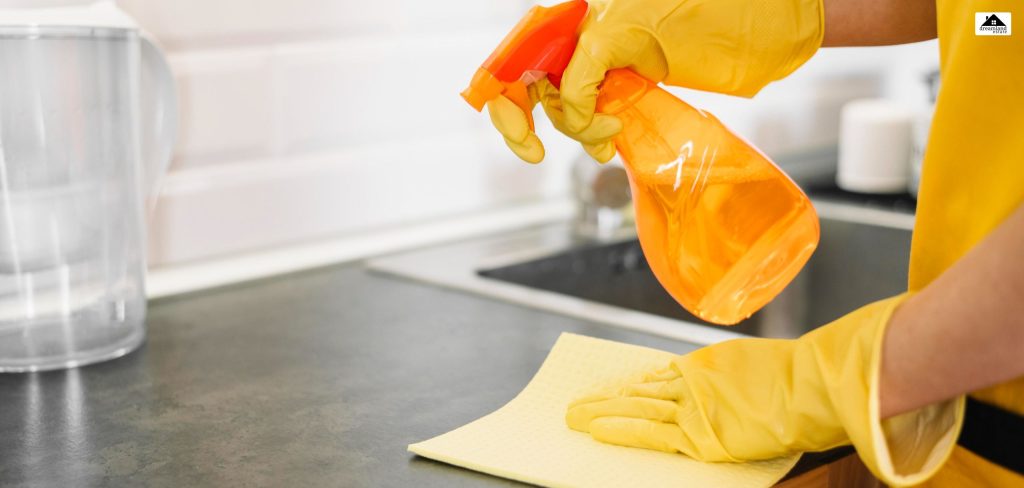
If your kitchen cabinets are made of maple, just like mine, you must know how gorgeous they look at first, only to slowly get spoiled by layers of cooking grease.
I have been changing methods of cleaning the sticky film off my cabinetry for years, trying all sorts of stuff.
Through the whole lot of experiments in my kitchen, I have stumbled upon the ultimate kitchen cabinet degreaser that makes the work really simple.
I have been personally using and only recommending these 6 degreasers:
1. Krud Kutter
I have found Krud Kutter to be the greatest kitchen cabinet degreaser for prepping before painting cabinets.
What I really like about it is that cleaning is basically just spraying and wiping. There’s hardly any unpleasant smell, so you won’t get to the point of holding your breath.
It acts like a charm on that sticky, dead-on maple wood grime.
How to Use It:
Spray it and keep it for five minutes. Ten minutes for tough spots. Finally, use a clean cloth to wipe the surface.
What I like:
- Simple to use and super effective.
- It’s odorless and safe for kids and pets.
What I don’t like:
- More expensive than plain soap.
- You’ll get stains if you don’t paint later.
2. Trisodium Phosphate (TSP)
If your cabinets are covered in years of heavy cooking grease, TSP is the heavy-duty hero you need.
This is a very powerful cleaner often used by professional painters. Because it is quite strong, it can actually help scuff up old paint or finish.
This can be the best degreaser for kitchen cabinets if you want the new paint to stick perfectly.
How to Use It:
You must mix this powder with water first. Since it’s a bit toxic, please wear gloves and long sleeves! Scrub the wood with a soft brush and rinse it well when you’re finished.
What I like:
- It is incredibly powerful.
- It actually helps peel off old, loose paint as you work.
What I don’t like:
- It’s moderately toxic and can irritate your skin or eyes.
- It takes more effort to use safely.
3. Mineral Spirits
It has been a long time since I figured out that mineral spirits can also be very effective for cleaning wood deep down, in addition to being a paint thinner.
It is a strong solvent that dissolves oil without damaging the wood beneath. For my maple cabinets, it worked wonders on those hidden corner grooves.
It really is a top contender for the best degreaser for kitchen cabinets.
How to Use It:
Dampen a soft cloth with the liquid and rub the greasy areas. Use a small toothbrush for the tiny cracks.
What I like:
- It cuts through tough grease but is mild enough not to strip the wood.
- It gets into those hard-to-reach crevices.
What I don’t like:
- You have to wash it off with soap and water afterward.
- It isn’t a good choice for everyday cleaning.
4. White Vinegar & Lemon Juice
If you don’t want to use chemicals, mixing these two ingredients is the best homemade degreaser for kitchen cabinets in a natural environment.
The acids present in the two ingredients help to break down grease.
Besides being very inexpensive to make, the scent resembles a fresh summer day in the kitchen!
How to Use It:
Combine ½ cup vinegar, 2 tablespoons of lemon juice, and a quart of warm water. With a microfiber cloth, wipe the wood surfaces.
What I like:
- All the ingredients used are natural and most likely already available.
- It is really cost-effective.
What I don’t like:
- More physical effort is needed to remove tough grime.
- It is slower than synthetic chemical products.
5. Baking Soda
Baking soda is another one of those awesome natural options that most of us have in our pantries.
It gently scrubs surfaces and helps to remove even the most stubborn, dried-on bits.
When I was faced with the issue of a liquid spray not being effective at removing spots, this method turned out to be the best degreaser for kitchen cabinets.
How to Use It:
First, spray the cabinets with a vinegar-water solution. Next, use dry baking soda and a damp sponge to scrub clean.
What I like:
- Being like vinegar, it is safe and natural.
- It’s quite inexpensive and very effective at removing food residues.
What I don’t like:
- Cleaning it up can be quite a mess.
- Stubborn stains require more manual work.
6. Dawn Dish Soap
Everyone knows Dawn for its ability to rescue ducks covered in oil, right? Well, it cleans just as well if you’ve got a bad mess on your maple wood!
In fact, soap is a great cabinet degreaser if you don’t want to spend a lot and want to keep it simple.
The active agents in the detergent wrap around the oil, then pull it off the surface.
How to use it:
Drop some Dawn in a bucket with warm water. Take a cleansing sponge and give the kitchen cabinets a wash.
What I like:
- One can find it anywhere, and a small quantity can do a lot of work.
- It’s almost universally safe for any surface.
What I don’t like:
- It produces a lot of foam, so you’ll spend some time washing it all off.
- It might not have the power to tackle the buildup that has been there for years.




Leave A Reply