





The Secret Reason Your House Isn’t Selling (And It’s Not The Price!)

Welcome to our latest blog post! In an ideal world, you would sell your home the second it hits the market!
Moreover, you have all the time you need to find a dream home while your buyers wait patiently.
However, reality is usually a bit more complicated. Most of the time, you’ll find yourself buying and selling houses at the same time.
This overlap creates a “housing chain,” in which several moves depend on one another.
While these chains are common, they can definitely cause a few headaches if you aren’t prepared.
To keep things moving, you typically want an offer on your current place first.
Sellers take you much more seriously when you’re already “under offer.”
This shows you have the funds ready, making you a much stronger contender when buying and selling houses.
The Entire Process Of Buying And Selling Houses
Moving house can certainly be a big deal, but it does not have to be a headache!
When you are simultaneously buying and selling houses, you are basically carrying out two quite major life changes at the same time.
For everything to go smoothly, you must have a very solid, reliable plan.
Here is a concise, easy-to-follow, human-friendly step-by-step guide that will help you throughout the whole process, like a true professional.
1. Get Your Property Valued

If you don’t get your property valued beforehand, you will not have a clue what it’s actually worth.
The process from the moment you put your house on the market to agreeing on a sale usually takes about two months.
To precisely determine the value of your property, you must:
- Start with an online tool: Use a free instant valuation to get a ballpark figure.
- Invite three local agents: Have several real estate experts assess your home. They may be able to identify unique features or upgrades that a computer program cannot.
- Beware of “flattery”: Some agents may offer excessively high valuations only to secure the listing.
By checking out three, you will be able to identify the extremes, and you won’t end up setting a price you will have to lower later.
2. Work Out Your Finances
When you are buying and selling houses at the same time, your financial arrangements must be completely aligned.
You need to determine your “equity,” which is the money you have left after settling your old mortgage.
Most often, you rely on the deposit that your buyer gives you to pay for your new home.
Of course, if your next house is more expensive than your current one, you will need to find the additional cash to make the purchase.
At the same time, please include hidden costs in your budget, such as stamp duty, estate agent fees, and solicitors’ charges.
It is generally a good idea to have a small “emergency fund” just in case unexpected problems arise along the way.
3. Speak To A Mortgage Broker
If you have a mortgage, you have two main choices: “porting” or “switching.” Porting means moving your current deal to the new house!
Especially while switching involves getting a totally new mortgage. A broker can help you decide by looking at:
- Interest Rates: Is your current rate better than what’s on the market now?
- Portability: Does your current lender allow you to move the loan?
- Early Repayment Charges: Will you be charged a fee for leaving your current deal early?
- New Deals: Sometimes a new lender offers perks that outweigh the costs of switching.
4. Get Your EPC Sorted
Before your home even hits the market, you legally need an Energy Performance Certificate (EPC).
This ranks your home from A (super efficient) to G (not so much). Buyers look at this to estimate their future energy bills.
While your estate agent can organize this for you, they often charge a premium for the convenience.
To save some money, you can find a local assessor yourself.
Please check whether you already have one, as they last for 10 years. It’s a small but vital step in the selling process.
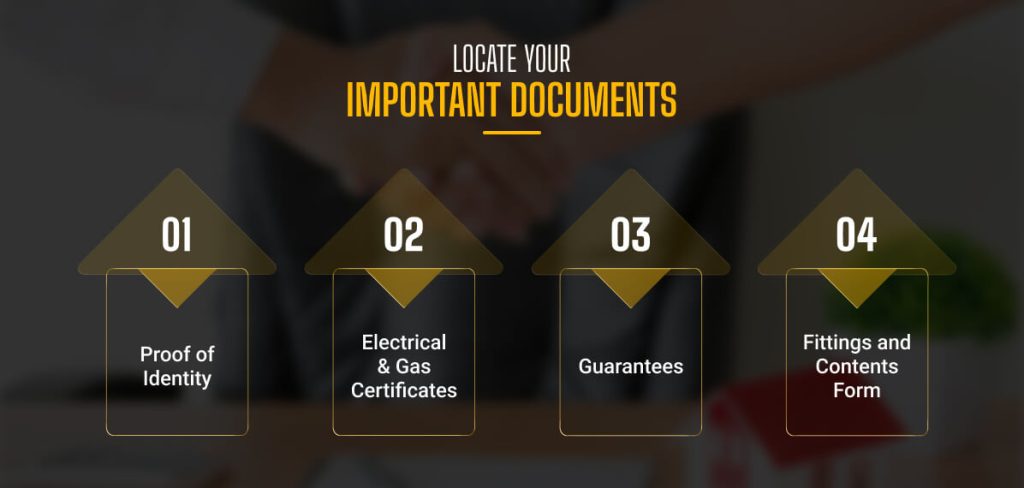
5. Locate Your Important Documents
Almost nothing is more frustrating and time-consuming in a real estate transaction than finding out at the last minute that a document is missing.
To avoid delays in your purchase or sale, start gathering your paperwork shortly after deciding to move.
Here is a list of the documents your solicitor will need you to have ready:
- Proof of Identity: Passports and other documents, such as a recent utility bill, to verify your address.
- Electrical & Gas Certificates: Documents proving boiler services and any rewiring work.
- Guarantees: Documentation of the new appliances, windows, or any roof work.
- Fittings and Contents Form: An inventory of the items you will be taking with you, as well as those you will be leaving behind.
Organizing yourself well not only makes you a “dream seller” but also helps prevent the chain from collapsing due to minor delays.
6. Get Your Home Ready For Sale
Ultimately, you want to get as much money as possible for your home. This is where home staging helps.
But if you get started with the decluttering, if you don’t need it, it is either packed up or donated!
Painting a small room in light tones will make it look bright and spacious. With a high-quality camera, iPhone photos can produce astonishing pictures.
However, unless you are a specialist with this sort of thing, you’ll probably get the best results by sticking with a professional property photographer.
Making simple touches, such as fixing a dripping tap or repainting your front door, will add value to your home and help it sell more quickly than the house next door.
7. Find An Estate Agent & Market The Property
After that, you need to put your home out there! Picking the right estate agent is quite similar to dating.
You are looking for someone who communicates effectively and has a strong success rate.
With the help of online tools, you can compare local agents not only on how quickly they sell a property but also on whether they actually achieve the asking price they had promised.
Online agents are a good consideration if you want to save on fees. After choosing the match, your agent will handle the listings and viewings.
This is what allows you to focus on your move while they look for the ideal buyer.
8. Choose A Conveyancing Solicitor
A conveyancing solicitor is the one who knows how to manage all legal aspects of property transactions.
I recommend choosing one in advance so it’s immediately available once you have a deal.
Besides that, do not make a decision solely on price. Checking testimonials and contacting other companies should be a part of your decision-making process as well.
A competent solicitor can save you an average of £490 by preventing errors.
Having them on hand means there will be less waiting time later, which is exactly what you want when things get moving quickly.
9. Agree On A Sale
It usually takes about 10 weeks from listing your home to shaking hands on a deal. In today’s market, houses are often in short supply.
This puts you in the driver’s seat as a seller! If you’re lucky enough to get multiple offers, don’t just look at the highest price.
You should also consider:
- Buyer Status: Are they first-time buyers with no chain?
- Reliability: Are their finances ready?
- Motivation: Are they in a rush to move, or are they happy to wait? Choosing a reliable buyer often matters more than an extra thousand pounds.
10. Start Your House Hunt
While it’s a “seller’s market” for your old home, remember you’re also a buyer! This means you need to act fast.
Moreover, you can set up alerts on sites like Rightmove or Zoopla and check them every morning.
If you’re in a popular area, be prepared for sealed bids, where everyone submits their best offer at once.
If you are struggling to find the right place, a Buying Agent can be a lifesaver.
They do the searching for you and can even help negotiate a better price in a crowded market.
11. Review Your Budget & Present Your Bid
Once you discover the right property, it becomes time to assess the reality.
Measure the cost against the budget you initially set, including any remodeling the house might require.
If the numbers correspond, then go for it! Marking your status as “under offer” on your existing home greatly increases the appeal of your proposal to sellers.
Besides, since approximately 41% of sales don’t go through, this is also a good time to explore Home Buyers Protection Insurance.
It safeguards your investment if the transaction fails through no fault of your own.
12. Get Your Mortgage Official

Have they given you the green light? That’s fantastic! However, you shouldn’t throw a party just yet.
We need to exchange the “mortgage in principle” for an official application.
Step to your mortgage broker without delay to initiate the process. They will take care of the mortgage lender formalities.
This is the most significant step in buying or selling a property, as the lender will need to verify that the property is indeed worth the price you’re paying.
By keeping your broker informed, you avoid any nasty last-minute funding surprises.
13. Reach Out To Your Conveyancing Solicitor
Your solicitor is what really makes the difference here. They will initiate “local searches” to prevent you from having to cope with any unexpected situations.
This includes a new highway being constructed right behind your home!
You should keep in close touch with them throughout this process. Make sure to request information on:
- Land Limits: How far exactly does the garden go?
- Construction: Is that new extension properly authorized?
- Documents: Both the windows and the heating system have safety certificates.
If you feel things are stalling, simply send them a friendly reminder to speed up the process.
14. Get A Survey
Your bank will do a basic valuation, but that’s just for them. To protect yourself, you should hire your own surveyor.
They will crawl into the attic and check the walls for any hidden issues, such as dampness or structural cracks.
Depending on your budget, you can choose a basic or very detailed report. If the survey finds a big problem, don’t panic!
You can use the results to ask the seller for a lower price or request that they fix the issue before you officially move in.
You’re nearly at the finish line! The final stretch of buying and selling houses is all about staying on top of the details and getting ready for the big move.
15. Take Charge Of Communication
During the process of buying or selling a home, you should not assume that silence is always fruitful.
To maintain progress, you should be prepared to read, sign, and send back any documents as soon as you receive them.
A lot of solicitors now rely on online portals, which is a huge convenience! But if you get worried, please call them.
- Pro Tip: Make sure you share your email addresses with the people involved in your buying and selling.
- Stay Direct: Staying in touch with each other will help you avoid slow intermediaries and resolve minor misunderstandings before they become major issues.
16. Get Your Estate Agent Involved

If you cannot spend time repeatedly reminding people, please ask your estate agent to do it for you.
One of their tasks is to keep track of progress and lead the sale to completion.
As per professional codes of practice, they are entrusted with several tasks to assist you:
- Keep Track: They need to monitor the progress of the legal part closely.
- Be the Informer: They are obliged to provide you with any information that would help in finalizing the transaction.
- Be Your Helper: In the event of any disputes between the buyer and the seller, they should work out solutions.
If you don’t hear back from them, please contact them. If they are calling too often, please ask them to reduce the frequency.
17. Agree On A Completion Date
After the surveys have come back and the legal checks are all satisfactory, then it’s time to choose “The Day.”
This is the day when you officially transition from your old home to your new one.
Since you are both buying and selling homes in a chain, you all have to agree on the same day.
This will typically require a bit of back-and-forth between the solicitors. You might be required to be a little flexible on this.
Ultimately, it is about agreeing on a day that works for the entire group.
Once the date is agreed upon, you can exchange contracts and make everything legally binding!
18. Plan Your Move
Having set a date, it’s time to get down to earth.
Please contact your utility providers and let them know about the move so that gas, electricity, and water are available at your new home.
You may also want to think of this moving house checklist:
- Removals: Book a removal company early, as the most reliable ones fill up quickly.
- Packing: Choose whether to do your packing or have professionals handle it for you.
- Checklists: Keep a moving list handy so you do not end up leaving the kettle or the cat behind!
Having a proficient and reliable removal team will take most of the physical stress off your shoulders on the big day.
19. Completion Day
The big day is finally here! This is the official moment for buying and selling houses, when the magic happens.
Your solicitor will send the money to the seller’s solicitor, and once it’s received, they will call to say the keys are ready for pickup.
While you are busy unloading boxes, the legal teams will be registering the new ownership with the Land Registry.
It’s often a long and tiring day, but once you have got those keys in your hand and the last box is finally inside, you can sit back and relax in your new home.


Leave A Reply