





Stop Wasting Rent! Why a Condo is Your Best Move in 2026!
Condo vs Apartment. Well, those who are stuck between which one to choose, I can feel what they are going through.
If you walked into my home right now, you might think it is just another apartment! It is a unit in a building!
I share a wall with my neighbours! And there is a community gym downstairs. But, in reality, things are slightly different than what they seem.
I have lived in both places! Before buying my condo in Dallas, I lived in a small apartment near Clermont.
The process kinda taught me that the “condo vs apartment” is not just about the building.
It is mostly about who you have to call when the kitchen sink leaks or who owns the dirt under your feet.
Deciding you want to live can be a massive move. You might find yourself getting lost in jargon to understand the difference between condo and apartment.
However, it is actually pretty simple once you see the pros and cons from the inside.
Here, I want to walk you through the key differences I have noticed as an owner. That way, you can pick the path that actually fits your life and your budget, without any regrets.
What Is A Condo?
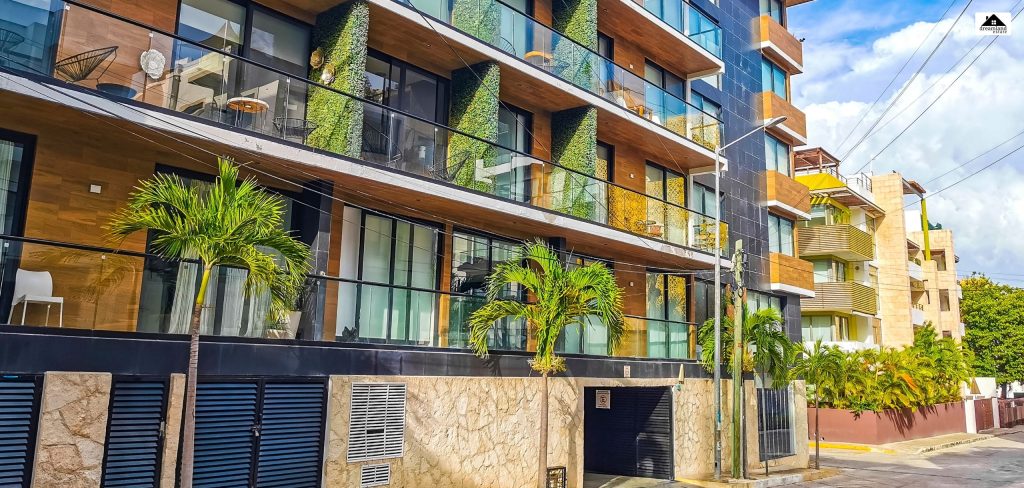
You can think of a condo as a mix between a traditional house and a rental apartment.
In a condo house, you can own an individual unit, essentially everything from the paint on the walls inward.
However, you share the ownership of the common area with your neighbours, such as:
- Lobby
- Pool
- Gym
Here, the big difference is ownership. A condo building has many different owners, while a single company usually owns an entire apartment building.
This setup is a staple of the American dream.
As of 2026, there were about 370,000 homeowner associations, housing nearly 80 million people.
Condos often feel more personal because you can own them. While the average U.S. apartment size climbed to 1,072 square feet by late 2025, condos can vary wildly.
For example, if you look at Dallas high-rise condos for sale, you’ll find luxury units ranging from 1,300 to over 7,000 square feet. Thus, you get the perks of a community without a landlord calling all the shots.
What Is An Apartment?

An apartment is a unit you rent in a building or complex. Here, the biggest difference is that one person or a big real estate company owns the entire property.
You do not own the walls. You simply have the right to live within them.
This means! You have a landlord who manages all the big stuff. Moreover, it means you are not building any equity with your monthly check.
The rental living in the US still goes for millions.
By the start of 2026, the data show that about 35% of households are occupied by renters.
On the other hand, while the luxury Dallas high-rise condos can offer you a permanent footprint, the average apartment lease is only for 12 months.
This is perfect if you aren’t ready to commit to a city long-term.
Plus, the average rent in major U.S. hubs has stabilized around $1,900 to $2,100 this year, making it a predictable, though not equity-building, monthly expense.
What’s The Difference Between A Condo And An Apartment?
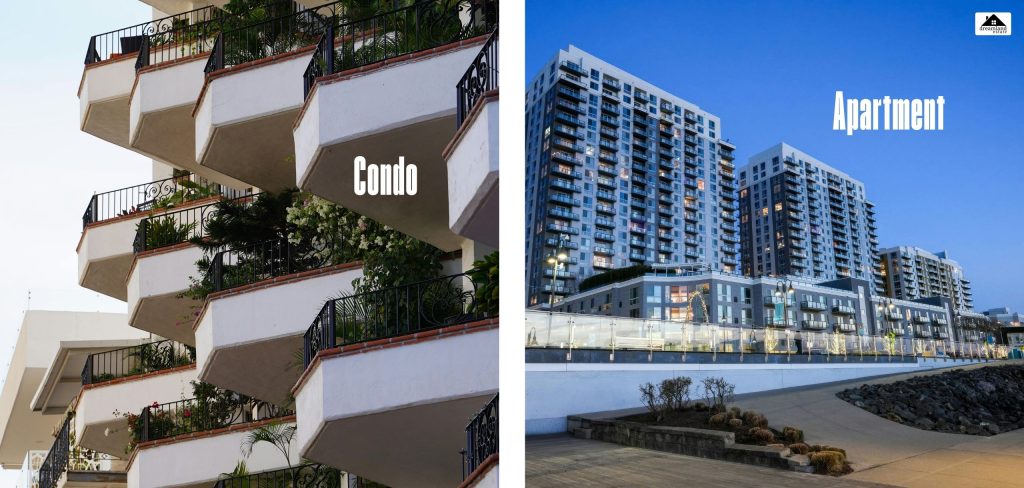
When you look at them from the street, you might ask: “are condo and apartment the same?”
They look identical. However, as someone who actually bought a condo in the US, the experience is absolutely different once you have the keys.
It really comes down to who actually holds the power.
Condo Vs Apartment: Ownership
Ownership is the biggest divide between these two. When you rent an apartment, you are essentially a guest.
You sign a lease! Pay your deposit! And follow the landlord’s rules. You do not own the walls, the floor, or even the appliances.
In my experience owning a condo, the feeling is completely different.
You receive a deed, just like you would with a standalone house. Moreover, you own the interior space of your unit. However, you also own a “piece” of the entire building.
Here is how that ownership looks in practice:
- Equity: My monthly payments build wealth. In an apartment, that money just covers the landlord’s mortgage.
- Property Taxes: As a condo owner, I get a tax bill from the city. Renters never have to worry about this.
- The Land: Apartment dwellers don’t own the land. Condo owners share the “common elements,” such as the lobby and the roof.
By 2026, about 1 in 5 homeowners in urban areas will choose condos over houses because they’re more affordable. It is about having a seat at the table instead of just a key to a door.
Condo Vs Apartment: Maintenance
Maintenance is where the reality of ownership really hits home.
When I lived in an apartment, a leaky faucet was just a phone call away. I would call the super, and it was their problem to fix. It was free, and I did not have to lift a finger.
Now that I own a condo, that has changed. If a pipe bursts inside my walls, it is on me. I have to find a plumber, schedule the work, and pay the bill. However, I do not have to worry about the big stuff like the roof or the elevators.
Here is the breakdown of who does what:
- Inside the walls: In a condo, this is your job. In an apartment, the landlord handles everything from light bulbs to broken fridges.
- Common areas: Here, both setups usually have a crew for this. For my condo, my monthly fees cover lawn care and hallway cleaning.
- Emergency repairs: Thirdly, the apartment dwellers have a 24/7 maintenance line. As a condo owner, I have to keep a “rainy day” fund for unexpected breaks.
Condo Vs Apartment: Amenities
The gap between these two is closing when it comes to perks. However, the quality is where you notice the shift.
In an apartment, amenities are often “standard.” You get a basic gym and a pool that might be crowded with everyone in the complex. The landlord keeps these up just enough to attract new renters.
With a condo, especially if you are looking at high-rise condos for Sale, the amenities often feel like a five-star hotel.
There is a huge incentive to keep the gym top-tier and the rooftop lounge spotless. This is because the owners are also investors.
By 2026, over 60% of luxury condo owners report that high-end amenities like pet spas and coworking hubs were the main reason they bought their unit.
Key Differences in the Perks:
- Quality Control: In my condo, we vote on upgrades. If the gym equipment gets old, the board replaces it. In an apartment, you’re stuck with whatever the landlord provides.
- Exclusivity: Condo amenities often feel more private. Since people own their units, they tend to take better care of the shared spaces than short-term renters do.
- The Cost: Here is the catch. In an apartment, amenities are “free” (included in your rent).
Whereas, in a condo, you pay for that beautiful pool every month through your HOA fees.
I use the facilities more now that I am the owner. It feels like an extension of my living room rather than a public space.
Condo Vs Apartment: Rent
The financial path you take depends on your long-term goals when looking for a place. If you look at a condo vs apartment for rent, the monthly check you write might look similar.
However, the person receiving it is different. When it comes ot an apartment, you mainly pay the professional management company.
Whereas someone who owns the space is renting you the condo as an investment.
The market is currently shifting slightly.
National data show that renting a condo vs. an apartment can vary in price by about 15%. The condos are often more expensive since they include
- Higher-end finishes
- Better appliances.
Here is how the money breaks down:
- Fixed Costs: In an apartment, your rent is usually a flat fee. On the contrary, the condo owner may pass the cost of rising HOA fees onto you.
- Negotiation: You can rarely negotiate with a big apartment complex. At the same time, a condo owner might get a better deal if you’re a great tenant with a solid history.
- Stability: This is the big one. An apartment building will always be for rent. A condo owner might decide to sell the unit. This means you would have to move out when your lease ends.
I always tell friends that if you want a “managed” experience, go to an apartment.
However, if you want a place that feels like a real home with better kitchen counters and nicer floors? You can take a look at those individual condo listings.
Condo Vs Apartment: Price
The price isn’t just in the monthly bill. It’s where cash ends up. In an apartment, costs are steady but often vanish.
And in a condo, expenses grow into real value, but they also mean more things to manage.
In early 2026, condo prices rose sharply. Rent for a similar unit might hit $2, 100. A mortgage in the same place could go up to $ 2,800 once interest and insurance are added.
As a homeowner, I get tax breaks renters never do. Real cost check: Entry fee: Buying a condo means making a down payment, usually 3% to 20%.
That’s simpler than the deposit and first month’s rent for an apartment. HOA fees: These are quiet costs.
My fees cover roof repairs and security. They can go up. In apartments, landlords handle those rising costs themselves.
Property Taxes are a major factor in 2026. Here, your tax bill follows if property values in your area go up. The renters are shielded from this directly.
For me, the higher price of the condo was worth it. I am not just paying for a roof! I am buying an asset. This grows in value, while a renter is simply paying off someone else’s debt.
Condo Vs Apartment Resale Value
When you look at the long game, the difference between these two is massive. When it comes to an apartment, your “resale value” is zero.
You give the keys back, hope for your security deposit, and move on.
Moreover, you have essentially spent years funding your landlord’s retirement instead of your own.
Whereas owning a condo is a completely different story because you’re sitting on an actual asset. The 2026 data show that condo values in major hubs have stayed resilient, appreciating at an average of 4% to 5% annually.
So, what determines if your condo will sell for a profit?
First comes the HOA’s Bank Account. The 2026 buyers are smart. They will not touch a building with low reserves. A well-funded association makes your unit much more valuable.
Second comes your personal upgrades. In my condo, I can swap my laminate counters for quartz. Those small changes directly bump up my asking price. You cannot do that in an apartment.
Third comes the market demand. Now that the apartment buildings are popping up everywhere, the prime condo spots in walkable districts are limited.
This scarcity keeps your resale value high.
I personally love the feeling of “forced savings.” Every mortgage payment I make is just moving money from one pocket to another.
What are the pros and cons of condos vs. apartments?

Deciding whether to buy or rent often comes down to one question: Is it smarter to get a condo or apartment?
There isn’t a single “right” answer, but your lifestyle and long-term financial goals will usually point the way.
Based on my experience living in both, here are the pros and cons of the 2026 market.
Condo Living
The advantages of condo living include:
- Building Equity: Every monthly payment is an investment in an asset you own.
- Freedom to Change: You can knock down walls! Or renovate the kitchen, or install rustic sage green kitchen cabinets if you want.
- Tax Perks: Owners often get deductions for mortgage interest and property taxes. Sad that these are the things renters miss out on.
- Luxury Access: When looking at High-Rise Condos, amenities like 24/7 concierge service and private gyms often stand out from those in standard apartments.
The disadvantages of condo living include:
- HOA Fees: These can be expensive and may increase over time to cover building repairs.
- Responsibility: It is your problem to fix and your bill to pay if the water heater breaks at 2 AM.
- Less Mobility: Selling a condo takes time. It makes it harder to move quickly for a new job.
Apartment Living
Now that we have discussed condo living, let’s take a look at the advantages of apartment living:
- Total Flexibility: You can pack up and leave as soon as your lease is up. Here, you do not have to worry about a mortgage.
- Zero Maintenance: The landlord handles every repair. Whether it is from a leaky sink to a broken lightbulb!
- Predictable Costs: You do not have to worry about sudden “special assessments” or rising property taxes.
Now, the disadvantages of apartment living are such as,
- The “Black Hole”: Your rent money is gone forever. This way, you have nothing to show for it at the end of the year.
- Strict Rules: Most apartments will not let you paint, swap fixtures, or sometimes even hang heavy pictures. So you will miss out on customizing your spaces to suit your lifestyle.
- Instability: A landlord can choose not to renew your lease or raise the rent significantly.
How To Choose Which One Is The Best For You?

It is okay if you are stuck deciding between a condo and an apartment. However, knowing exactly how a condo vs apartment functions is the first step.
It really comes down to understanding the pros and cons of condo vs. vs apartment to see which one fits your daily life and your bank account.
So, before you sign any papers or put down a deposit, I would suggest checking these four boxes:
1. Your Budget
Always try to look beyond just the monthly payment.
Can you handle a mortgage, property taxes, and those HOA fees? Or is a flat rent check more your speed?
2. Your Lifestyle
Secondly, you must think about how much control you actually want.
Do you want the freedom to knock down a wall, or do you want the freedom to move to a new city next month?
3. Space And Perks
How much room do you really need? If you’re eyeing those Dallas High Rise Condos for Sale, you’ll likely get better amenities and more square footage than a standard rental.
4. The Neighborhood
Check out the local vibe. Some areas are packed with high-end condos, while others are dominated by apartment complexes. Which one feels more like home?



Leave A Reply