




Space Coast Short Term Rental Rules: Cocoa Beach vs. Melbourne (2026 Guide)
The Space Coast is really booming.
From record-breaking rocket launches to a huge expansion at Port Canaveral, everyone wants a piece of Brevard County.
Picture this: you discover a gorgeous beach house in Cocoa Beach. After computing the AirDNA figures, you come across an impressive $80,000 annual profit.
You finalize the purchase, put the property on the market, and feel like a genius. However, reality dawns on you.
Within a week, code enforcement shows up with a $500-a-day fine.
That hurts. The reality is that Space Coast is not an investor’s wild west.
In fact, by 2026, localities including Cocoa Beach and Melbourne have implemented very strong measures to prevent quiet neighborhoods from becoming noisy tourist districts.
This guide explains the disorder. We will navigate you through:
- The permit maze in Melbourne,
- Discuss the newest Airbnb regulations in Brevard County, and
- Uncover the lesser-known dangers of purchasing a Cocoa Beach condo.
Do not let your investment sit on the ground; we need to talk about it before you buy.
What Are The Sites Failing To Tell You?
Most blogs only touch the surface, but we are going to uncover the traps they don’t even mention.
Firstly, let’s begin with the “City vs. Unincorporated” trap. A lot of guides make a very lazy statement like “Airbnbs are legal in Melbourne.”
That is a very dangerous and inaccurate simplification. Yes, the City of Melbourne permits Airbnbs only in certain commercial zones.
However, Melbourne Beach and Indialantic nearby have their own much stricter rules. Then, we have the “Minimum Stay” confusion. “Short-term” is not just a feeling; it is a legal term.
In Brevard County, any rental for less than 30 days, or sometimes 90 days, is subject to resort taxes, zoning approvals, and other restrictions that can be very complicated.
Lastly, the “Condo Assessment” drama should be on your radar. Some people may suggest you invest in condos overlooking the beach.
However, they do not take into account that changes to Florida’s structural laws take effect in 2026.
Your condo may permit you to rent it out, but if you receive that unexpected $40,000 invoice for concrete repairs, then your return on investment (ROI) will definitely be affected.
Don’t let these hidden “landmines” destroy your investment.
This is why we are here to provide you with the genuine, local information you really require. This includes the Cocoa Beach short term rental rules.
Cocoa Beach Short Term Rental Rules: The Strict Reality

Planning a beach rental in Cocoa Beach? You have to get ready because the short-term rental rules in Cocoa Beach are strict.
In short, the city is very protective of its residential areas. So, if you want to stay on a quiet single-family home street, forget it.
To keep your property legal and profitable, you will have to follow these main guidelines:
- The 90-Day Rule: The city imposes a strict ban on rentals for less than 90 days in standard residential districts (RS-1).
- The “Green Zones”: The only places where you can legally offer short-term rentals are certain districts, such as Resort (RM-1 & RM-2) or Commercial (CG).
Normally, these are facing the ocean side of A1A.
- High-Tech Enforcement: Dont think you can hide. Cocoa Beach employs software to check out Airbnb and VRBO.
If they see your listing in the wrong area, you will be facing those $500-a-day fines.
These Cocoa Beach short-term rental rules are in effect, so investors must review the zone map carefully before applying.
The best plan? Partner with a local expert who really understands the zoning map.
Coming up with a property on the wrong side of the street could stop your business from growing even before it starts.
Melbourne FL Vacation Rental Permit & Zoning Laws
Investing in the Space Coast rental market is a wise decision, but only if you understand the rules.
Getting your way through the Melbourne FL vacation rental permit process and zoning laws is what separates a pot of gold from a legal nightmare.
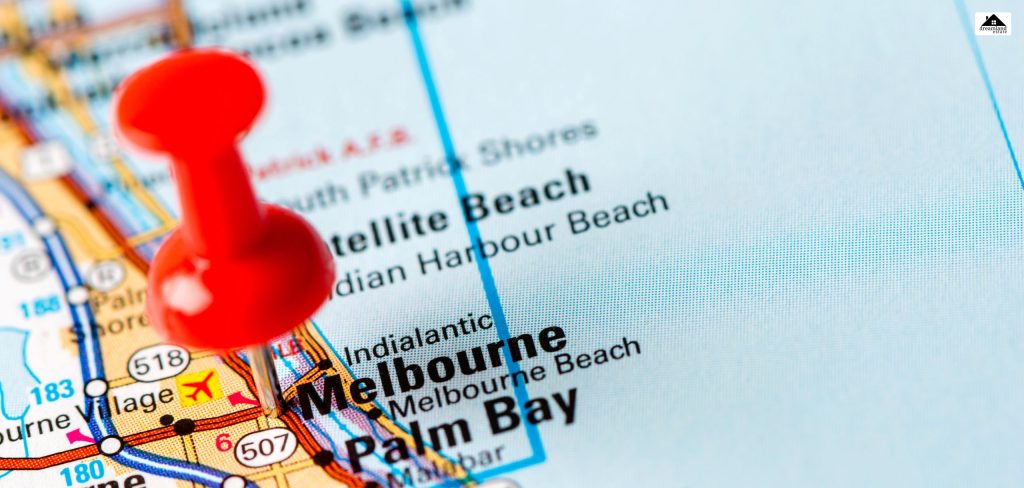
Like its neighboring cities, the City of Melbourne prohibits short-term rentals in the quiet, single-family (R-1) zones.
Instead, they direct investors to the commercial or mixed-use areas. Even if you stumble upon a legal place, you cannot just start running your business.
There are some requirements that you must fulfill:
- The Documentation: You must obtain a Business Tax Receipt (BTR) from the city.
- The Safety Review: A fire inspector will be dispatched to verify that fire extinguishers, exit maps, and interconnected smoke alarms are present.
- The “On-Call” Hero: A local contact person must be identified who can address noise or trash complaints within 2 hours, 24/7.
Here’s the main trap: Melbourne vs. Melbourne Beach. They sound alike, but they differ totally.
Melbourne Beach is a separate town that is very strict about short-term rentals, to the point of almost banning them, to preserve its tranquil, sea-turtle-nesting atmosphere.
Mixing them up may turn out to be a very costly mistake!
Airbnb Laws Brevard County FL: The Baseline Requirements

If you intend to purchase real estate in unincorporated areas of Brevard County, you’ll be abiding by the county’s regulations instead of the city’s regulations.
To ensure you do not get on the wrong side of the Airbnb laws in Brevard County, Florida, you need to treat your rental property as a professional business.
First, you will need to obtain a “Transient Public Lodging Establishment” license from the Florida Department of Business and Professional Regulation (DBPR).
This license indicates that your house complies with the state’s safety and sanitation standards.
Furthermore, always keep the “11% Tax” rule in mind. Since you are in fact operating a mini-hotel, you must be responsible for the following:
5% Tourist Development Tax (TDT): This “bed tax” is paid to the Brevard County Tax Collector and is used to promote tourism and maintain local beaches.
6% State Sales Tax: This is paid to the Florida Department of Revenue.
Although companies such as Airbnb and Vrbo often take care of these taxes on your behalf, you are still the one deciding who is legally responsible.
Make sure you open your own TDT account with the county so that all records are kept accurately.
Investing In Cocoa Beach Condos: High Yields Vs. High Risks
There is no question about it: investing in Cocoa Beach condos can be like winning the lottery.
Visitors want a place to stay that is a few steps from the world-famous Ron Jon Surf Shop and the Cocoa Beach Pier.
These two places will offer the highest nightly rates on the entire Space Coast. On the other hand, high returns come with high obstacles.
Before you sign that contract, keep an eye on these two “deal-killers”:
1. The HOA Power Play
The city can say “go,” but the Condo Association may say “no”. If their rules do not allow leasing for less than 12 months, your Airbnb business will be shut down. Don’t just trust the city. Also, double-check the HOA rules!
2. The “Condotel” Edge
To avoid risk, many experts buy “Condotels”. These are hotels designed to be rented out daily and usually have front desks and other amenities, like a resort.
The biggest 2026 caution is: New safety laws in Florida are causing disruptions.
Now, older beachfront buildings must undergo mandatory “Milestone Inspections”. Before you buy, you need to see the Structural Integrity Reserve Study (SIRS).
If the building has not been putting aside enough for repairs, you may have to pay a huge $40,000 special assessment.
That amount will eat up your rental income more quickly than a high tide.
The “Mid-Term Rental” Pivot (The 2026 Space Coast Strategy)
It can be very disappointing to find a fantastic property only to discover that short-term rentals are prohibited.
But you do not have to get rid of it. The time has come for the Mid-Term Rental (MTR) change.
This is the best way to “hack” the 2026 Space Coast market.
When you lease your furnished property for 30 to 90 days, you avoid those “short-term” zoning restrictions that are very strict.
This includes Cocoa Beach short term rental rules that restrict the nightly rentals.
Besides, if your tenant stays for a couple of months, you usually don’t have to pay the 5% Brevard County TDT tax at all.
Space Coast is a perfect spot for this method as it has a very different working population:
- Aerospace Experts: There are project-specific 3-month housing requirements for engineers from SpaceX, NASA, and Blue Origin.
- Travel Nurses: Medical personnel on 13-week contracts are employed by local hospitals.
- Snowbirds: Every winter, retirees arrive here for 3-month stays to escape the cold.
Rather than spending your time with city hall negotiations on a weekend rental, you can accommodate a very high-quality worker.
Fewer changes of tenants, less worry, and often the same level of profit.
Top 10 Mistakes Investors Make With Space Coast Airbnbs

Avoid these common pitfalls that can ruin your Space Coast investment before it has even gotten off the ground.
1. Believing The Listing Agent
A listing described as a Perfect Airbnb Opportunity does not mean legal short-term rentals. Agents may fail to learn about zoning changes.
Therefore, it is always a good idea to check city codes and zoning laws before buying. This way, you do not end up with a property that cannot be rented.
2. Ignoring Sea Turtle Lighting
In Brevard County, nesting sea turtles are protected from egg laying through hatching. Bright beach lighting is subject to very heavy fines. These may disorient hatchlings,
To be compliant with local regulations, use shielded, turtle-friendly lighting.
3. Not Reserving Sufficient Money For Insurance
Beachfront real estate normally entails higher insurance premiums. Windstorm and flood insurance can cause a substantial increase in your insurance costs.
Investors should make provisions for an increase of around $4,000 annually.
4. Deciding To Manage Everything From Out Of State
Salt air exposure causes corrosion in the systems, and the guests may need emergency assistance.
Therefore, owners who live far away from their property should employ a local property manager. They can take care of the
- Maintenance,
- Guest support,
- To keep the property in good condition.
5. Overlooking Tax Transfer
Even when the Airbnb platform collects some taxes, Brevard County owners must register with the Tax Collector and file the tourist development tax.
Audits and penalties can result from a lack of registration or non-payment.
6. Buying In A Strict Homeowners Association
Some communities, like Viera or Suntree, do not allow rentals, or they limit them very strictly.
For example, some homeowner associations only allow rental agreements lasting 7 to 12 months.
You should always check the association bylaws first before purchasing a property for rental purposes.
7. Under Pricing Rocket Launch Days
When rocket launches occur on the Space Coast, huge crowds gather to witness the event.
During these times, rental prices usually increase significantly. Setting your prices appropriately during these times can lead to a much higher overall rental income for you.
8. Not Providing Beach Gear
Lots of tourists dont want to carry a lot of luggage with them on their trip.
Guests may feel unhappy if the rental does not include beach chairs, umbrellas, or wagons.
Providing beach gear not only increases comfort and guest satisfaction but also leads to more positive reviews.
9. Over Renovating The Interior
The majority of guests consider comfort and location more important than very luxurious, high-end upgrades.
It is much wiser to invest in high-quality, long-lasting furniture and beach-style decor.
They should be able to withstand sand, water, and heavy use! rather than going for pricey renovations.
10. Skipping Condo Reserve Documents:
Previously, Florida condominium laws required substantial financial reserves for future repairs.
If a building does not have adequate funds available, it may resort to charging large assessments to the owners.
It is always wise to review the association’s financial documents before buying a condominium.
Conclusion: Compliance Is The Ultimate ROI
The Space Coast is a great place to get vacation rental yields, but following the rules should be your real way of making good money.
Understanding Cocoa Beach short term rental rules before investing can save you from major fines and legal trouble.
It is no longer possible to buy a house randomly and put it on listings without any paperwork in recent times.
Starting in 2026, Cocoa Beach and Melbourne will prioritize their residents while imposing heavy fines on investors who do not comply.
Therefore, think of your strategy first before you make a purchase.
If you really want that nice, flowing cash daily, concentrating on the RM-2 areas in Cocoa Beach is the way to go.
But if you are looking for a consistent, less demanding income, then corporate Mid-Term Rentals on the mainland of Melbourne are just what you need.





Leave A Reply