





What You Must Know Before Buying A Grade 2 Listed House: Restrictions And Hidden Costs
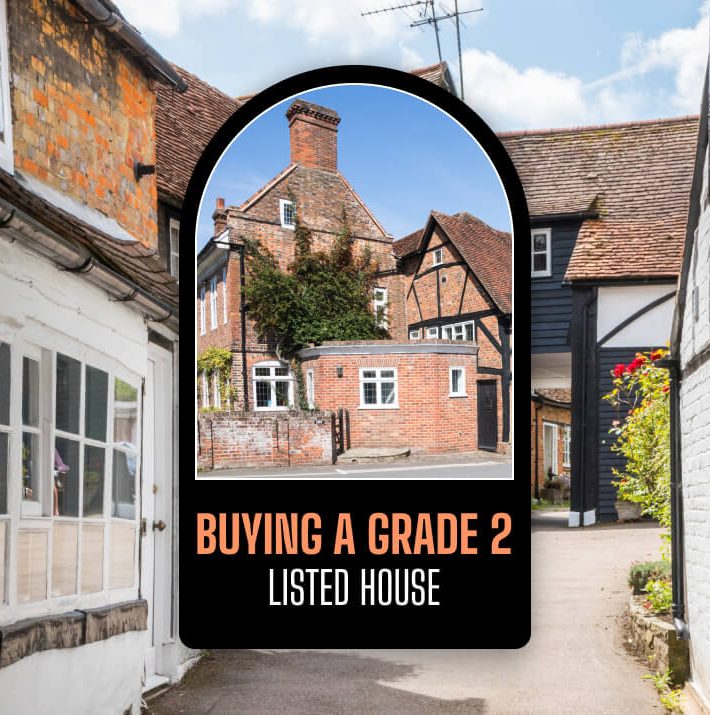
Having a listed building in your possession can be a thrilling and fulfilling experience!
But just for a second, let’s be honest with ourselves. It can also lead to quite a few unforeseen problems.
These wonderful homes usually require a lot of additional time and money for restoration.
Besides, you will have to consult professionals specifically trained to work with these historic buildings.
If you are a novice and want to know where to put your money, it is quite possible that these architectural gems will not be very attractive to you to begin with. You certainly want to do that with your eyes wide open!
What Are We Getting At?
This sort of help is meant foremost for those who are at a stage of buying a Grade 2 Listed Buildings or may be considering it.
The reason? Simply because they are more than 90% of all protected buildings in England!
So it is actually these sorts of historic homes that you would buy if you were to invest in the property market or embark on a building project.
What are we going to explore in this guide?
We will explain it all in plain, simple language. Here is what we will discuss together:
- What being a listed building means in 2026.
- The wonderful benefits of owning a historical property.
- The potential pitfalls that you need to be careful about.
What Exactly Is A Listed Building?
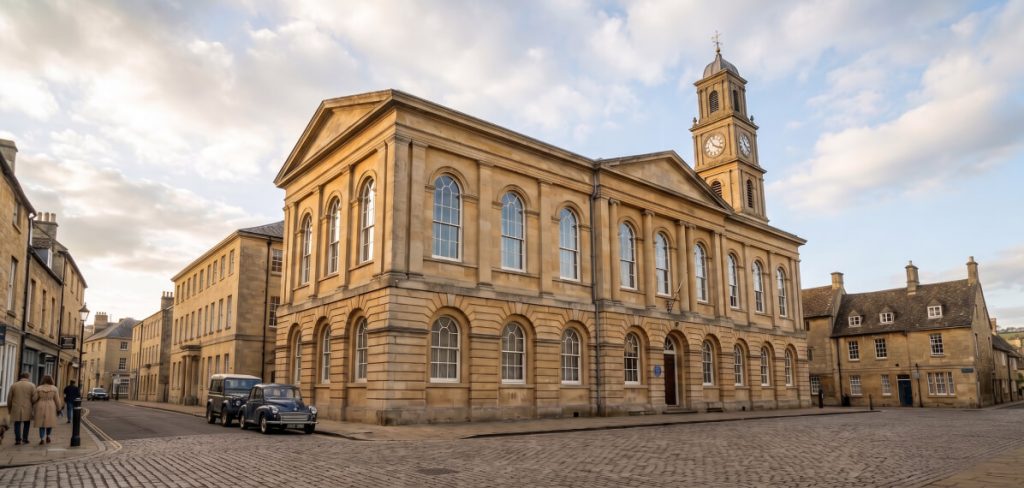
A listed building is a property with special legal protection because of its history or unique look.
Basically, the government protects it so people cannot just change or demolish it.
As you might guess, older buildings are much more likely to be listed. In fact, they protect almost any building that was standing before 1700!
Most homes built between 1700 and 1850 are also on the list. However, modern houses built after 1945 are rarely listed because they are so common.
Interestingly, listing isn’t just for houses. Quirky things like old telephone boxes, battlefields, and even a historic toilet in Westminster are protected too!
So, if you are thinking about buying a grade 2 listed house, you are truly buying a piece of history.
The Three Main Types Of Listed Buildings
So, did you know that Historic England splits these special properties into three different groups?
Well, it is super helpful to understand how they actually work! Especially if you are thinking about buying a grade 2 listed house.
| Grade I | These are rare gems of exceptional historic interest. Only a tiny 2.5% of all protected buildings get this top stamp. |
| Grade II* | These are particularly important properties with more than just basic special interest. They make up about 5.8% of the list. |
| Grade II | These are beautiful buildings of special interest. They make up a massive 91.7% of the total! |
You can look it up online right now to easily check if a property is protected.
Simply search the official National Heritage List for England to find its status completely free.
How Many Listed Buildings Are In The UK?

Today, the United Kingdom is preserving about 4,66,000 listed buildings. Each nation surprisingly maintains its own distinct register to keep track of these gems:
- England: ~380, 000 entries
- Scotland: ~47, 000 entries
- Wales: ~30, 000 entries
- Northern Ireland: ~9, 000 entries
As England is the most populous country with very dense historic cities, it has by far the highest number of listed buildings.
While England, Wales, and Northern Ireland use the Grade 1 and 2 ranking system, Scotland uses its own Categories A, B, and C system.
However, the objective is one and the same: preserving the past! So, if you happen to buy a grade 2 listed house, you will be part of a huge family of history owners all over the country.
Why Are Buildings Listed?
The primary purpose of listing buildings is to prevent unsuitable renovations or drastic alterations that might compromise their historic character.
By safeguarding them, we ensure that our descendants will also have the opportunity to admire these wonderful relics of the past.
Once they list a building, it becomes a matter of concern for the local planning authorities.
Essentially, before you undertake any significant alterations, both external and internal to the building, you will have to seek formal Listed Building Consent.
That said, it should be stressed that a listing is neither the same as a total lock-up nor a preservation order.
In fact, you can continue modernizing and upgrading your residence only after first obtaining the official okay by following the proper legal procedure.
The Amazing Perks of Owning a Listed Building
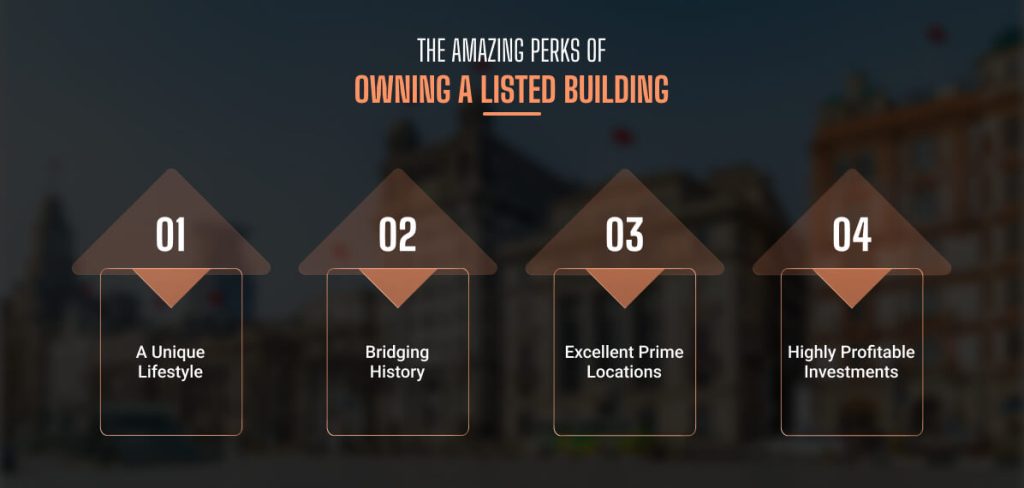
As surprising as it may sound, there are some really wonderful perks of buying a Grade 2 listed house. Here are the main reasons why people enjoy owning them:
· A Unique Lifestyle
Firstly, there are few things more thrilling than owning a historic building to satisfy your lifestyle aspirations.
If, for example, you are a romantic at heart, who wouldn’t fancy living in a warm Tudor farmhouse or a magnificent Victorian mansion with charming and original features?
· Bridging History
Secondly, owners cherish the sense of being vicariously drawn back into history. When you reside in one of these properties, you are not only safeguarding the country’s gorgeous heritage.
You are also making history accessible for those coming in the future.
· Excellent Prime Locations
These houses are almost always located in very desirable areas.
Quite a few are situated on some of the most prestigious streets in great cities such as London, Manchester, and Birmingham.
Moreover, these have long been centers of power and hubs for the affluent.
· Highly Profitable Investments
Such old homes can see their values rise much faster than those of regular houses.
Since there is a limited number of historic properties, continuous high demand from buyers keeps pushing their market prices up over time.
The Tricky Downsides of Owning a Listed Building
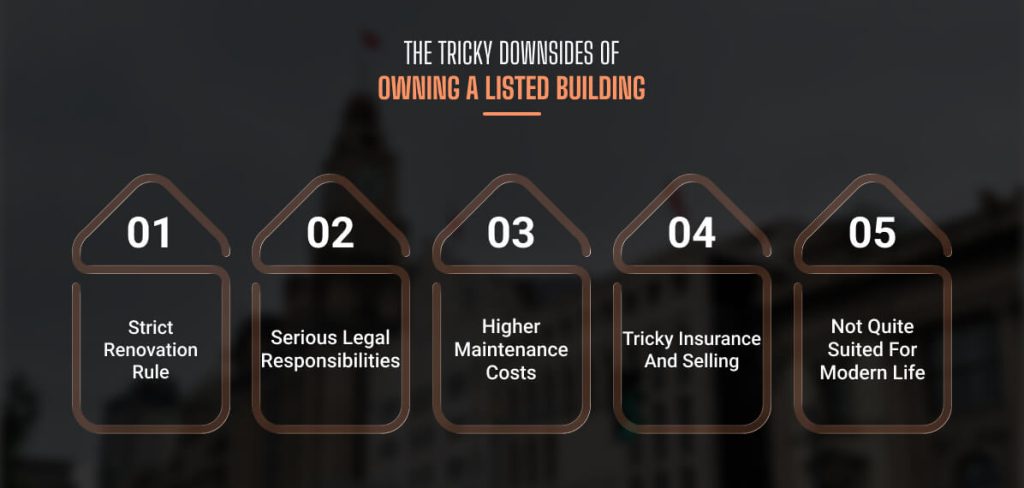
Buying a Grade 2 listed house also comes with some real, everyday challenges. Even when the perks are amazing.
Moreover, it is super important to know what you are getting into so you do not face costly surprises down the road.
Here is a closer look at the main disadvantages you should keep in mind:
· Strict Renovation Rule:
Firstly, you cannot just change things on a whim. To alter the interior or exterior, you must obtain official Listed Building Consent from your local council.
This strict rule applies to common updates like:
- Replacing old doors and windows
- Knocking down or moving internal walls
- Changing classic fireplaces and staircases
- Altering outbuildings, gardens, or external paint colors
If your main goal is to flip houses quickly, these rules can make things very difficult.
Also, sometimes, you even need extra planning permission for simple things that normal houses do not need permission for at all!
· Serious Legal Responsibilities
Taking care of a historic home is a serious legal duty, not just a suggestion. You need to look out for these strict rules:
- Making changes without official permission is actually a criminal offense.
- Local councils can issue a formal repairs notice if they feel you are neglecting the property.
- Finally, they might hold you legally responsible for illegal, unapproved work done by past owners before you even bought the place!
· Higher Maintenance Costs
Older properties need a lot of love, care, and specific materials. Because they use traditional building methods, you cannot just use cheap, modern cement or plastics.
Instead, you have to buy specialist materials like lime mortar and hire highly skilled tradespeople. This extra care makes everyday maintenance and big renovations much more expensive.
· Tricky Insurance And Selling
Getting standard home insurance can be a major headache. Most regular companies will not cover these properties because they are so expensive to rebuild properly.
Therefore, you will need to find a specialist broker, which usually costs more money.
Furthermore, if the home has glaring structural issues that require expensive fixes, it can be much harder to sell later on when you want to move.
· Not Quite Suited For Modern Life
Let’s face it, historic homes were built for a totally different era. You might find a few annoying quirks like:
- Oddly shaped rooms with very low ceilings
- Massive, lofty spaces that are hard to manage
- Very poor insulation that makes the house chilly in the winter and expensive to heat
Because of these older designs, it is incredibly tough to achieve a good energy-efficiency rating, such as a modern EPC C rating.
What Are You Not Allowed To Do To A Listed Building?
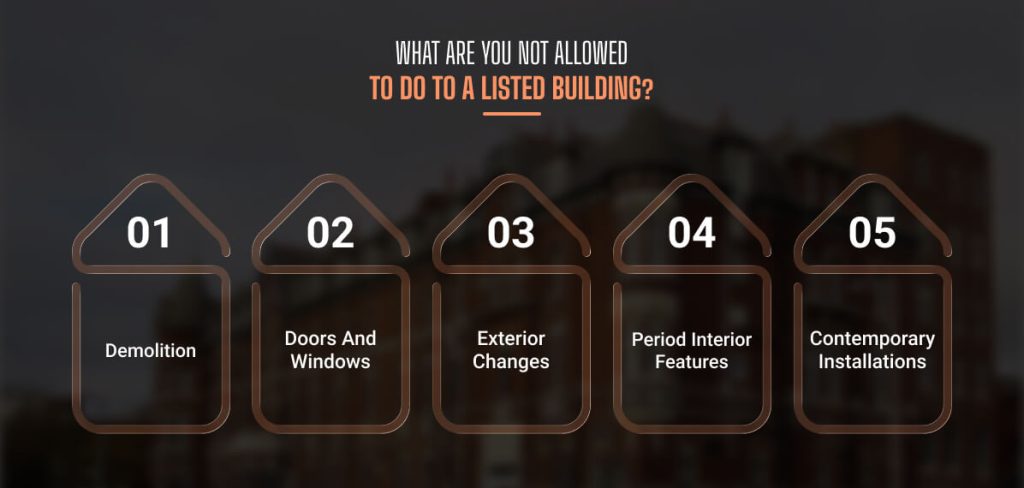
Buying a grade 2 listed house means that the first and foremost rule is that you cannot alter anything that changes its historic character without getting official permission.
Local council officers examine everything very closely.
In simple terms, your renovation should not harm the old parts of the house, and if you are making any changes, it should be possible to revert them without much trouble later.
Here is a brief summary of the key works which nearly always need official permission:
· Demolition
You simply cannot demolish any part of the house, interior walls, or old garden sheds.
· Doors And Windows
You cannot change doors and windows, even if the same style and design are used. Plastic uPVC windows are generally not permitted.
· Exterior Changes
No allowance to paint bare brickwork, change the house exterior paint color, or add modern finishes.
· Period Interior Features
Old fireplaces, stairs, wooden panels, or period floors cannot be taken away.
· Contemporary Installations
They do not allow getting solar panels, satellite dishes, or new wall insulation without approval.
The protection of each house is different, so the regulations vary accordingly.
Therefore, it is always better to speak with the conservation officer at your local council before making any physical changes to the house.
You will also avoid very costly mistakes by doing this simple step.



Leave A Reply