




KC’s 5 Most Walkable Neighborhoods: A Guide to Home Prices & The New Streetcar Commute
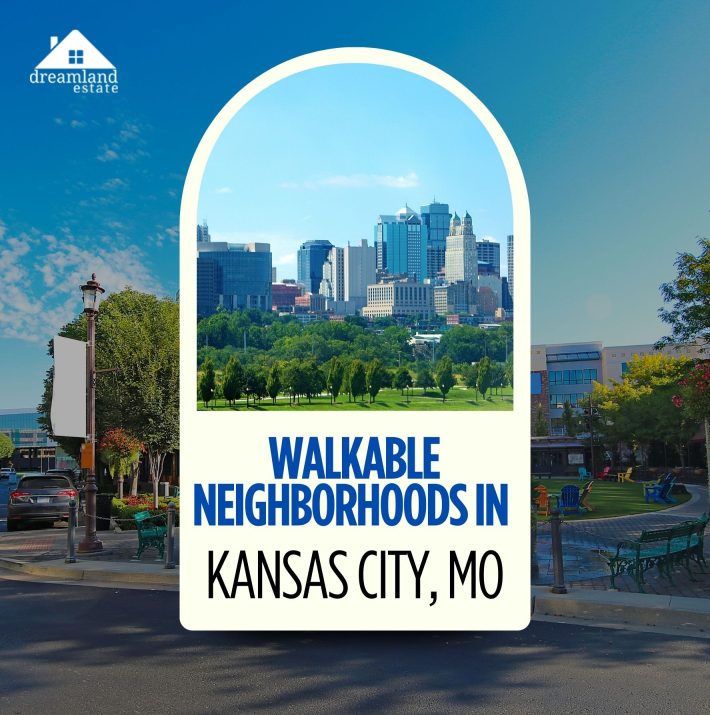
Kansas City is progressively transforming its image from a car-centric city to one with walkable neighborhoods—small, vibrant centers where one can still perform most daily activities on foot.
The term “urban villages” does not necessarily refer to areas with a high Walk Score, since the score’s simplicity might overlook the beauty of a shaded street or the difficulty of an uneven sidewalk.
Buyers who want car-lite living have to be aware of these intricacies. Dreamland Estate, local real estate experts, give you not just numbers but also the actual impact of the new KC Streetcar extension.
This began in 2025 and linked the most loved neighborhoods like River Market, Crossroads, and Midtown with fast, free transit.
This guide lists Kansas City’s five most walkable neighborhoods, using in-depth local insights and honest, on-the-ground experience.
If you are looking for walkable neighborhoods in Kansas City, MO, this is your essential starting point for making smart home choices.
The Honest Truth About Walkability & Commutes in Kansas City
Kansas City is not yet a city where you can live without a car. This city is more like an urban landscape, which is famous for its collection of increasingly interconnected, walkable villages.
These pockets are scattered across the metropolitan area and can offer you dense, self-sufficient cores where you can navigate your daily life on foot.
The concept of “village” is more evident in areas such as:
- Historic river market
- Burgeoning Crossroads Arts District
- Established country club plaza
These areas feature a high concentration of shops, restaurants, and residences within a very short distance.
Setting your own expectations based on this model, rather than assuming a universal city-wide walkability, is the key to finding a neighbourhood. This truly suits a car-lite lifestyle.
By focusing on these specific and pedestrian-friendly enclaves, you can easily build trust in homebuying decisions. This way, you can avoid the frustration of the city-wide assumptions.
What A Walk Score Gets Wrong About Kansas City
Different metrics, such as walk score, transit score, and bike score, were designed to provide you with a quick, numerical overview of a location’s pedestrian, public transit, and cycling friendliness.
However, when it comes to Kansas City, these scores are a blunt instrument. These often fail to provide a meaningful assessment. We at Dreamlandestate have identified the four major limitations in these scores that apply to our city!
1. Missing Context On Pleasantness
The Walk Score does not always reflect the overall quality of the walking experience. A high score indicates the overall proximity to a dense area.
However, it will not tell you whether the route is pleasant! The scenic beauty is also being affected by the heavy traffic.
2. Ignoring Pedestrian Safety
These metrics do not adequately account for pedestrian safety issues. Kansas City is currently working to improve street safety through its Vision Zero Action plan.
However, high traffic on certain arteries can still pose a significant risk, and a numerical score won’t reflect much!
3. Gaps In Sidewalk Infrastructure
Despite all the recent improvements, the sidewalk infrastructure in Kansas City can be inconsistent. You might have a very high score due to nearby destinations.
However, the path to them can be really challenging. It might happen due to the missing or poorly maintained sidewalks, especially when you are outside the densest urban areas.
4. The Topography Factor
A walk score does not account for the city’s overall topography. The areas have steep hills, which give the impression of a high score.
Still, the physical challenges of navigating on foot are not part of the calculation, making the experience far less walkable for many of the residents.
The Commute X-Factor: The KC Streetcar Changes Everything (2025 Update)
The KC streetcar Main Street Extension opened in October 2025. This has been a game-changer for walkability and the commuting landscape.
The new extension adds 3.5 miles to the existing route. This creates a single and very connected line stretching from the River Market to the Plaza and the University of Missouri-Kansas City (UMKC).
This specific expansion has a dramatic impact on real estate and commute convenience. This fundamentally alters how residents navigate the city’s urban core!
A free, frequent, and reliable public transit option now links the previously separate walkable pockets.
As a result, the following neighbourhoods are now connected and offer residents a new level of mobility.
- Crossroads Arts District
- Midtown
- Westport
- Country Club Plaza
This integration means living in one walkable pocket that no longer isolates you from others.
Moreover, the buyers are creating a much larger, more accessible, transit-friendly urban network!
The 5 Best Walkable Neighborhoods in Kansas City, MO (A Homebuyer’s Deep Dive)
Kansas City is indeed recognized for its expansive streets and straightforward roadways, but there are still unique neighborhoods that offer a walkable lifestyle.
In our role as local specialists, we have identified the top five locations where most residents can really live a car-lite life.
This is a sincere in-depth analysis of the vibe, amenities, commutes, and real estate in the most walkable areas of KC.
1. River Market
The historic River Market, situated just north of the downtown loop along the Missouri River, is one of the city’s most vibrant and authentic walking experiences.
It’s a lively, culturally diverse center where people of different backgrounds live side by side in houses with a historical and modern touch, with all basic amenities nearby.
Vibe: Bustling and historic. It really feels like a true urban village, with a varied population that loves walking and eating out.
Walk Score (approx.): 85+ (Very Walkable)
What You Can Walk To: The City Market is the center of attraction in the area, hosting a market for farm products year-round, many food stalls from different countries, specialty grocery stores, and unique shops.
The market is also home to the Arabia Steamboat Museum, which is a major local attraction.
Residents have access to a wide range of bars, cafes, and entertainment options within walking distance.
The Commute: Great. The neighborhood is at the northern end of the KC Streetcar route, which offers free, easy access to all areas south.
This includes the Power & Light District, Crossroads, and Union Station. This easy access makes working downtown hassle-free.
The Real Estate: Mainly offers industrial-style lofts and refurbished historic apartments. The real estate market here spans a range of prices, from riverfront luxury condos to quaint, older apartment conversions. Rarely do houses for sale come up here; it’s a quintessence of urban living!
2. Downtown (The Loop & Power & Light District)
The improved downtown area, referred to as “The Loop,” together with the Power and Light District, is the city’s business and entertainment district. It is the most vertical, high-energy living experience Kansas City offers.
Vibe: High-energy, sleek, and focused on entertainment. The area is suitable for people who want to be right in the middle of the action but still enjoy a clean, well-maintained urban environment.
Walk Score (approx.): 90+ (Walker’s Paradise)
What You Can Walk To: The T-Mobile Center, a huge and lively entertainment venue; the Power and Light District, full of bars and restaurants.
The Midland Theatre and the Kansas City Music Hall are the highlights of this neighborhood. Grocery stores and pharmacies, which are essential services, are also located within walking distance.
The Commute: Outstanding. The neighborhood has Streetcar stops that connect several parts of it to the rest of the city.
Also, if you are employed in the central business district, your commute might be just an elevator ride or a few blocks walk.
The Real Estate: The area is composed mainly of high-rise apartments, luxury and condo conversions, and many of them offer first-rate amenities like rooftop pools, gyms, and concierges.
Anticipate high-end finishes and urban convenience. The price point here is usually high, reflecting the central location and an amenity-rich lifestyle.
3. Crossroads Arts District
Once an industrial zone, the Crossroads Arts District now lights up Kansas City as the main venue for arts and culture.
It has become a hip, very attractive neighborhood for city dwellers, offering a perfect mix of rawness and glamour.
Vibe: Quirky, earthy, and fashionable. Besides being a hotspot for the visual arts, it has also become a foodies’ paradise, with well-established events such as the monthly “First Friday” gallery walk.
Walk Score (approx.): 80+ (Very Walkable)
What You Can Walk To: Manifold independent galleries, trendy restaurants, microbreweries, artisanal coffee places, and other creative businesses are among the spots within walking distance of home.
The area offers Union Station Kansas City with its permanent science exhibits and temporary attractions, and the National WWI Museum and Memorial, among others.
The Commute: Streetcar service cuts directly through the center of the Crossroads, providing the most convenient access to the north-area River Market and south-area Midtown and Plaza (via the 2025 extension).
The location is easy to reach from any direction, as it is near the main highway entrances.
The Real Estate: Most of the housing stock consists of converted warehouse lofts and condominiums with a very industrial character, such as exposed brick and concrete floors. Additionally, there are new upscale apartments, some exclusive small-scale townhomes, and a few rare smaller homes through conversions. This area is always in demand, so property prices are constantly rising.
4. Midtown / Westport
Midtown is a vast, older district that includes the vibrant Westport neighborhood.
The place where Kansas City began its very first suburban development is a tree-lined historical area that is both classic and cozy.
Vibe: A mixture of historical, active, and traditional neighborhoods. Westport, especially, is the hot spot for young people’s nightlife, while the adjacent Midtown region is quieter and more residential.
Walk Score (approx.): 70+ (Very Walkable in the heart of Westport, lower in the outer parts of Midtown)
What You Can Walk To: Westport has hundreds of century-old bars, a wide range of different dining places, and local boutiques.
The larger Midtown area has the Nelson-Atkins Museum of Art and the Kansas City Art Institute. The Streetcar’s extension has also connected this region directly to downtown.
The Commute: Great. The new Streetcar line (2025) will offer a zero-car hassle direct route to Union Station and the Downtown Loop. There are plenty of bus routes, and trips by car are relatively fast.
The Real Estate: A variety of lovely, historic single-family homes (Craftsman, Tudor, Colonial, etc.), duplexes, and multifamily apartment buildings.
This area presents a more conventional home-buying option than the downtown core, making it a superb choice for people wanting both great aesthetics and walkability.
5. Brookside
Brookside, situated in southern Kansas City, is one of the most adorable and livable neighborhoods of the city.
The neighborhood has a suburban-like feel, yet it also has a small, pedestrian-friendly commercial area at its center.
Vibe: Charming, family-friendly, and highly desirable. The air is relaxed, and the community is welcoming with well-kept gardens and a friendly local population.
Walk Score (approx.): 75+ (Very Walkable around 63rd Street corridor)
What You Can Personification Of Aay: You will find a butcher shop, a classic cinema, unique local boutiques, and many restaurants around 63rd Street.
It is the main limb of the Brookside shopping district and thus the life of the area. With easy access to everyday products, this place is ideal for living.
The Commute: About 10-15 minutes of driving to downtown. For streetcar travel, it terminates close to the university.
But you have to drive or take the bus to reach it. The public transport system serves the neighborhood less than it does the northern areas.
The Real Estate: Mainly splendid, old-fashioned single-family homes with distinctive architectural features.
Interest in the area is incredibly high, and properties are often snapped up very quickly. It is a purchase in a stable, established neighborhood with strong community bonds and great schools.
How do we rank KC’s most walkable neighborhoods (2026)?
- The amenities density, such as grocery, pharmacy, cafe,s and parks within a 5-10 minute walk.
- The transit access, which is about the proximity to streetcar stops and RideKC routes. Weekend/late headways.
- The pedestrian environment includes sidewalks, crossings, lighting, traffic calming, and block sales.
- Every day errands are about the ability to complete daily tasks without a car.
How to Find Your Perfect Walkable Home in Kansas City
Step 1: Define Your “Walkable” Lifestyle
First, to broaden your search, you need to define what walking means to you. The term Kansas City’s many different urban neighborhoods is not one-size-fits-all.
A common attractiveness to walkability does not suffice.
Take into account your priorities:
Are you a young professional looking for bars, nightlife, and a variety of restaurants quickly?
Or
Could you be a young family where living in a walkable area means a nearby park, a local bakery favored by families, and a daycare or school?
A retired couple could be looking for a place surrounded by beautiful trails and tranquil coffee shops.
Whereas a creative professional might want to be close to art galleries or artists’ studios and take daily walks to get inspired.
By being precise about your needs and wants, you can exclude neighborhoods that might score high on Walk Score but do not meet your daily needs.
Step 2: Use the Commute as Your Anchor
Though the KC Streetcar has changed urban mobility entirely, your workplace and daily commute are still important factors in deciding where to move.
The newly extended Streetcar’s route now covers the River Market, Crossroads, Midtown, Westport, and Plaza.
Hence, if you are a daily Streetcar commuter, think about whether a Streetcar stop close to your home would eliminate your commute or be just a major anchor for your lifestyle.
If your office is on the Streetcar line, living at a stop means no burden, and you can move around without the expense of a car, all for free.
But what if your office is still car-dependent? Just use its location as your starting point, and then look for the nearest walkable pocket.
The Streetcar makes it possible to reside in one walkable “village” and, at the same time, have very easy access to another one.
However, properly positioning your home relative to your frequent commute will maximize your convenience.
Step 3: Use Our Map Search Tool
To see how all these factors intersect visually, take advantage of Dreamland Estate’s exclusive, interactive map search tool.
Our tool goes beyond the basic layers offered by national real estate websites. It allows you to filter listings not just by price and size, but also by hyper-local, walkability-specific features.
This includes proximity to new
- Streetcar stops,
- Popular parks,
- Top-rated local coffee shops,
- Schools.
This empowers you to see the true connectivity of a property beyond a simple, potentially misleading score.
Step 4: Talk to a Local Expert
No amount of online research can replace the invaluable insights of a local expert. Our experts at DreamLandestate always believe that one must talk to a local expert who lives and breathes the KC.
They have a better idea of the entire city, from the pleasantness of a morning walk to the perceived safety of an evening stroll.
We can guide you to neighborhoods that match your specific lifestyle needs, not just a numerical score.
Whether you need insight on a specific block or want a personalized neighborhood tour, our team is ready to help you navigate Kansas City’s walkable landscape with confidence.



Leave A Reply