





6 Simple Steps To Save For A House (Without Starving)

The moment you take your first step onto the property ladder, everything starts to feel incredibly exciting.
But there is a trust hidden behind it: the overwhelming feeling you get when you look at property prices.
If you are wondering how to save for a house without completely giving up your lifestyle, you are definitely not alone.
While building up a deposit takes time, patience, and a few minor lifestyle compromises, it is entirely possible with the right plan.
In this quick guide, we will break down exactly how much cash you need, share simple budgeting tricks, and reveal six practical, stress-free ways to grow your savings safely and efficiently starting today.
How Much Deposit Do I Need To Save?

Usually, you need at least a 5% deposit. However, you will unlock much lower monthly mortgage rates if you can stretch that to 10%.
According to Nationwide data, a typical 10% deposit is around £23,000. A first-time buyer usually saves £320 a month for nearly six years to reach this.
It might feel out of reach, but don’t worry!
Surprisingly, you can actually buy a home with zero deposit using a 100% mortgage. Want to explore your options safely?
It is best to chat with trusted experts. This includes the Mortgage Advice Bureau to help you find the perfect deal for your budget today.
How Can You Set Your Budget?
Before diving into how to save for a house, you first need to figure out your actual budget.
Luckily, using online affordability calculators is a great way to see what you can safely borrow.
Let’s be honest, building up a deposit takes time and some real sacrifices.
Even so, tracking your monthly spending is still the absolute best way to stop wasting cash.
Start by looking closely at your biggest bills, like your phone, internet, and insurance.
Then, use comparison sites to find cheaper deals and try cutting back on extras for just six months.
Lastly, checking local house prices and improving your credit score will make managing future mortgage repayments much easier.
How To Save For A House: 6 Ways You Can Save For A Deposit

If you are working out how to save for a house, these six sensible steps will guide you in safely building your deposit.
1. Improve Your Earnings From Savings
To begin with, check out the highest available interest rates.
A tax-free Lifetime ISA is an excellent way to increase your money as the government gives you a free 25% bonus on your savings twice a year (up to £1, 000 yearly).
If you are unlikely to need to withdraw your money soon, setting it aside in a fixed-rate account will earn you even higher guaranteed returns.
2. Reduce Your Rent
Renting generally makes it difficult to save money, but a short-term compromise can completely change the situation.
For instance, if you live with your parents again for only 6 to 12 months, you save thousands on rent and utility bills.
However, just make sure you establish very strict rules upfront!
Also, one can share a flat with friends or take a lodger to split utility bills and living expenses down the middle.
3. Partner Up With Someone
Another good option is to purchase a property with a partner or friends.
Combining your funds immediately provides a significantly larger amount.
Besides, it becomes much easier to come up with the 10% deposit, which is roughly £27,000 at the current average UK house price of £271,900.
On the other hand, joint buying involves risks, so reading a legal guide and getting thorough advice beforehand is crucial.
4. Seek Help From Relatives
It is common for many first-time buyers to get help from what is known as the “Bank of Mum and Dad.”
This can take the form of a gifted deposit or a guarantor mortgage, where parents use their own home as security without having to provide cash.
In fact, a very large proportion of young buyers have now become reliant on parental support to get their first property.
5. Explore New Mortgages
New mortgage deals, such as 100% mortgages that do not require a deposit, are regularly being introduced by lenders.
The mortgage market is so volatile that it is very beneficial to follow mortgage updates on a regular basis in order to find the mortgage that suits you best.
While doing this, remember that the best alternative is the one that best fits your personal finances and credit history.
6. Take Advantage Of Government Help
Lastly, do not forget about the government schemes. You can find the programs such as the Mortgage Guarantee Scheme and Deposit Unlock.
This way, you can purchase a newly built or standard home with a deposit of only 5%.
This means that for an average house, you will only need to save around £13,500.
Note: For thorough and reliable planning, it is always best to consult a professional, such as the Mortgage Advice Bureau, who can guide you through your options.
What Lenders Look For When You Apply?
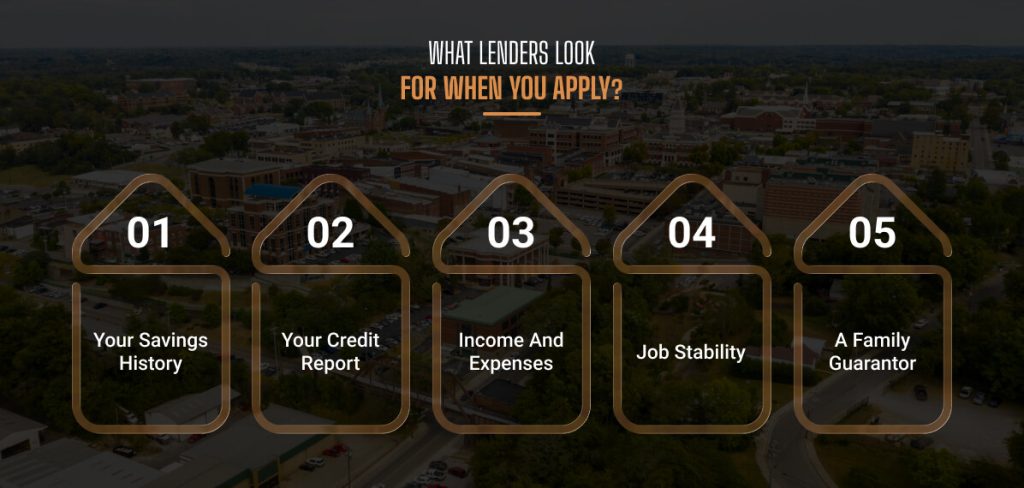
When working out how to save for a house, remember that banks are not only interested in your lump sum. They also require solid evidence that you’ll be able to manage a mortgage both now and in the future. Here are the major things they will investigate:
- Your Savings History
Lenders are convinced by a pattern of regular, consistent savings that you can budget responsibly.
- Your Credit Report
They will examine your financial history to determine if you make your payments on time.
- Income And Expenses
Banks compare your total earnings with your debts to make sure that you can afford the repayments.
- Job Stability
A permanent position demonstrates that you have a stable source of income in the long run.
- A Family Guarantor
If someone from your family assists in securing your loan by using their property as collateral, bear in mind that they have to cover the payments if you default.
The Perks Of A Bigger Deposit
You will need some time to figure out how to save for a house deposit.
However, a larger deposit will definitely help you buy less by borrowing less and cutting your expenses in the long run.
Besides, it is a great way to show the banks that you have a good handle on managing money, thereby greatly increasing your chances of getting a loan.
However, saving for longer means you will have to postpone buying the house.
· Understanding LVR And LMI
Your loan-to-value ratio (LVR) is a comparison of the amount of your loan to the property value.
For instance, if you borrow $ 450,000 for a $ 600,000 house, then the LVR is 75%. Remember, lower is always cheaper!
If your deposit is less than 20% (LVR more than 80%), you will be required to pay Lenders Mortgage Insurance (LMI).
This one-time fee protects the lender, not the borrower, and can be paid at settlement or added to the loan amount.
Nevertheless, this can be avoided if you are eligible for the Australian Government’s 5% Deposit Scheme.
For reliable safety advice, visit the Insurance Council of Australia website.


Leave A Reply