





How to Save Energy at Home: Simple Tips to Lower Your Utility Bills

We all know that making a Canadian home warm in winter and cool in summer is becoming very expensive.
As utility prices rise, finding ways to reduce your bills is becoming a main focus for most families across the country.
According to 2026 Statistics Canada data, nearly 10% of Canadian households are in deep energy poverty.
These households are defined as ones that use at least 10% of their after-tax income on home electricity and heating only.
Moreover, recent research indicates that 15% of the Canadian population has had to reduce spending on other essential items. This includes food and medicine to cover their utility bills.
Keeping Your Canadian Home Warm and Affordable
It really shouldn’t cost you a fortune to keep your Canadian home warm. However, utility bills are rising, and low-income families are suffering the most.
At the moment, about 1 in 10 Canadian households are in deep energy poverty, meaning they spend more than 10% of their income on basic electricity and heating.
The Wage Disparity In Energy Charges
If we consider income segregation, the data present a very harsh picture:
- Poorer families experience the heaviest financial burden; they are sometimes even torn between heating and eating.
- On the other hand, richer families can afford to install modern, green products that will, in the long run, reduce their utility bills.
This sad disparity ultimately marks vulnerable communities in a cycle of high costs.
Minor Efforts To Reduce Your Bills
Luckily, you don’t need a huge budget to stand against the ever-increasing bills. The first step towards saving energy at home is following a few simple, everyday habits:
- Cold-water wash: Do your laundry in cold water to drastically reduce water heating costs.
- Stop the drafts: Use cheap, simple weatherstripping to seal windows that let in the cold air.
- Dial it down: Turn your thermostat a few degrees lower at night or when you are out of the house.
Every little thing you do will help you keep your hard-earned money in your pocket.
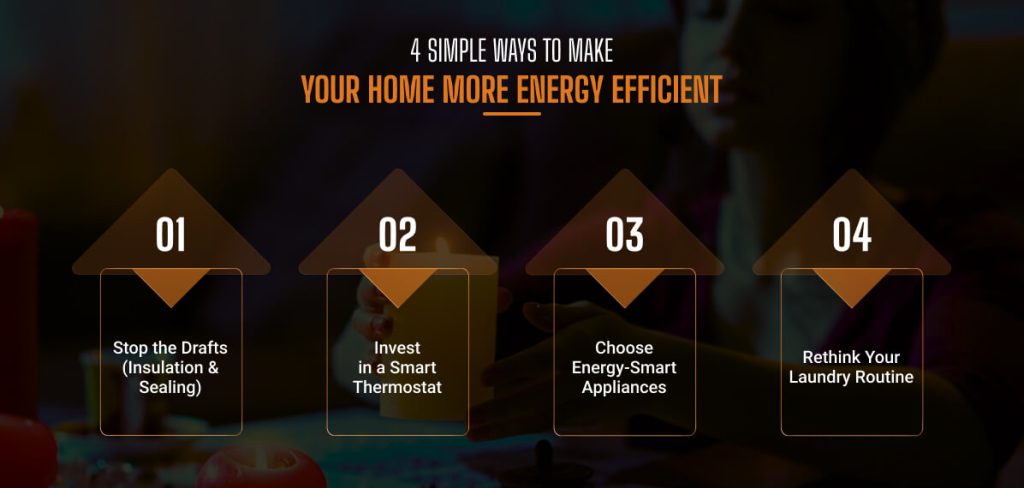
4 Simple Ways to Make Your Home More Energy Efficient
Let’s be honest, maintaining a Canadian home at a comfortable temperature through icy winters and hot, humid summers can really add up.
With utility rates rising, finding effective ways to reduce your bills has become a top concern for families across the country.
Fortunately, it is possible to make your home more environmentally friendly without spending a lot of money or going through any hardship.
You can start saving energy at home right away through a few simple, everyday decisions.
Regardless of whether you live in a house or an apartment, the following four practical methods can help you reduce your utility expenses.
This can reduce your carbon footprint and save you money you deserve.
1. Stop the Drafts (Insulation & Sealing)
Did you know that poorly sealed windows and doors cause up to 25% of your home’s total heat loss?
When warm air constantly escapes during the winter or cool air leaks out during the summer, your heating and cooling systems have to work twice as hard to maintain a comfortable temperature.
- The Quick Fix
Take a walk around your home and feel for moving air. You can easily fix drafty gaps around windows and doors using affordable caulking or weatherstripping from a local hardware store.
- When to Replace
If your windows are old and rattling, replacing them with modern, energy-efficient ones or adding proper insulation to your attic can completely change your comfort level.
- Options for Renters
Renters should ask their landlord to fix these leaks. It keeps utility costs down and protects the property from moisture damage.
2. Invest in a Smart Thermostat
Upgrading to a smart thermostat is one of the easiest ways to take control of your energy bills without constantly having to think about them.
These Wi-Fi-enabled gadgets automatically adjust your home’s temperature based on your daily routine.
Many models use motion sensors or track your smartphone’s location to figure out when the house is empty, turning on an energy-saving eco-mode until you head back home.
- The Big Savings
Data from Natural Resources Canada shows that an ENERGY STAR-certified smart thermostat slashes your heating and cooling energy use by at least 8%. Over a full year of unpredictable Canadian weather, those savings add up fast.
- Options for Renters
Renters can pitch these benefits to their landlord, especially since great provincial rebates often cover the upfront costs completely.
3. Choose Energy-Smart Appliances
When your old household appliances finally call it quits, don’t just buy the cheapest replacement on the floor.
Instead, look for the trusted blue ENERGY STAR logo.
These appliances are thoroughly tested to ensure they use significantly less electricity and water without sacrificing performance.
- Washers & Fans
A certified clothes washer uses 25% less energy and 33% less water than standard old-school models.
- Cooking
If you are remodeling, look into an induction stove. Induction technology transfers heat directly to your cookware with an incredible 85% efficiency.
Whereas traditional gas stoves waste a ton of energy, sitting at a measly 32% efficiency.
- Options for Renters
Renters can ask their landlords for these upgrades, as green rebates are widely available to property owners.
4. Rethink Your Laundry Routine
The way you handle chores can have a massive impact on your monthly power bill. For instance, a staggering amount of the energy your washing machine uses goes entirely toward heating up the water.
- Wash in Cold
Simply switching your temperature dial to a cold-water wash instantly cuts down that massive energy drain while keeping your clothes sparkling clean.
- Tame the Dryer
Clothes dryers are notorious energy hogs, so hang your laundry to air dry whenever the weather permits. If you must use the machine, throw in wool dryer balls to speed up the process.
- The Ultimate Upgrade
If you are shopping for an upgrade, a heat pump dryer uses at least 28% less energy than traditional dryers and is much gentler on your fabrics.
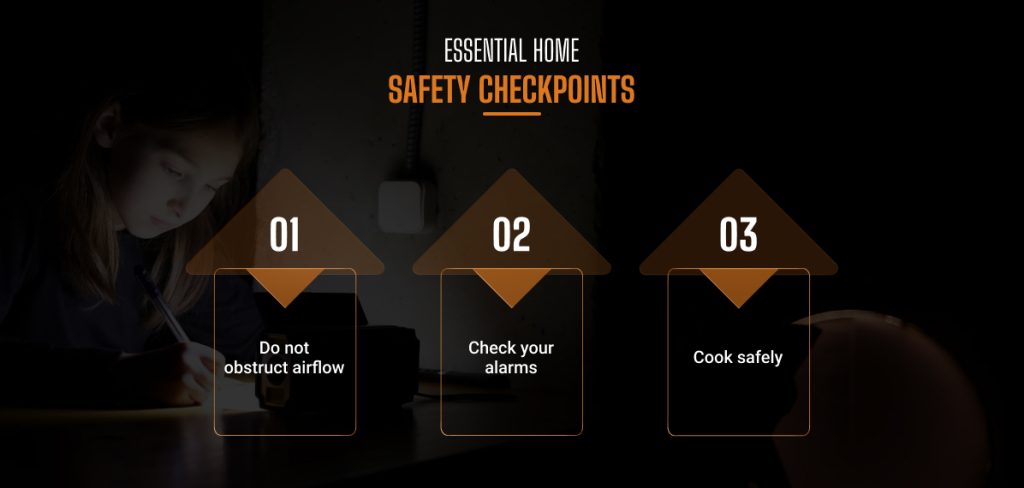
Essential Home Safety Checkpoints
Saving energy at home is great for your budget, but your top priority should always be safety. Here are some important safety tips you need to remember:
1. Do not obstruct airflow
While attempting to block drafts, do not close or block the dedicated air intakes for combustion or chimney flues.
Oxygen is essential for appliances that burn fuel to prevent the accumulation of carbon monoxide.
2. Check your alarms
If you are sealing your house tightly against the cold weather of winter, make sure there are functioning smoke and carbon monoxide detectors on every floor.
3. Cook safely
Do not assume that all your current pots and pans will work on an induction stove.
Before making a purchase, verify that the cookware is magnetic and compatible to prevent harm to the unit or electrical malfunctions.
Quick Resource Directory (Official Canadian Trust Signals)
- Find Regional Rebates: Use the official Natural Resources Canada Financial Incentives Directory to easily look up active, income-qualified energy grants tailored specifically to your province and postal code.
- Verify Home Performance: Locate a licensed, NRCan-certified energy advisor through your local provincial utility network to schedule an official EnerGuide home energy assessment for your property.
- Review Energy Star Data: Browse the official Natural Resources Canada Energy Star Products List to verify efficiency ratings and water-saving metrics before purchasing new household appliances.
Provincial Financial Aid And Rebates
You are not required to pay for all these upgrades entirely from your own funds.
Various programs by Canadian provinces provide support to low and moderate-income households to reduce their energy costs without charging them:
- Ontario: Through the Energy Affordability Program, households at qualifying income levels are eligible for free energy-saving home upgrades and weatherproofing.
- British Columbia: CleanBC features the Income-Qualified Program, which can cover up to 95% of your heat pump and insulation upgrade costs.
- Alberta & Prairies: Check with your local municipality for grants that may offer zero-interest financing for solar panels and window upgrades.



Leave A Reply