






Say Goodbye to Mud: The Ultimate Guide to Backyard Drainage Solutions
Indeed, you’ve likely noticed how a messy backyard looks at you when it heavily rains, and the backyard can’t drain and get stuck with rainwater.
Small ponds are created here and there, making it difficult for the kids and pets.
The dangerous part is that the accumulated water slowly seeps underground and begins to penetrate your building’s foundation, weakening it and posing a safety risk over time.
You cannot deny the necessity of a well-built drainage system for the backyard that works efficiently to evacuate excess rainwater promptly.
You can either create a single drainage system or combine some of them efficiently.
However, this is not a typical DIY job; it requires an experienced professional who works with the entire system and can keep costs affordable for the average homeowner.
And Reliabledp works while keeping all these things and handling your task carefully.
SAFETY NOTE: Before beginning any excavation or drainage project, always contact your local utility location service (like 811) to mark underground lines. Improper digging can lead to utility damage or personal injury.
Top 9 Ways Of Draining Backyard Rainwater!
We present to you a straightforward, human-level explanatory text on how to take back control of your external living area.
1. Formulate A Robust Strategy
Don’t rush to pick up the tool. First, check out the route water takes as it runs through your greenery.
Each garden has its own personality; certain types of soil absorb rainwater rapidly, while others behave like sponges.
- Study the current: Find the spots where water pools on its own when it rains heavily.
Expert Tip: Check your yard’s “perc rate” by digging a small hole, filling it with water, and timing how long it takes to drain. This tells you if your soil is heavy clay or fast-draining sand.
- Make a plan: Simply sketch your garden and highlight the trouble spots.
- Find out the rules: Make sure your plan will not cause the neighbors to flood, nor will it go against any local ordinances.
2. Get To Know Your Choices
There’s no such thing as a universal remedy. Perhaps you’ll need a means to carry water below the surface or a way to direct it to the surface.
If you learn about various backyard drainage solutions, you can combine them to create a tailor-made arrangement.
- Subsurface drains: These operate underground.
- Surface solutions: These utilize green changes to visibly guide water.
- Hybrid systems: Multiplying benefits by blending two techniques to tackle intense rainfall.
3. Construct A Basic Dry Well
A dry well is, in fact, an underground “reservoir” for rainwater. You dig a deep hole, then fill it with gravel or a plastic well liner.
This setup captures large amounts of water quickly and releases it to the surrounding soil gradually.
- The “Sponge” effect: This feature is like a makeshift storage for sudden heavy rainfall.
- Sizing: Be sure it is able to accommodate the initial 15-minute volume of torrential rain.
- Stackable: For quite large gardens, it is possible to have several wells running in parallel.
4. Install A Reliable French Drain
If you have a small space that is consistently wet, a French drain is the right solution for you.
Basically, this is a trench where a pipe with small holes is placed, covered with gravel and landscaping fabric.
Ensure you use 1/2″ to 1″ washed river stone. Using unwashed stone or “crusher run” will introduce fine dust that clogs the system within months.
Besides, it is an inexpensive, flexible alternative that can be discreetly installed.
- Perforated pipes: Firstly, these pipes have holes through which water can flow through them from the surrounding soil.
- Fabric layer: Secondly, it prevents dirt and sediment from getting into and clogging your pipe.
- Working of gravity: Thirdly, you need to make sure the pipe is slightly tilted towards a safe place for the water to exit.
5. Grow A Beautiful Rain Garden

What if you fix a drainage issue with some gorgeous greenery? Simply put, a rain garden is a small depression decorated with flowers that love water.
Moreover, these plants are like miniature water pumps, not only absorbing moisture but also acting as filters, removing harmful substances from the runoff water.
- Species: To have a successful rain garden, choose native species such as Irises, Canna, or Swamp Sunflowers.
Consult your local University Extension office for a list of native plants that thrive in your specific climate zone to ensure long-term survival. This is equally important.
- Filtration agent: In addition to cleaning, plants remove pet waste and chemicals from the water through their root zones.
- Help system: Note, these only serve as an “auxiliary” to your main drainage.
6. Design A Natural Creek Bed
A dry creek bed is a very appealing backyard drainage solution. Besides being a man-made watercourse lined with stones, it pretends to be a real stream.
Moreover, during a rain shower, water will run down this stony pathway to a safe location rather than pooling on your lawn.
The way it catches the eye: It appears to be every bit a natural and beautiful feature of the landscape, even when it is dry.
- Rocks and stones: Firstly, use assortments of sizes to make the “creek” seem real.
- Minimal effort: Secondly, after the rocks are set, there is almost nothing left to do.
7. Adding Dirt To Fill Low Spots
Sometimes the easiest solution is simply topping these areas with some soil.
If you have got a couple of small low spots in your yard where water frequently collects, you can “top-dress” them.
This stops the soil from becoming waterlogged and also safeguards your lawn roots.
- Gradual slope: Design the surface such that water flows away from your residence.
- Soil mix: Combine topsoil and compost for the best results.
- Foundation safety: Lastly, You need to make sure the highest point is always the one in contact with your house walls.
8. Creating A Grass-Lined Swale
A swale is a grass-covered, wide, shallow ditch that helps control water flow.
Consider it a natural slide for water from the rain. Since it is plant-lined, it not only decelerates the water but also enables it to percolate.
- Contour lines: Firstly, trace the swale to the natural contours of your yard or follow the slope.
- Stabilization: Employ indigenous grasses to anchor the soil and prevent its loss to water.
- Slow release: Secondly, this is a great way to avoid sudden erosion during heavy storms.
9. Always Keep Your Gutters Clean
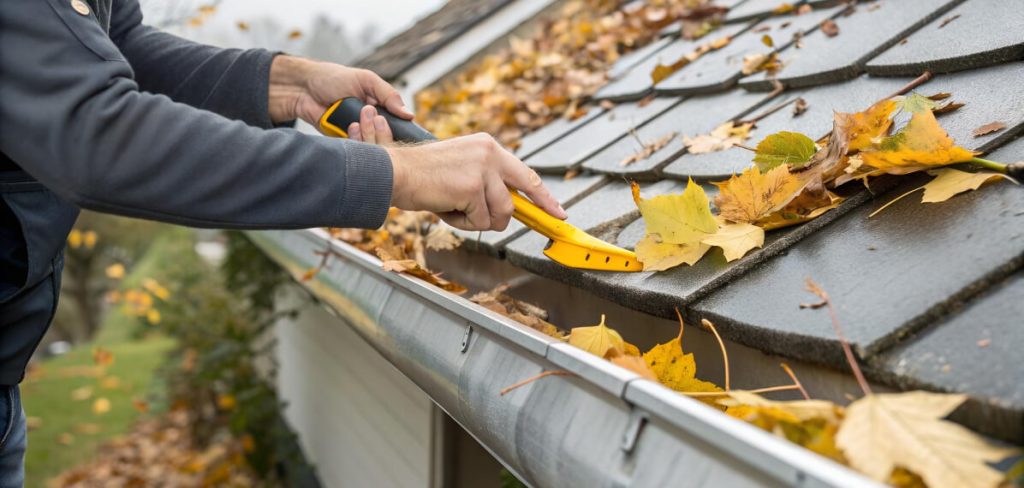
Surprisingly, your roof is the main source of flooding in your yard. If the gutters are full of leaves, the water will overflow and be deposited near your foundation. This is a very simple drainage repair.
- Regular cleaning: Remove debris twice a year (spring and fall) at a minimum.
- Downspout extensions: These are used for directing water several feet away from the house.
Many homeowners drain gutters directly into their French drains. This often overwhelms the system.
Always keep your surface (gutters) and subsurface (French drains) systems separate if possible.
- Smart exit: Ideally, your downspouts should lead to a rain garden or a creek bed. This is equally important.
Why Is It Necessary To Improve Drainage?
There are several reasons you need to make improvements in backyard drainage solutions:
- Prevents Waterlogging and Flooding
Poor drainage can saturate the soil, leading to surface pooling. This may cause plant damage, creating a muddy environment that sometimes flows into your home during heavy rainfall.
- Protect Your Foundation
Excess water around your home’s foundation may exert undue pressure on the foundation, which could lead to cracks and eventual structural damage over time.
- Healthy Plant Growth
Most plants require well-drained soil for healthy growth. Bad drainage may cause root suffocation, stunted growth, yellowing leaves, and, eventually, plant death.
- Prevent Erosion
The flow of water through your yard might cause soil erosion, washing away valuable topsoil and forming ugly gullies. This is equally important.
- Eliminate Mosquito Breeding Sites
Standing water becomes a perfect breeding site for mosquitoes, which are disease carriers.
- Increases Property Value
A well-drained yard is more attractive to potential buyers, thereby increasing your property’s value.
- Creates a More Enjoyable Outdoor Space
A dry, well-maintained yard is more pleasant for activities like gardening, playing, and relaxing.
Moreover, by taking steps to improve drainage, you can protect your home, enhance your landscaping, and create a more enjoyable outdoor living space.
Facts That You Must Know: The Water-Loving Trees and Shrubs
Mother Nature has always provided us with enough plants to help us soak up the water in our backyard.
Here are some of the species that can possibly do the job as a backyard drainage solution:
- Buttonbush (Cephalanthus occidentalis)
- Red or black chokeberry (Aronia spp.)
- Summersweet (Clethra alnifolia)
- Thornless honeysuckle (Gleditsia triacanthos var. inermis)
- River birch (Betula nigra)
- Red maple (Acer rubrum)
- Black tupelo, also called black gum (Nyssa sylvatica)
When To Call In The Professionals?
While DIY projects can be a blast, some backyard water problems are just too big for a weekend warrior to handle alone.
Since your home’s safety is on the line, it’s important to know when to put down the shovel and call in an expert team like Reliabledp.
First off, if you see water pooling right against your house walls, that’s a major red flag. This can lead to scary foundation cracks or “basement seepage” that ruins your floors and walls.
Also, if your yard has a steep hill, you might need a retaining wall to keep the soil from sliding away.
Furthermore, you have to be careful about where that water goes to avoid legal trouble with neighbors.
A Quick “Call a Pro” Checklist:
- Foundation Risks: Water sits directly against your house.
- Indoor Leaks: You notice damp spots in the basement.
- Big Slopes: Your yard needs structural support.
- Legal Worries: You aren’t sure where to safely drain the water.
Additionals





Leave A Reply