




Why Buying A Bungalow In 2026 Might Be Your Worst (Or Best) Move?
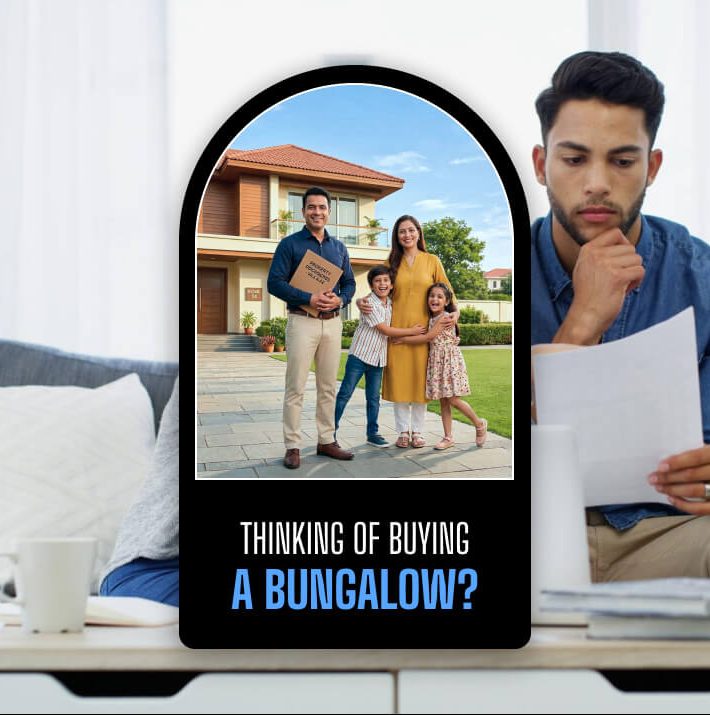
Most of the time, finding a home that suits us perfectly feels like ticking off a major achievement.
But before we jump on the bandwagon and decide to buy a bungalow, it’s only fair that we weigh a few arguments!
Well, we could say that bungalows are typically single-level homes and can therefore offer a very different lifestyle.
They may have some features that would make people prefer them to other types of houses, but they are certainly not perfect in all respects.
So, to give you an accurate picture, we will list the advantages and disadvantages as simply as possible to help you decide based on both your lifestyle and your budget.
Who Is The Ideal Resident Of A Bungalow?
In fact, bungalows seem tailored to a specific group of buyers. Moreover, they do, however, appeal to a broad spectrum of people at different stages of life.
- Empty Nesters: If your kids have moved out and your current house feels too big, a bungalow is a fantastic option to simplify your life.
- Forward Planners: Many people in their 60s, for instance, look for a “forever home.” Once you choose a single-level house, you will not have to worry about climbing stairs as you get older.
- Anyone Needing Accessible Space: A step-free layout offers greater independence and safety if you or a family member has mobility challenges.
- Young Families: Parents with toddlers particularly like bungalows since they do not have to worry about their children falling down the stairs.
Furthermore, parents can easily keep an eye on their children, as all family members are on one floor only.
The Benefits Of Living In A Bungalow
There is so much to admire about these types of homes. If you move to a bungalow, this is some of what you stand to gain:
- Simpler Upkeep: Most importantly, cleaning and even outside repairs are kinder to your nerves since your home is all on one level. You will not have to climb giant ladders just to reach the gutters.
- Greater Privacy: Bungalows are often built on wider plots of land. In many cases, that means that you get a larger garden and more space between you and the neighbors.
- Absolute Safety: What is more, eliminating any fall risk on stairs means taking proper care of both the elderly and toddlers, who can be a handful.
- Opportunity for More Space: Due to the fact that bungalows are on large plots, they are quite often much simpler when it comes to extending or altering them.”
Cons To Consider!
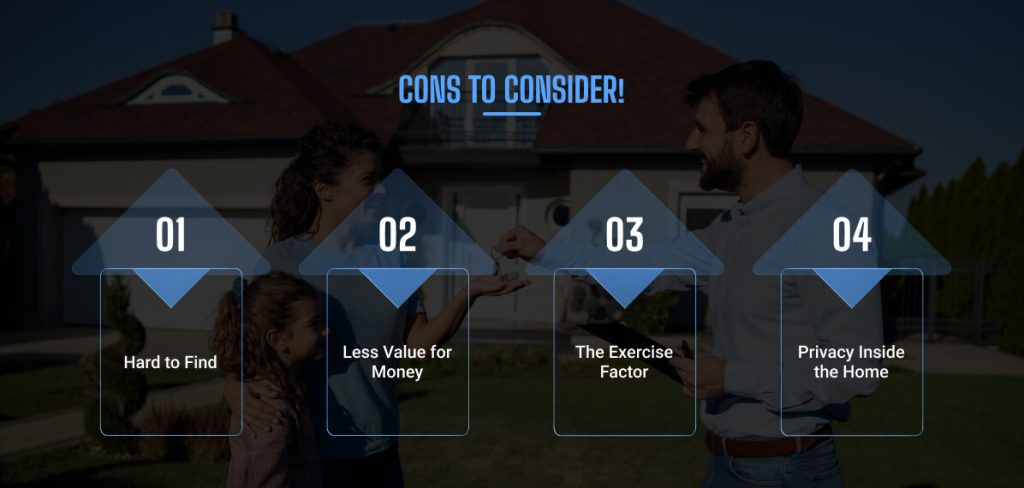
In fact, considering everything is what ultimately leads to making a great decision. So, here is a list of reasons why some people say “no” to bungalows
- Hard to Find
First, builders are not really building many bungalows these days because two-story houses use less land. That is why there is so much competition, and prices can shoot up.
- Less Value for Money
On the other hand, these homes, square foot-wise, can cost more than your ordinary house. You might get less indoor space for a specific price.
- The Exercise Factor
Walking up stairs is an excellent way to work out. It is one of the reasons old people are able to maintain strong legs and overall physical condition to a great extent.
- Privacy Inside the Home
Finally, if you have your bedroom, kitchen, and living room all on the same floor, noise levels could become a factor.
For example, it is not you who will be sleeping if someone is watching TV late at night.”
Bungalow Vs House: The Comparison
When you are looking for a new home, the biggest decision is often whether to choose a single-level property or a traditional multi-story home. If you are thinking about buying a bungalow, it helps to see how it stacks up against a standard house.
Here is a simple, honest breakdown to help you compare the two options side by side:
| Feature | Bungalow | Traditional House |
|---|---|---|
| Living Space | You often get less indoor space for your money, and the single-level setup can feel a bit snug. | You get more total square footage spread across two floors, which usually feels much roomier. |
| Privacy | Taller houses next door might look down into your windows, though large plots can offer great garden privacy. | Upstairs bedrooms offer excellent window privacy, but neighbors might easily see into your back garden. |
| Heating Bills | They can cost more to heat because a large roof and outer walls allow heat to escape more quickly. | They are often better at trapping heat, making them cheaper to keep warm per square meter. |
| Cost per Square Meter | Prices are typically higher because they sit on bigger plots of land and are hard to find. | You usually get more space for your budget, and there are far more options available on the market. |
| Room to Expand | Excellent potential! It is usually much easier to build outward into the garden or convert the attic. | Extending depends entirely on your plot size, and building outward can be quite restricted. |
| Getting Around | Perfect for independent living. The flat, stair-free layout is ideal for anyone with mobility challenges. | Stairs can become a real hassle as you get older, and adding lifts or ramps can be very expensive. |
How To Find A Bungalow And Beat The Competition?
Finding a single-story home can be tough because they are in high demand. However, you can easily beat the competition when buying a bungalow by using these smart steps:
- Widen your search area: Look on the edges of towns and in villages where these homes are usually built.
- Filter your online searches: Use specific keywords and filters on property websites to spot new listings instantly.
- Call local estate agents: Tell them exactly what you want so they can alert you before a home goes online.
- Tell friends and neighbors: Use word of mouth to find out about people planning to sell soon.
- Consider fixer-uppers: Dated bungalows offer the best value and are very easy to update or extend later.
- Look at chalet bungalows: Homes with a loft conversion still offer main-floor living with extra space upstairs.
- Get fully prepared: Have your mortgage agreement and solicitor lined up so you can make a quick offer.
- Check for future needs: Look for level access, doorstep parking, and room for an accessible bathroom.
- Get a professional survey: Some older bungalows use non-standard materials, so always check the structure first.
What To Look For When Buying A Bungalow?
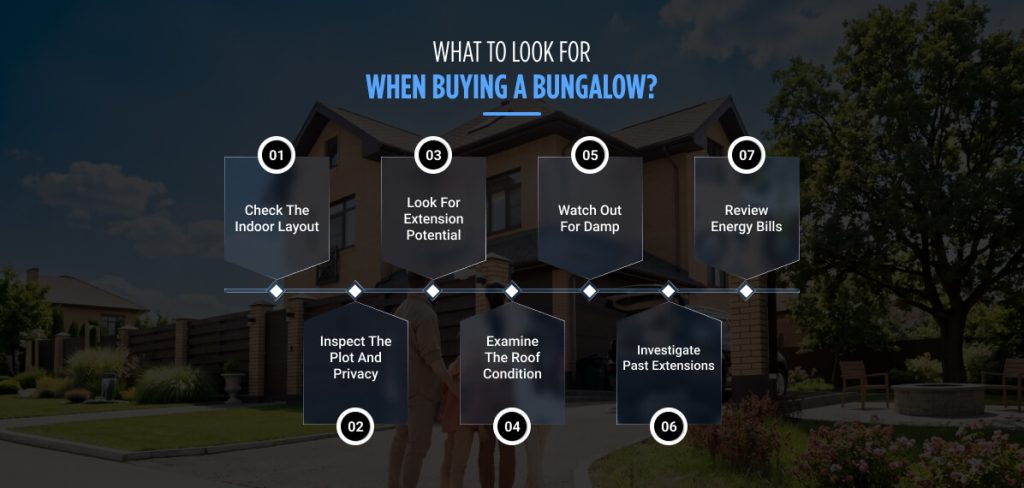
Every bungalow is unique. They come in all shapes, ages, and conditions, so you need to look closely before making an offer.
If you are thinking about buying a bungalow, here is a simple checklist to help you find the right one:
Check The Indoor Layout
- The floorplan flow: Make sure the rooms do not feel too cramped or awkward to walk through.
- Bedroom privacy: Check that the bedrooms are far enough away from the noisy living room and kitchen.
- Storage space: Bungalows often lack attic space, so look for plenty of built-in cupboards.
- Future access: Ensure the hallways are wide enough for walking aids or wheelchairs later on.
Inspect The Plot And Privacy
- Neighbors’ views: Walk around the garden to see if taller nearby houses can look straight into your windows.
- Garden size: A big garden is great for privacy, but remember it takes a lot of time and effort to maintain.
Look For Extension Potential
- Attic conversions: Check if the roof is high enough to build an extra room upstairs.
- Building outward: See if there is enough spare land at the back or side to extend the kitchen or living room.
- Moving walls: Ask if the internal walls are easy to knock down to create an open-plan space.
Examine The Roof Condition
- Large surface area: Bungalow roofs are massive. This means replacing them can cost a fortune.
- Visual warnings: The visuals always play a huge role in this. You need to look from the street. Just check for the broken tiles, sagging lines, or messy patch jobs.
- Gutter health: Lastly, check that the gutters and fascia boards are clean and free of rot.
Watch Out For Damp
- Red flags: Just smell for musty odors. You also need to look for peeling paint or mould around the windows.
- Airflow: Secondly, make sure the kitchen and bathrooms have working extractor fans. This can greatly help prevent moisture buildup.
- Problem spots: Lastly, look closely for damp patches near chimneys and flat-roof extensions.
Investigate Past Extensions
- Paperwork: Ask your solicitor to check for building regulations approval if the home was extended by a previous owner.
- Quality checks: Also. walk through the extension. During this, you need ot check for uneven floors, thin walls, or dodgy DIY wiring.
Review Energy Bills
- Heat loss: They lose heat quickly because bungalows have large roofs and outer walls.
- The EPC rating: Always check the Energy Performance Certificate on the listing to see how efficient the heating is.
Why You Shouldn’t Skip A Survey When Buying A Bungalow?
Even if you have bought a home before, skipping a professional survey is a mistake when you are buying a bungalow.
You might feel confident. However, these unique properties can hide great structural surprises under their large roofs.
In fact, recent research shows that 30% of buyers who got a house survey ended up saving money.
The results gave them the power to negotiate a lower price or get repairs fixed before closing the deal.
Naturally, survey costs will vary based on the property’s size, location, and final value.
However, paying a small fee now can save you thousands later.
You can easily use free online tools to find qualified, local surveyors in your area today. This can help you to get started.
Why Finding A Bungalow Feels Almost Impossible Right Now?
While writing this blog, I did some deep diving into the current housing market and found some fascinating research from the HomeOwners Alliance.
These findings explain why it feels like such an uphill battle right now if you have been struggling to buy a bungalow.
About 1.2 million UK homeowners aged 55 and over have completely paused their plans to move.
They just could not make it happen, even though they wanted to move. When you look at the numbers, it makes total sense:
- The Stress: Around 41% found the whole moving process way too stressful.
- The Community: Roughly 23% simply didn’t want to leave their lovely neighbors and friends behind.
- The Shortage: A massive 34% couldn’t find any suitable houses available on the market.
The real point is the real tracker. It turns out that almost 38% of the older homeowners would absolutely love to move into a bungalow.
In fact, it is by far the most popular choice for this age group.
However, housing developers have almost completely stopped building them.
Smart Alternatives To Buying A Bungalow
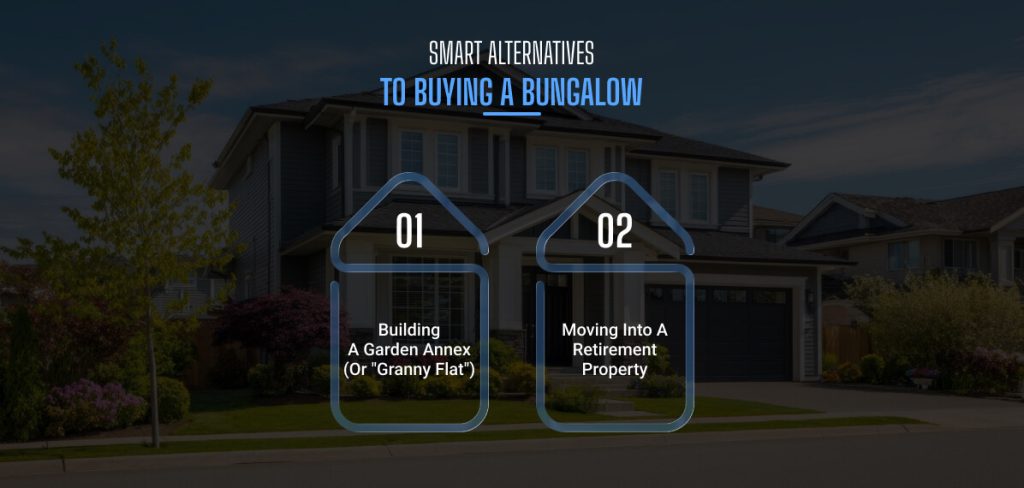
These single-story homes are so rare and expensive right now. This is why buying a bungalow might not work for everyone.
Fortunately, there are great alternatives to consider if you need a step-free home but cannot find one on the market.
1. Building A Garden Annex (Or “Granny Flat”)
You can build an annex as a wonderful solution if you have a family with extra garden space.
These spaces are a self-contained little home built next to a main house. Moroever, this is complete with its own kitchen, bedroom, and bathroom.
In fact, at present, there are already around 60,000 of these across England and Wales.
2. Moving Into A Retirement Property
Another option is a home specifically built for people aged 55 or 60 and older.
These are usually flats. And these flats offer you a complete flat-living and often come with lovely communal gardens and social areas.
However, you do need to be careful with this option. These properties can come with hidden costs. If you ever decide to sell the place, this includes high monthly service charges, high ground rents, and hefty fees.





Leave A Reply