



Is Buying A Leasehold Property A Financial Trap? What They Hide
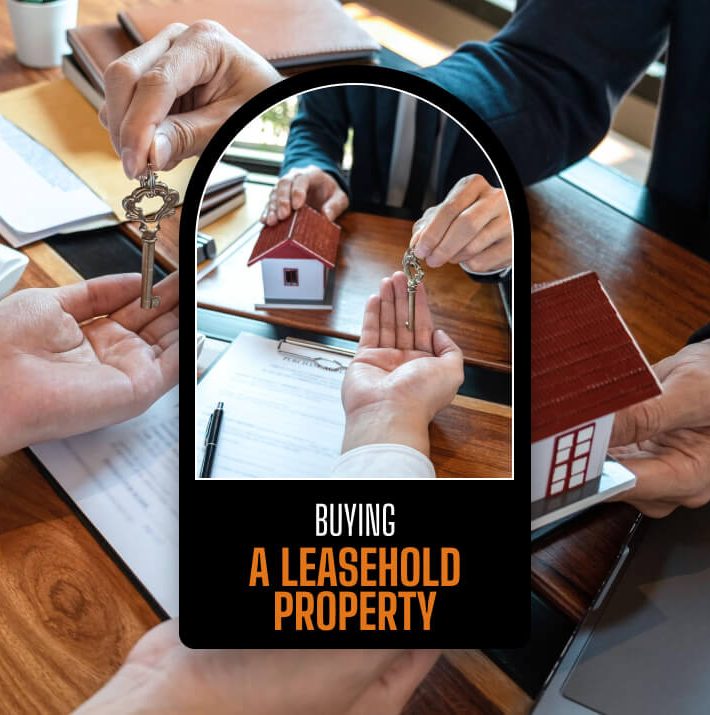
Are you thinking of buying a leasehold property, possibly a flat? Actually, you are in good company!
Many people choose this. However, it is crucial to thoroughly understand what you are getting into before signing.
In the simplest terms, leasehold refers to your owning the flat only while someone else, the freeholder, owns the building and the land under it.
As a result, your home will be a bit different in terms of the rules, responsibilities, and costs that recur each year.
To avoid running into trouble, be clear about what you ordinarily have to do and work out any additional costs, such as service charges.
Most importantly, before finalizing the deal, you need to make sure to inquire about everything.
The Definition Of Leasehold
When you buy a leasehold property, leasing the property from a freeholder under a long-term legal contract is known as lease.
Interestingly, according to government figures, roughly 19% of all homes in England are leasehold.
In this agreement, the number of years you are considered the owner of the property is clearly set out.
Most commonly, lease terms are 90 years, up to 999 years; sometimes they can be very short.
Though the freeholder retains ownership of the land and property, they usually handle repairs in common areas such as roofs, stairs, and hallways.
At the same time, in a few cases, the residents themselves continue to handle these responsibilities.
When living in a leasehold flat, one needs to bear in mind that one will be sharing the costs and inevitably have to follow the rules.
You might have to pay for:
- Annual service charges
- Parts of the building insurance
- Maintenance costs
- Ground rent
Moreover, you have to get the freeholder’s green light if you want to carry out significant refurbishments.
The lease could also impose some major lifestyle constraints, such as
- No pets allowed,
- Subletting prohibited,
- Even a condition that floors always remain carpeted.
You must adhere to these policies, it is crucial or neglecting them might lead to eviction.
On the other hand, owning a freehold house means that you inherit the rights to both the house and the land forever without being subjected to a landlord’s rules at all.
The Reason Why Anybody Would Want To Purchase A Leasehold Property?

Yes, buying a leasehold property can be a little bit more challenging than purchasing a freehold home.
However, it is a very common path to homeownership, especially when you are considering flats.
When you buy a flat, it almost always comes with a lease because the freeholder owns the main building structure.
Luckily, a big advantage of this arrangement is that someone else is responsible for maintaining the entire building.
As a result, you will be spared from having to negotiate with your neighbors about
- Cleaning hallways,
- Changing broken lightbulbs in stairwells,
- Mowing shared gardens.
Also, you do not have to bother with getting buildings insurance. Even though the freeholder arranges this, remember that you will still be contributing to its cost.
What Are The Cons Of Leasehold Property?
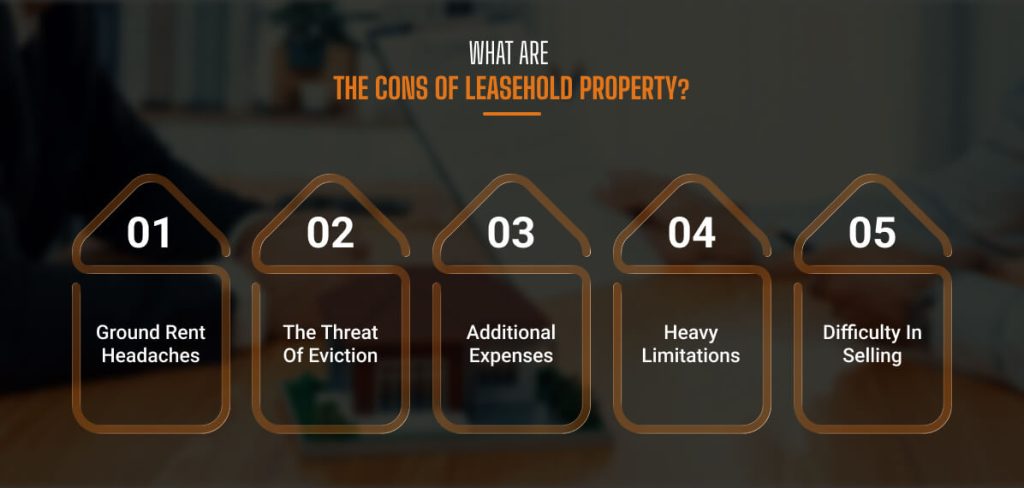
Let’s discuss some of the negatives of purchasing a leasehold property. Consider it as a house-rental combination where you own only the space.
However, the long-term contract with a landlord leads to additional expenses and restrictions.
The main issues to be aware of are:
· Ground Rent Headaches
The National Leasehold Campaign states that one of the major reasons property transactions fall through is rising costs.
The ground rent, if raised too steeply, might result in banks refusing your mortgage application.
· The Threat Of Eviction
When ground rent exceeds £250 (£ 1,000 in London), there is a provision that the lease can be regarded as a tenancy.
This certainly facilitates the freeholder’s process of reclaiming the flat if the tenant becomes legally delinquent.
· Additional Expenses
You have to set aside funds for service charges, which can be quite hard to anticipate.
On top of that, you will be spending more on legal conveyancing since the solicitor’s workload involves scrutinizing additional documents.
· Heavy Limitations
Generally, the owner must obtain permission and pay a fee for significant renovations.
Additionally, there could be prohibitions on pets, subletting, and the use of the property for business purposes.
· Difficulty In Selling
Properties with a lease of less than 85 years are very hard to market.
However, the government’s draft of the January 2026 Leasehold Reform Bill will, in all likelihood, introduce very low or zero ground rents for all new leases by late 2028.
Due to these specific conditions, it is recommended to get your solicitor to examine the lease papers right away.
Is Leasehold Bad?
Over the past ten years, leasehold issues have increased dramatically. Indeed, an official Competition and Markets Authority (CMA) investigation has revealed serious cases in which buyers have been completely misled.
While many were suddenly slammed with sharply rising ground rents and surprise service charges, others were not even informed in advance that the dwelling was a leasehold.
Adding to the misery, the recently exposed building cladding scandal became a major talking point.
Consequently, many flat owners have been burdened with exorbitant safety-related repair bills, rendering their properties unmarketable because freeholders refuse to take responsibility.
To safeguard the interests of picers, the Leasehold and Freehold Reform Act 2024 has become law, although its provisions are being implemented in stages.
Naturally, not all leasehold arrangements are negative, indeed many residential complexes are quite simple and operate smoothly.
Still, purchasing a freehold house is definitely the best and most desirable option.
So, if you decide to buy a leasehold property, make sure you get a conveyancing solicitor with a specialism in leasehold property.
Be patient, examine the matter thoroughly, and do not hesitate to check every detail before you commit!
How Can You Buy A Leasehold Property?
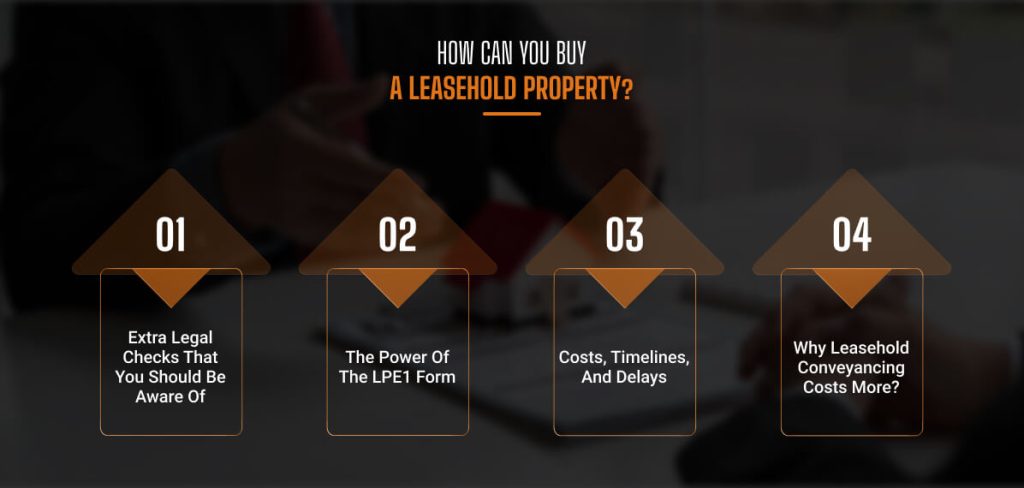
Purchasing a leasehold property is essentially the same as buying any other home from a legal perspective.
However, your legal team will need to take on more behind-the-scenes work.
Since you are only purchasing the right to occupy the property for a limited period of time, your solicitor or conveyancer will have to conduct some additional essential checks to protect your investment.
Extra Legal Checks That You Should Be Aware Of
In order to avoid any unpleasant surprises, your solicitor will thoroughly examine these six important areas of the lease agreement:
· Lease length
Without a doubt, your first consideration should be the lease term. If it is short, you will have to find out if it needs to be extended before you can move in.
· Property restrictions
Rules are integral to leases. Your solicitor will search for lifestyle restrictions that are so tough that you will not be able to live with them.
· Ongoing charges
It is essential to obtain a detailed breakdown of the annual ground rent and service charges.
Your team will also find out whether the current owner is in arrears and analyze the year-on-year increases in these fees.
· Property boundaries
In legal terms, this is called the “demised premises.” The lease must identify in writing the areas of the flat, balcony, or parking space that you own.
· Administration charges
You need to know what the landlord charges for basic paperwork.
This includes fees for granting building approvals, sending documents, chasing late payments, or handling contract issues.
The Power Of The LPE1 Form
Fortunately, your solicitor does not have to hunt down this information blindly.
They will request a specialized document package known as the Leasehold Property Inquiries (LPE1) form.
This vital form is filled out by the managing agent or the freeholder who oversees the shared spaces.
Here is my top insider tip: the sooner your team gets hold of the LPE1 form, the better.
Make sure everyone is involved: the seller, the estate agent, and the conveyancers.
They know that getting this form quickly is your top priority. Without it, you cannot truly decide whether to proceed with the purchase.
Costs, Timelines, And Delays
It is important to manage your expectations regarding the budget and the clock, as the paperwork takes time:
- The cost: The seller is responsible for paying for the LPE1 pack, which usually ranges anywhere from £300 to £800.
If the seller delays making this payment to their managing agent, the whole process can grind to a halt.
- The wait time: On average, it takes lease administrators about 54 days to complete and return the LPE1 pack.
- The review: Once the pack finally arrives, your conveyancer will carefully dissect it. They will often raise extra follow-up questions to clarify vague details.
Do not leave the reading to the professionals alone! Make sure you look over the LPE1 pack yourself and ask your solicitor about anything you find confusing.
Why Leasehold Conveyancing Costs More?
The legal process naturally takes longer and costs more than the straightforward legal fees you pay when buying a freehold house, due to the extra steps, reviews, and forms involved.
The complexity of checking the building’s management history simply increases the required hours.
You need to get and compare quotes from trusted local conveyancing solicitors today so you know exactly what your budget looks like. This way, you can ensure you are getting a fair deal.
Is It Possible To Get A Mortgage For A Leasehold Property?
In general, buying a leasehold property is very easy if the lease is simple and has more than 85 years left.
But obtaining a mortgage becomes much more difficult if the lease is shorter.
Most banks will not provide loans for properties with less than 85 years remaining on the lease.
They typically require the lease to continue for at least 40 years after the mortgage end date to maintain property value.
However, big lenders such as NatWest do allow some flexibility for prime central London locations, requiring only 10 years remaining at the end of the term.
Remember that property prices fall sharply as lease lengths shorten.
Moreover, banks also scrutinize steep ground rents, hidden estate charges, and cladding safety issues.
So, speak to a mortgage broker who doesn’t charge you to help you locate sellers who are friendly towards leaseholders!
What Are The Ground Rent And Leasehold Service Charges?
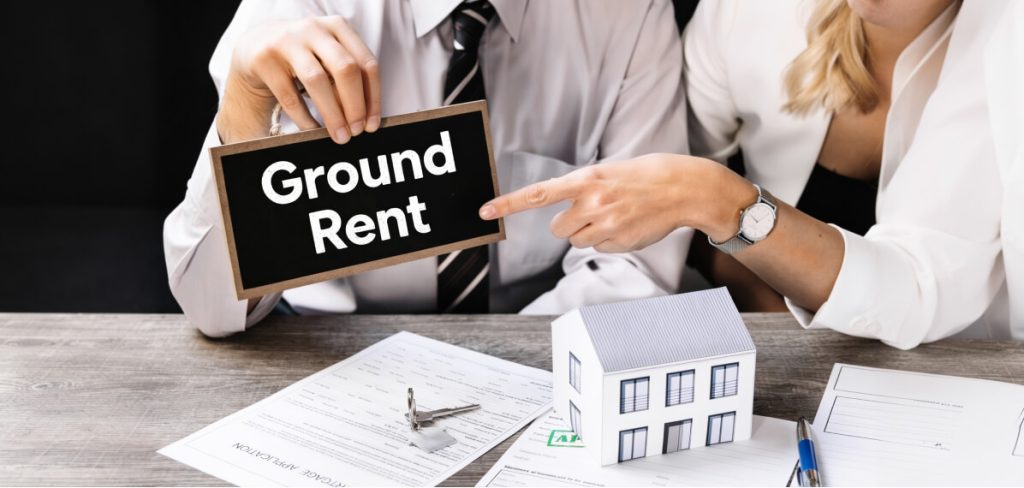
If you buy a leasehold property, you need to set aside money for regular payments made to the freeholder.
The first payment you will make is ground rent for the land your house is on.
If the house you are buying is quite old, you should check the lease to find out the rent amount and the frequency of increases.
The next payment you will have to make is the service charge. This is the amount going to shared tasks such as building maintenance and buildings insurance.
However, one thing to keep in mind is that you will still be responsible for purchasing your own separate contents insurance.
Besides that, some leases may require payment into a sinking fund annually.
Such a fund is a reserve that accumulates cash for major repairs, like a new roof or lift.
Therefore, you should get your solicitor to verify. They can help you understand that the previous owners have paid the incurred expenses before completing the purchase, so you will not be subject to any legal proceedings.
What Are The Restrictions For Leasehold?
When you buy a leasehold property, it’s important to understand that you have to follow certain house rules, as nearly all leases have strict provisions.
Some of the most common restrictions you may find in a lease document are:
- Not allowing pets
- A complete prohibition on subletting
- Not permitting any major structural changes
- Not running a business from home
In general, you will need the landowner’s official approval for any construction or alteration work.
Since leases are full of confusing legal terms and phrases, here is a major suggestion: get your solicitor to send you a plain summary of your main obligations.
It’s absolutely necessary to stick to these rules because if you violate them, your landlord can sue you.
Taking the appropriate first steps is a good decision. Hence, you should compare instant quotes from fully regulated local conveyancing solicitors today!
Is It Possible To Extend My Lease?
Great news if you are buying a leasehold property!
Thanks to a January 2025 rule change, the old law of extending the lease is gone.
Now, you can extend your lease immediately after buying, as soon as your Land Registry paperwork clears.
Alternatively, a seller can officially pass their ongoing extension process over to you.
Extending adds serious value and unlocks better mortgage rates. However, it can cost tens of thousands of pounds.
While future reforms promise cheaper extensions, waiting is risky since freeholders are fighting the changes.
999-Year Lease Good?
In general, purchasing a leasehold property with a 999-year lease is definitely a great decision!
As the lease term spans over several human generations, in a way, buying such a property is like buying your home forever.
It means you do not have to worry about your property depreciating over time.
Nevertheless, contrary to popular belief, a 999-year lease is not the same as having freehold ownership in perpetuity.
In fact, your rights are still at the mercy of a freeholder who has the authority to increase service charges, levy unexpected administrative fees, and impose severe restrictions on what you can do with your own property.
Can I Buy The Freehold?
Buying a leasehold doesn’t mean you’re stuck forever! The really good news is that you and your neighbors can actually come together and legally buy the freehold of the whole building!
The minimum requirement to begin is that at least 50% of the flat owners in your block agree to participate.
After you get enough owners on board, you will co-own the freehold, commonly through a shared limited company, and you will be able to grant new, longer leases to yourselves.
The major plus is that you can set your own ground rent, choose a cheaper insurance plan, and have complete control.
Though if you think about it, only buildings that comply with the following four conditions can be considered:
- Whether the whole building contains at least two flats.
- The commercial space should be less than 25% of the total space.
- Two-thirds of the flats should have long leases.
- Half of the owners must be willing to join.
What Is The Definition Of Commonhold?
If you are considering purchasing a leasehold property, you might want to learn about a new option called commonhold.
This innovative scheme gives owners of flats the right to have their own parts independently and to control the whole building jointly.
Therefore, the government published a new draft of the Leasehold and Commonhold Reform Bill in January 2026.
This exciting initiative not only intends to prohibit the sale of new leasehold flats. It also envisages introducing a more robust legal framework to resurrect commonhold.
At the moment, MPs on the Housing Committee are scrutinizing the bill prior to its final passage through Parliament.
What Are The Questions You Need To Ask When You Are Buying A Leasehold Property?
To sum it all up, buying a leasehold property requires you to get clear answers before making your final move.
Therefore, make sure to ask your conveyancer these essential questions to keep your investment safe:
- Lease length: How many years are left on the lease?
- Ownership boundaries: What exactly do I own inside and outside the flat under the “demised premises”?
- Past changes: Have any previous owners made alterations to the property?
- Ground rent cost: How much is the annual ground rent?
- Rent increases: Does the ground rent change over time? If so, when and by how much?
- Service charges: How much are the ongoing service charges?
- Emergency savings: Is there a “sinking fund” or “reserve fund” for the building?
- Future repairs: Is there any major work scheduled for the building soon?
- Admin fees: Are there any administration charges to pay now, during my ownership, or when I sell?
- House rules: Are there any restrictions on how I can live in and use the property?
- Landlord contact: Is the freeholder easily contactable if issues arise?





Leave A Reply